

Victor Stagnaro, Chief Executive Officer of the National Fallen Firefighters Foundation (NFFF), shares his personal reflections on the September 11 attacks.
It has been 25 years since the tragic events of the September 11 attacks. The events of that day have left their mark on history and serve as a poignant reminder of the sacrifices made by firefighters and the emergency services every day.
One of the organisations that will be leading this year’s memorial efforts is the NFFF. Created by Congress in 1992, the NFFF serves to honour America’s fallen firefighters. For every firefighter who dies in the line of duty, their family receives a flag that has been flown over the United States Capitol and the National Fallen Firefighters Memorial in Emmitsburg, Maryland. The NFFF holds a memorial every May and this year, they paid tribute to 204 fallen firefighters. It also supports the families of the fallen by providing scholarships and retreats for both spouses and children.
Its networks for Chiefs and Incident Commanders provide a valuable lifeline for the departments who are left behind after a cherished co-worker passes away in the line of duty. Additionally, the NFFF’s death prevention programmes highlight the ways firefighters can look after their mental and physical health.
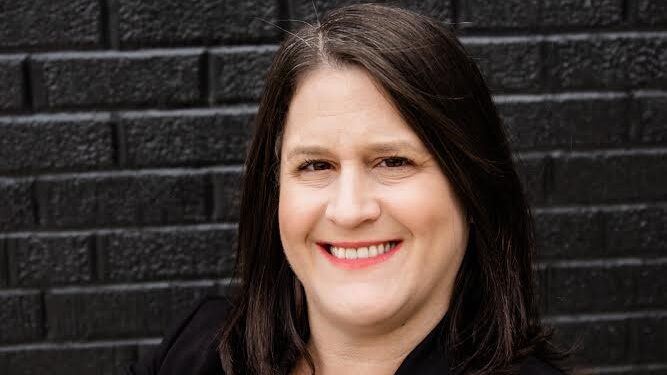
Victor Stagnaro is the Chief Executive Officer of NFFF. Here, he talks to International Fire Buyer about the legacy left by the September 11 attacks and the efforts his organisation is making to mark this important anniversary.
Please introduce yourself and your background.
I have over 40 years of fire service experience. I started off as a volunteer in
Silver Spring, Maryland, which is a suburb of Washington, D.C. I was then hired by Prince George’s County Fire and EMS Department in 1985. I ran up through the ranks, leaving as the Deputy Chief of Operations. Between being hired and my retirement, I was a Company Officer, Fire Service Instructor, Public Information Officer, and a Fire Marshal.
I decided to volunteer in 1997 and that is where I really got connected with the NFFF. I was hired in 2010 as the Director of Fire Programs, which focuses on reducing line of duty deaths and injuries. I then went on to become the Managing Director where I oversaw all the operations, and for the last two and a half years, I have been the Chief Executive Officer.
You were working as a firefighter in Maryland at the time of the attacks. What could you say about your memories of that day and the aftermath?
For any of us who were around when that happened, it is branded into our memories. On that day, we were preparing to swear in the new Chief. While we were driving to the ceremony, we learned about what was going on in at the Pentagon in Arlington, Virginia, and in Shanksville, Pennsylvania. So, the ceremony was cancelled. We were expecting more tragedies to occur, more attacks to happen. We were sending crews to the Pentagon because we were very close to that incident. The then Executive Director of the NFFF was a retired Chief from Prince George’s County. When 9/11 occurred, he pulled together a group of folks to support the FDNY. I was privileged to be one of those that went to 9/11 and was in New York serving with the Counselling Service Unit, setting up what we thought would be places where families could reunite or get information about their firefighters. Just walking around the pile, it was really seeing the best of humanity in the worst of times. It was very unifying and amazing.
How is NFFF marking the 25th anniversary of the September 11 attacks?
We have partnered with a group called OOPA’S World of Words. They are a group that works with children and we are helping them teach the history in an age-appropriate way for children who are in kindergarten all the way through third grade using specific words like “anniversary”, “memory”, and “emergency” to teach children about what happened on 9/11.
Something that we have been doing since 2011 is hosting stair climbs. We have over 40 stair climbs scheduled to happen across the US and across our borders. Everybody who attends gets a badge with a picture of one of the 343 FDNY firefighters that were killed in the line of duty. They climb 110 floors which is how tall the World Trade Center Twin Towers were. We are very symbolically completing the climb that they could not finish. It is a very moving event and a way to commemorate and remember the courage of those firefighters.
Why is it so important that younger generations and those to come understand the significance of the September 11 attacks?
One of the values and traditions of the fire service is that we will never forget our fallen heroes. The stair climbs and what we are doing with OOPA’S World of Words helps us to keep that promise. It is important to educate not only the fire service, but the general public of what happened on that day. We are now at a point where we are teaching it as history and those of us who were here understand that unity, the connection and how we saw the best in the worst of times. So, it poses the question of how do we educate and prepare younger generations, and teach them that such unity is still possible without a tragedy?
We have heroes walking among us, and they are heroes because they raised their right hand, took an oath, and they said they are going to take care of you when you need help. The level of dedication that firefighters show every single day and we need to live up to that. We need to educate the public and our firefighters that they can still do that today.
What are the main ways the September 11 attacks have left a legacy on firefighters in the US and globally?
I think the legacies that it leaves is remembering that firefighters are willing to go towards collapsing buildings, fires, and hazardous incidents while everyone is running away. The training and preparation that has occurred has left a lasting legacy globally. It is unifying for all of the fire service; there is a true brother and sisterhood that occurs amongst firefighters, and I think 9/11 in many ways helps to forge that. For example, when we do these stair climbs, we have many firefighters who were not born yet. They are joining the fire service and they would not have known what had happened on 9/11 had it not been for these stair climbs. We can look at the courage of those 343 firefighters and the dedication and then those who passed away from 9/11-related diseases and say, “Can I live up to that model as a firefighter?” and that is the legacy it leaves. It gives us a genuine show of what dedication, preparation, and commitment is. As firefighters, we need to live up to that every single day.