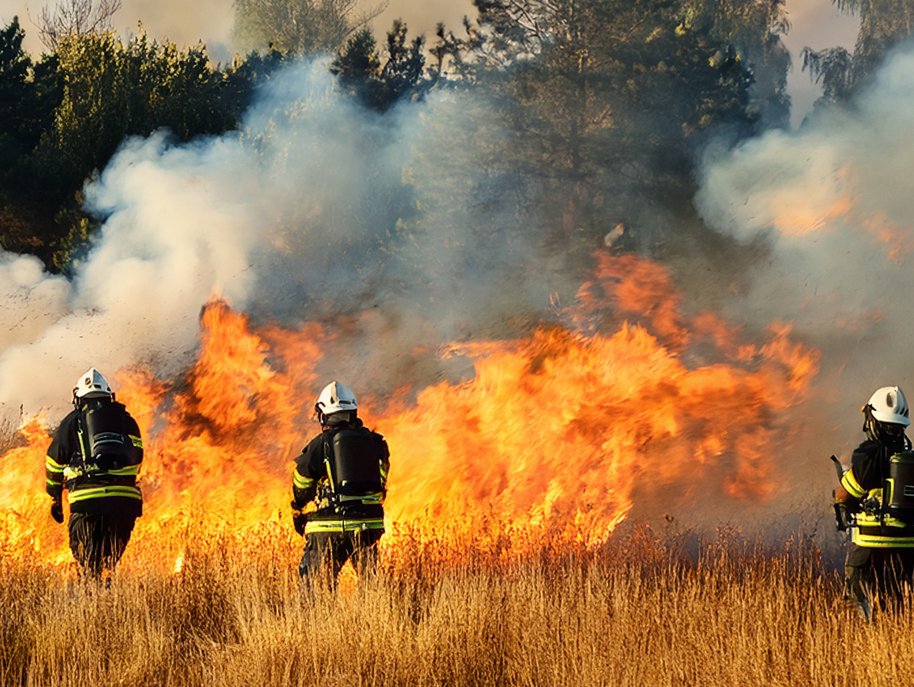

Gary McDowall, Director 3FFF Limited, explores how smarter water use, wetting agents and operational innovation can help fire and rescue services tackle growing wildfire and waste fire challenges
Where has our water gone?
The total amount of water on the earth has not changed significantly over the past 10,000 years. Our water is stored in different forms, fresh water, sea water, vapour and ice. Our concerns are raised when water is not where we expect it to be, in the volumes that we depend on, and which we have experienced and relied on over many decades. In the UK, this can feel like feast or famine, with warmer wetter winters and drier summers driven by extreme weather conditions. This year is an El Nino year, and the National Oceanic and Atmospheric Administration (NOAA) has already warned these conditions are likely to strengthen over the rest of 2026. Forecasters suggest this could be one of the strongest El Ninos ever recorded. This weather event will have serious implications for water supplies this year and 2027.
How El Nino Is Increasing Fire Risk and Water Shortages
Following one of the hottest years on record in 2025, we have been advising the UK’s Fire and Rescue Services to prepare for a continuation of prolonged hot and dry conditions throughout the summer of 2026. Historically, the effects of El Ninos always extend into the following year, and it is already predicted that air temperatures during the spring and summer of 2027 will exceed the temperatures we will experience in 2026.
This matters because water shortages during summer periods are already inevitable, and the impacts of El Nino only increase this demand on a vital human resource. The population’s demand for clean water never diminishes; it only increases. Farmers need fresh water for crops; industry needs fresh water for manufacturing and the overall demand from society for this vital resource increases year on year.
Water Conservation in Firefighting Operations
Firefighters must adapt to these changing conditions and take steps to conserve this valuable resource. Statistically, wildfires and waste fires are increasing each year, this is a predictable trend as solid fuels involved in such fires become drier, with the prospect of these fires spreading more quickly. Water alone is not an effective medium for extinguishing solid fuel fires because its high surface tension which limits penetration into the fuel surface. In fact, the drier the solid fuel, the more likely water will simply rebound from the surface and slow down the cooling effect and ultimately result in more water being used to achieve extinguishment. Managing water run-off is a key issue for the FRS, in particular, waste fire sites. The deployment of wetting agent minimizes this run-off and significantly reduces the environmental impact from large volumes of fire water.
Why Wetting Agents Improve Fire Suppression Efficiency
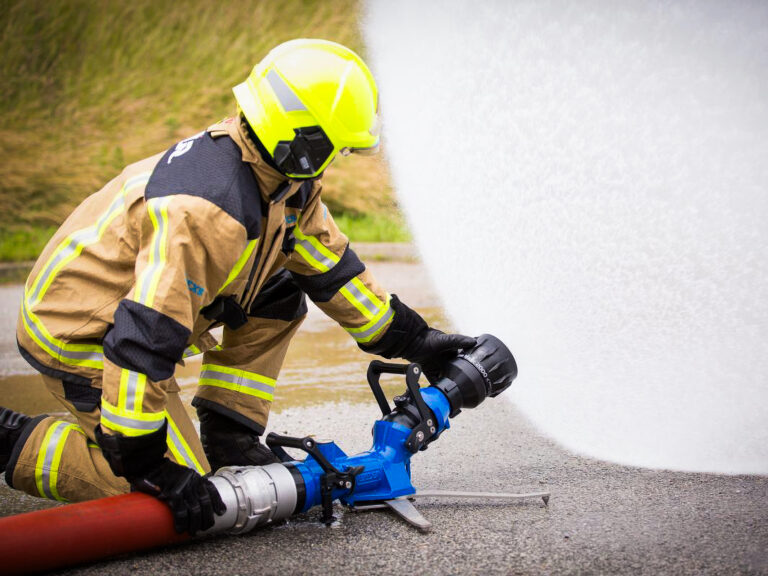
Wetting agents such as FREEFOR SF2 will soften the surface tension of water, promoting penetration into the fuel surface, provide rapid cooling of the solid fuel and achieving extinction using a fraction of the water that would normally be used for the same size of fire. FREEFOR SF2 is a PFAS Free and Solvent Free product. There is no detrimental impact to the environment over and above the fire and the burning fuel itself. It goes without saying that there are no toxins in FREEFOR SF2, but there are toxins in burning solid fuels. When black smoke turns grey and then to white, you know FREEFOR SF2 is working. It’s simple common sense to try to extinguish any solid fuel fire as quickly as possible, not just to save this vital resource, but to reduce the impact of toxin release from burning solid fuels into the atmosphere. The use of FREEFOR SF2 improves safety for firefighters and the population impacted by the fire.
Waste Fire Case Studies from UK Fire and Rescue Services
The UK FRS already have experience of using FREEFOR SF2 on a number of large waste fires. Northamptonshire, Staffordshire and Mid and West Wales FRS’s, to name a few, have used FREEFOR SF2 to great effect on this type of difficult, and in many cases, very complicated fire scenarios. Large volumes of solid fuel containing wood, card, paper, plastics, rubber, and fabrics, all stored and processed on sites with limited access and confined spaces.
The FRS’s have observed multiple efficiencies where FREEFOR SF2 had been used. This can be seen in the detail of incident reports where FREEFOR SF2 has been applied for these types of large, multi-solid fuel fires. For example; the case studies undertaken by Mid and West Wales FRS, compiled by Simon Pearson who is a Waste Fires Tactical Advisor, clearly describe the timelines, total resource and methodology employed to extinguish two large waste fires in that region. The National Fire Chiefs Council (NFCC) Waste Fires Review Group is in place to assist firefighters on the tactical approach for these fires based on ‘Learning Points’ from other similar fires across the UK. This group of dedicated fire officers provide valuable insight and strategies for this type of fire
Automatic Fire Suppression for Waste Processing Facilities
In addition to a number of UK FRS’s adopting FREEFOR SF2 as a vital tool to extinguish waste fires, a number of waste processing companies have already installed FREEFOR SF2 in automatic fire suppression systems deployed above conveyer belts as a first and rapid response to extinguish fire and prevent fire damage to equipment and halt the spread of fire to other site storage areas.
A Smarter Approach to Water Saving and Fire Safety
It’s not just a case that it can be done, I am making the case that it needs to be done to reduce water usage, reduce toxin release, improve the safety of firefighters and the safety of the community impacted by solid fuel fires.