
Joseph Clarke of Fire Buyer explores how fire suppression tactics and technologies are evolving to meet the unique demands of confined-volume environments – from control rooms to engine bays.
Firefighting is a discipline shaped by context. While open-plan warehouses and multi-storey buildings offer familiar challenges of scale, pressure, and spread, a different set of hazards emerges when fire occurs in environments where volume, access, and ventilation are limited.
These are the compact zones: engine compartments, control cabinets, telecom shelters, underground tunnels, offshore rig rooms, rail carriages, maritime holds, or autonomous vehicles. In these settings, the fire behaves differently, spreads faster, and becomes exponentially more dangerous in a shorter window.
Confined spaces amplify thermal energy and restrict smoke dissipation, often creating oxygen-depleted, superheated environments. Combustion byproducts accumulate rapidly, rendering traditional firefighting tactics difficult, dangerous, or outright impossible. First responders might not be able to physically reach the source of ignition. Human intervention is either delayed or entirely precluded. This leaves one critical option: suppression must be built-in, autonomous, and optimised for minimal spatial intrusion.
This is the reality confronting designers, engineers, and fire strategists working across sectors where risk is high, access is low, and tolerances are narrow. In these environments, fire suppression becomes not just a safeguard, but a systems engineering challenge.
Increasingly, these risks intersect with modern infrastructure trends. As lithium battery installations, compact data hubs, and mobile energy units become commonplace, the scope of what constitutes a confined-risk environment continues to grow. These deployments often sit in remote or mission-critical locations, meaning that when an incident occurs, the focus can turn to protecting uptime, safeguarding human safety, and ensuring compliance across complex regulatory frameworks.
Many of these environments are also governed by overlapping compliance regimes. For instance, data centres may be subject to both fire safety and environmental standards that dictate the types of suppression agents permitted. This necessitates careful evaluation not only of extinguishing performance but also of environmental impact, re-arming logistics, and chemical disposal requirements. In these cases, compact suppression must harmonise multiple standards without adding operational burden.
Compact environments pose a multi-layered suppression challenge. Limited air volume increases the intensity of smoke buildup, while narrow compartments complicate discharge dispersion. System components such as tanks, nozzles, detectors, and actuation controls must operate within highly constrained geometries, often in vibration-prone, high-temperature, or mission-critical settings.
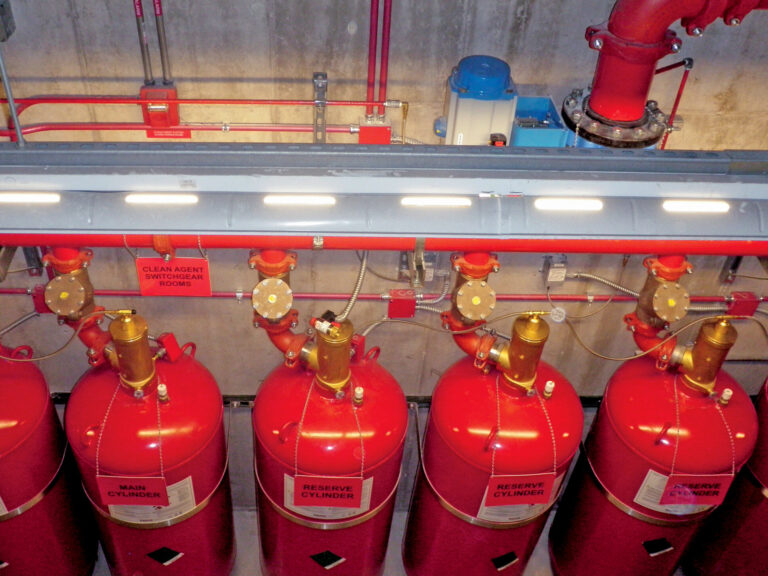
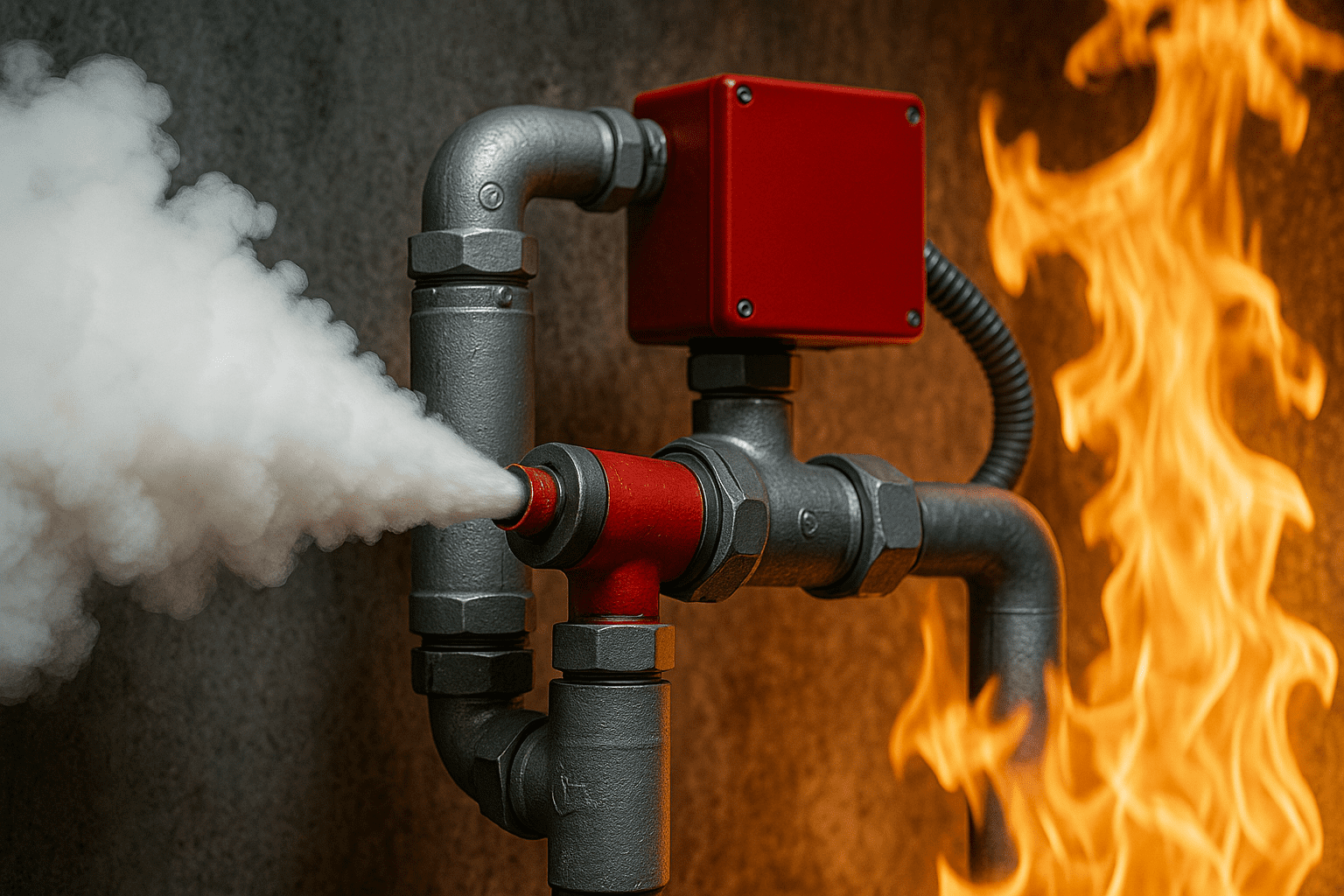
Traditional sprinkler systems or large-capacity foam rigs are not viable in such environments. Instead, compact suppression depends on systems that are self-contained, requiring no external water or pressurised gas supply; non-intrusive, capable of fitting into or around existing machinery or enclosures; autonomous, able to detect, decide, and deploy without human intervention; and clean, leaving minimal residue and avoiding secondary damage.
These stringent requirements have catalysed a wave of innovation in condensed aerosol systems, water mist technologies, and hybrid suppressants engineered specifically for small-space deployment.
Additionally, noise sensitivity and electromagnetic compatibility are emerging as new constraints in specific sectors. For example, onboard suppression systems in rail transit or aviation must not interfere with control electronics or generate false alarms due to vibration. This requires a high level of integration testing and careful selection of activation thresholds. Developers are increasingly engaging in co-design with vehicle manufacturers and facility operators to ensure that suppression systems are both safe and functionally silent within sensitive enclosures.