

The Responsibility of Fire Safety in Healthcare
An effective fire safety management and fire emergency plan requires both active and passive fire precautions and a high degree of management. In healthcare facilities, an even higher degree of safety consideration is required since its occupants may need additional assistance to escape in the event of a fire. Andrew Shaw, architectural consultant of Allegion UK, discusses ways to optimise fire safety in healthcare, and why a bespoke solution is key.
Fire safety is a major talking point in the industry right now. With the ongoing Grenfell Inquiry, concerns around fire safety are considerably high and rightly so. There is much confusion stemming from a distinct lack of clarity regarding exactly what the requirements are.
What we’re seeing at Allegion are not just issues pertaining to high-rise buildings, but across many different building types and industry sectors, in both public and government-owned buildings.
Healthcare facilities, in particular, pose incredibly complex safety challenges. Management teams must consider the facility’s occupants, the layout of the building, the purpose of each area, as well as carrying out regular maintenance checks and risk assessments and many other factors.
A healthcare facility’s fire safety measures will need to be both compliant with fire safety regulations and bespoke to the facility’s specific requirements.
The regulations are complex, and navigating a way through them to an effective fire safety plan can be difficult and painstaking. Here we provide some guidance on the key area of fire doors.
Fire Doors – do’s and don’ts
A number of regulations apply to both new and existing buildings in the UK, with the responsibility for fire risk assessment falling on the ‘responsible person.’
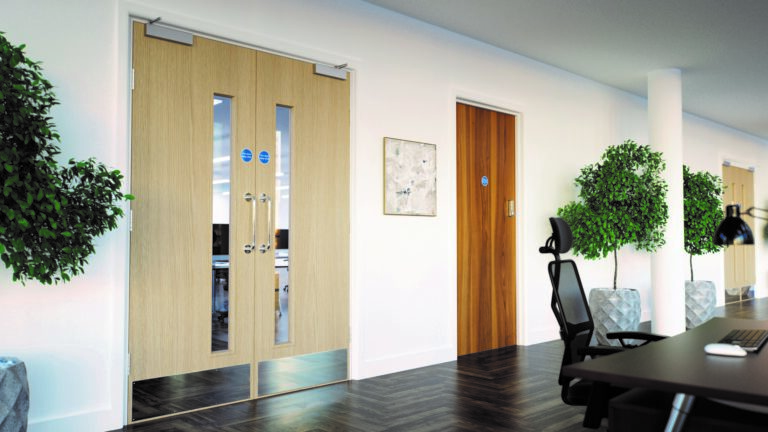
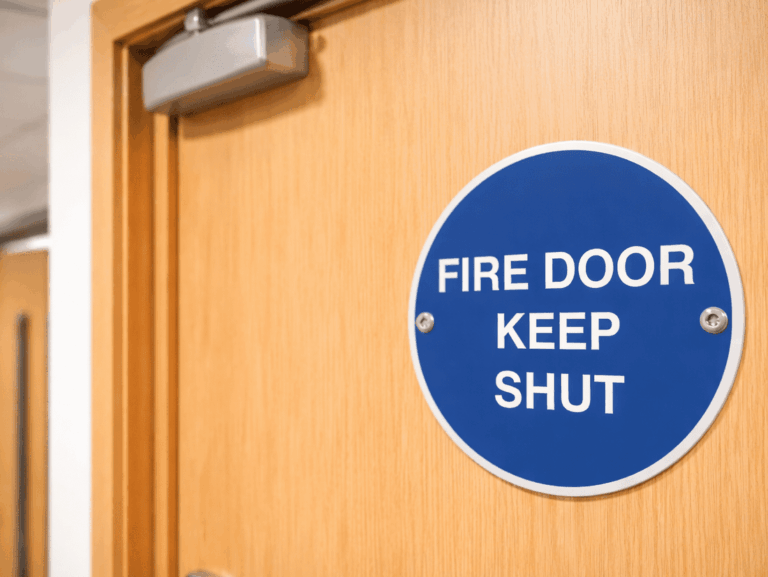
Fire doors play a major role in the fire safety and protection of buildings. A damaged, faulty or misused fire door is one of the most common breaches of fire safety regulations.
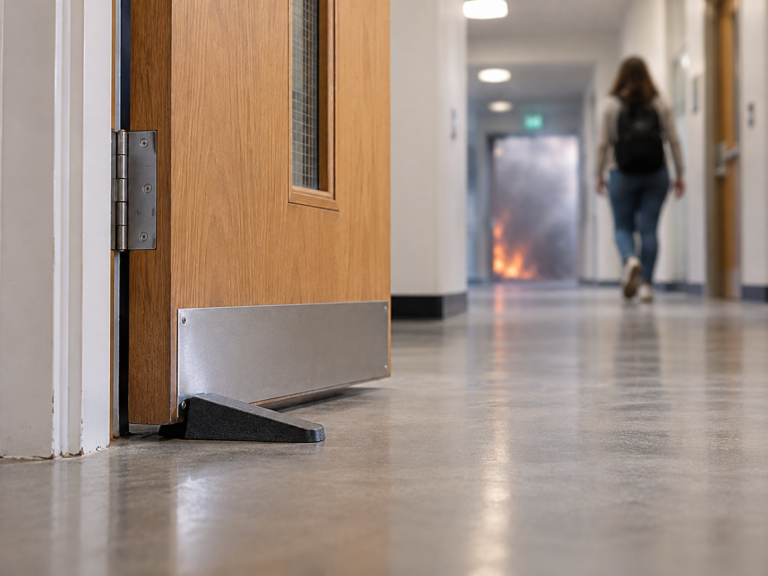
A propped open fire door, for example, is rendered obsolete. This is because in the event of a fire, they can only do their job if they can close. An open door will not prevent the spread of fire and smoke through a building to allow occupants to evacuate safety and protect the building.
The most common type of fire door, FD30, is appropriate in most cases. However, with fire doors, which are part of a compartment wall that separates buildings, a minimum of FD60 is required
Carrying out risk assessments should be regular practice, as this ensures fire doors are kept in good working order.
The holistic view
A recent investigation into the Grenfell Tower fire dubbed the tower a “culture of non-compliance” on account for its lack of compliance with basic fire safety measures. Damaged or incorrectly fitted fire doors with gaps of up to 50mm between the door and frame, and missing door closers, meant the fire doors failed to perform.
This means the fire failed to be compartmentalized, and the spreading was undoubtedly more severe than it should have been.
On top of this, last year, fire chiefs warned that 38 hospitals in the UK are as dangerous as the Grenfell Tower. As a result, more than 17,000 care homes, private hospitals and hospices were ordered to carry out imminent fire safety checks on their buildings.
As an industry, it’s often easy to neglect one area of fire safety and prioritise another. For example, fixating on training or evacuation plans can force other areas such as the checking and maintenance of fire doors into second place. The holistic approach – that is, keeping on top of all areas equally – is key.
Bespoke over value engineering
With each facility being unique and diverse, it’s important to know which fire safety solutions and products are appropriate.
Implementing suitable products is just as important as the building’s fire safety management and training of staff. Because each facility will be different in terms of use and design, fire safety procedures must accommodate each diverse performance requirement.
In considering this, it becomes easy to make the mistake of prioritising cost over quality when this doesn’t have to be the case. Although, an effective fire safety strategy also doesn’t always mean cost-efficiency should be ruled out.
Above all, understanding fire safety requirements, possessing adequate fire safety solutions knowledge and carrying out appropriate staff training requires minimal costs.
Whilst many healthcare facilities, such as hospitals, may be facing considerable budgetary pressures, requesting necessary assistance or expert guidance will help a facility meet fire safety standards and requirements based on its specific needs. This includes aesthetics and budget.