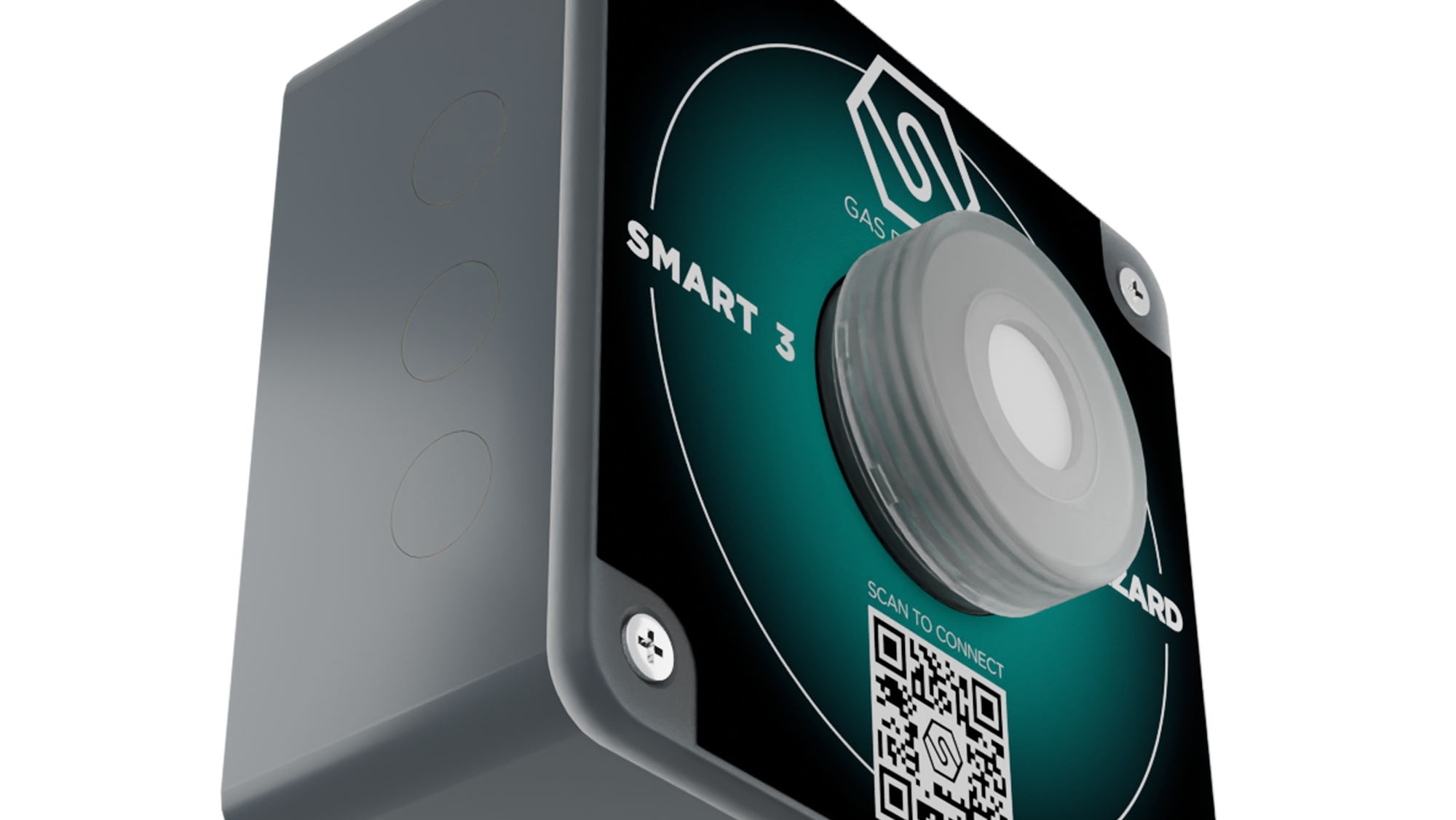
Sensitron’s SMART 3 Blizzard is a refrigerant gas detector designed for non classified areas, including HVAC-R environments, refrigeration chambers, machine rooms and technical facilities.
Developed from Sensitron’s experience in industrial applications and hazardous areas, the detector uses infrared technology to identify fluorinated gases including R32, R454B and R410A. It is designed to meet F Gas regulatory requirements and is SIL2 certified.
SMART 3 Blizzard can also operate as a standalone detector without a dedicated control panel, providing an option for machine rooms and technical rooms.
SENSE interface enables wireless detector management
The detector incorporates Sensitron’s SENSE wireless interface, allowing operators to manage the device remotely from a PC, smartphone or tablet without requiring physical access.
An integrated Wi Fi module with an internal access point enables a direct connection to the detector. Through SENSE, users can configure alarm thresholds and operating parameters, activate relays, conduct functional tests and calibration procedures, monitor sensor status and export test certificates.
The interface is available in six languages and does not require dedicated proprietary tools or the equipment typically required when working in hazardous areas.
SMART 3 Blizzard also incorporates a high visibility multicolour LED ring indicating three operational status levels, together with a built in buzzer for identifying alarms and faults.
The detector operates from a 12 to 24 Vdc power supply. Standard connectivity includes a 4 to 20 mA analogue output, two relays and digital communication with the sensor, supporting integration with existing monitoring systems.
Sensitron SMART 3 Blizzard applications
Designed to maintain accurate readings in conditions including low temperatures and high humidity, applications include industrial refrigeration facilities, food storage centres, pharmaceutical logistics cold rooms and HVAC-R technical rooms.
Remote access through SENSE can also support maintenance and start up activities where detectors are positioned in difficult to reach locations or areas where physical access is operationally restricted.