Integrated UltraSense and Stat-X system provides early detection and rapid suppression for safe, compliant, and sustainable battery energy storage protection
In the effort to combat climate change, battery energy storage systems (BESS) are rapidly becoming indispensable to the world’s transition towards renewable energy sources.
By stabilising the grid, enabling renewable energy integration, and meeting sudden power demands, these systems are a key component of a clean-energy future. However, alongside their growth, one fact has become clear: BESS installations are vulnerable to unique and complex fire risks.
Globally, incidents ranging from California to South Korea underscore how quickly BESS failures can escalate into dangerous, costly, and even life-threatening events. Research from the Electric Power Research Institute (EPRI) shows that most failures stem not from defective cells, as once believed, but from balance-of-system faults, water ingress, and control failures, issues often preventable through effective monitoring and timely intervention.
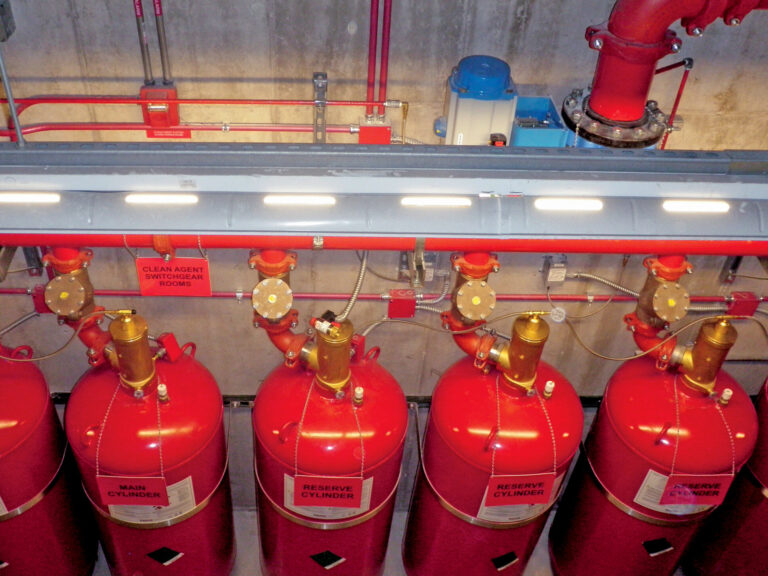
Against this backdrop, two combined technologies are emerging as an effective solution for BESS protection: UltraSense sensors, which provide real-time, prevention-based monitoring and early anomaly detection, and Stat-X condensed aerosol fire suppression, which delivers rapid, reliable suppression. Together, they create a layered protection strategy that aligns with international safety guidance and avoids the shortcomings of legacy fire suppression systems.
Understanding BESS Hazards
BESS hazards extend far beyond battery cells. While thermal runaway remains the most visible and dramatic threat, it is only one variable in a broader risk landscape. As the EPRI database indicates, other failure modes can compromise system resilience. Recognising and preparing for this wider spectrum of hazards is essential for developing safety strategies that reflect how incidents unfold in real-world conditions.
EPRI also observed that thermal runaway can occur without ignition, producing large volumes of flammable gases. Without early detection, responders may unknowingly open enclosures filled with a superheated, oxygen-starved, explosive atmosphere, a scenario that injured several firefighters in a 2019 Arizona BESS incident.
Water ingress has also emerged as a leading contributor to BESS incidents. Ironically, in some cases, water-based fire suppression systems themselves introduced the hazard. At the Moss Landing facility in the United States, leaking suppression plumbing caused electrical shorting and cascading thermal runaway. Another incident at the same facility occurred when rainwater entered through poorly sealed vents, leading to a fire and costly shutdown.
Why Systems Fall Short
Traditional fire suppression methods such as sprinklers and gaseous clean agents are not designed for the confined, high-energy environment of BESS enclosures. EPRI case studies document that sprinklers can cause short circuits, fire propagation, and additional hazards. They are often deployed only to prevent fire spread while the enclosure of origin burns itself out, a ‘let-it-burn’ strategy that sacrifices assets and creates unnecessary downtime.