Lifting heavy loads remains a significant challenge during technical rescue operations. At road traffic collisions, industrial incidents and structural collapses, responders can be required to work within unstable, confined and time critical environments, making the balance between lifting force, control and operator safety particularly important.
Developments in hydraulic lifting technology are increasingly addressing handling and the physical demands placed on crews alongside performance. The Hydraulic Jack B 10 ALU from WEBER RESCUE SYSTEMS reflects this approach, using lighter construction without compromising lifting capacity.
Reducing equipment weight can make transportation and positioning easier, helping crews deploy equipment more quickly while reducing fatigue during prolonged operations or incidents involving limited personnel.
Lukas Mugrauer, Product Manager at WEBER RESCUE SYSTEMS, said: “Switching from manual pumping to a standard cordless drill makes lifting more precise, less exhausting and faster – freeing up focus for the patient and the load.”
Improving control during technical rescue operations
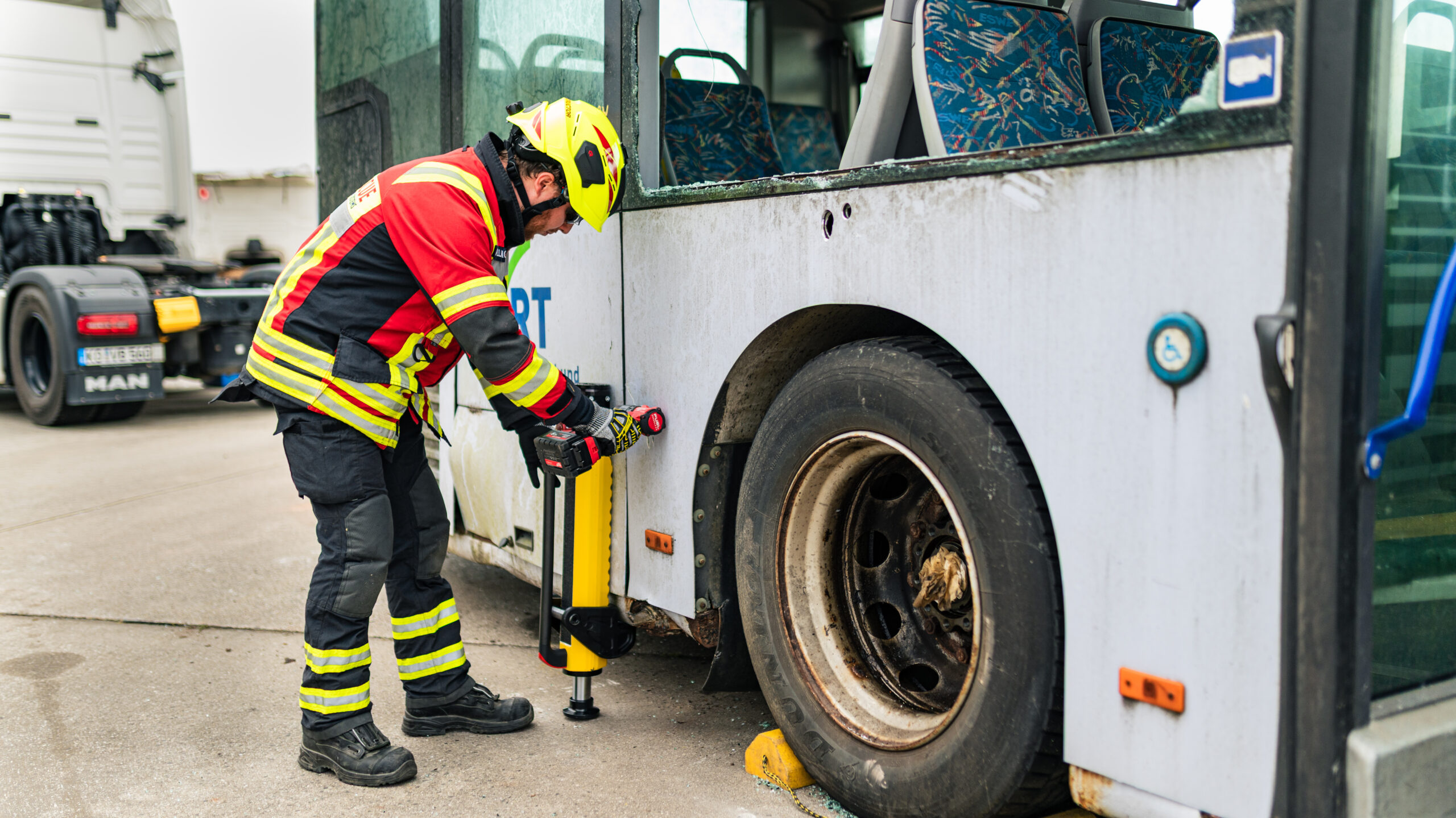
Precise movement is particularly important when lifting takes place close to casualties or within unstable structures. The B 10 ALU can be operated using a standard cordless drill rather than relying solely on manual pumping, reducing physical effort while supporting controlled movement.
Mugrauer added: “Switching from manual pumping to a standard cordless drill makes lifting more precise, less exhausting and faster – freeing up focus for the patient and the load.”
Adaptability is another consideration in unpredictable rescue environments. Multiple positioning options and varied points of application can help crews respond to different operational requirements and establish more efficient workflows.
Durability also remains important, with rescue equipment expected to operate reliably despite extreme weather and significant mechanical stress. Long term reliability and low maintenance requirements can therefore be important considerations for organisations evaluating new equipment.
The B 10 ALU reflects a wider focus on combining lifting performance with usability, ergonomics and adaptability, helping responders manage heavy loads while reducing operational complexity and physical demands.