
So much more than a vehicle
International Fire Buyer takes you through the most efficient and necessary equipment found on fire trucks that …
So much more than a vehicle Read More »

International Fire Buyer takes you through the most efficient and necessary equipment found on fire trucks that …
So much more than a vehicle Read More »

Steve Hirsch, Chair, NVFC talks to Fire Buyer about the importance of volunteers to the fire service, the recruitment…
Big interview – Steve Hirsch Read More »

We have everything crossed that we will be able to celebrate face to face again at Hilton on Park Lane this year…
Security & Fire Excellence Awards Read More »

The Fire Industry Associations (FIA) launches a Special Interest Group (SIG) on the Internet of Things (IoT) after publishing a report on IoT in the Fire Industry 02 MARCH 2021 The FIA is proud to publish our latest report on the Internet of Things (IoT). The report looked at who is working on IoT, how they are working on it, what they believe IoT to mean and why they are working with it and what barriers they are facing. Off the back of this report, we will be launching a Special Interest Group to continue this much-needed discussion. We are attempting to start a shared, productive and necessary dialogue around IoT in the fire industry. Our FIA IoT report highlighted how IoT can and will impact us all – with estimates that 87% of businesses might be working with IoT in the future. In spite of COVID-19 or Brexit the FIA – and the UK as a whole- are well placed to be the leading voice on IoT in the fire industry. The full report can be found on their website. To stay up to date on the latest, trends, innovations, people news and company updates within the global fire market please register to receive our newsletter here. Media contact Rebecca Morpeth Spayne, Editor, International Fire Buyer Tel: +44 (0) 1622 823 922 Email: [email protected]
FIA releases IoT Report on fire industry Read More »

With the launch of the new version of the fire protection system, Cerberus FIT, Siemens Smart Infrastructure expands its offering for the small to medium-sized buildings market. Various small to medium-sized buildings can now be covered with a simple and cost-efficient solution. Cerberus FIT maximizes fire safety, thanks to greater functionality and enhanced productivity for those working on protecting the buildings. The intuitive interface as well as the auto configuration tool allow the technician to install, commission and maintain the system in a fast, easy and reliable way. With the delayed alarm function staff will be informed first to identify what an alarm is about in order to assess the situation. This ensures business continuity and reduces disturbances to occupants of smaller buildings such as small-to-medium sized hotels, kindergartens or nursing homes. Safety and business continuity in every situation The Cerberus line offers a broad portfolio of detection and alarming devices including pre-configured Cerberus FIT device to choose from: from fast and reliable fire detectors to configurable alarming devices (including EN 54 compliant sounder and voice sounder beacons) which enables smart evacuation. The newest portfolio member, the updated Cerberus FIT fire protection system now allows for second loop, supporting a maximum number of 252 addressable peripherals and devices, such as detectors as well as alarm devices. All detectors and peripheral devices have an integrated line separator. In case of an interruption, the loop turns into two stub lines while making sure the system is running. This significantly increases the safety of building occupants and ensures business continuity. Because every device is also powered by the loop, less wiring is needed, enabling the customer to achieve cost-efficiency. Intuitive and easy operation The new version of the Cerberus FIT control panel comes with an intuitive interface, including LED indicators with self-explanatory icons and an easy-to-read display. This avoids extensive training and allows facility staff to perform simple operational tasks on their own, without the help of experts. Thanks to its auto configuration feature, the Cerberus FIT control panel detects and automatically reads-in all connected devices, providing immediate and simple operation. The integrated ‘Panel Configurator’ enables the configuration to be changed quickly and easily on a PC or laptop, without additional software. Cerberus FIT is an EN-compliant fire protection system. It is approved and certified by the independent certification body LPCB and can be used in accordance with the application standard DIN VDE V 0826-2. The new Cerberus FIT version will be available globally, maximizing the fire safety of smaller buildings as well as enhancing the productivity of everyone involved in their protection. To stay up to date on the latest, trends, innovations, people news and company updates within the global fire market please register to receive our newsletter here. Media contact Rebecca Morpeth Spayne, Editor, International Fire Buyer Tel: +44 (0) 1622 823 922 Email: [email protected]
Siemens’ fire protection system Read More »
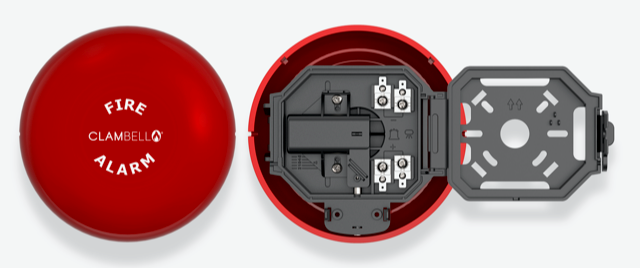
Vimpex’s new ClamBell is a UK manufactured, fire alarm bell with a hinged design that swings shut after installation. ClamBell is the first newly developed and approved bell to be launched globally in decades and the only fire alarm bell that’s made in Europe. It has been carefully designed to combine core elements of popular existing designs with innovative new features to ensure consistent, reliable and predictable performance. Installed in under 2 minutes The ClamBell’s permanently fitted gong and unique hinged design does away with the long, complicated installation process of other bells. With no central bolt, the ClamBell can be fitted in a matter of minutes. All installers need to do is fit the ClamBell to the wall, wire it to the circuit and then click it shut. It really is that easy. Three mounting options and a choice of European, Asian and US-style backplates make the installation process even easier. Vimpex MD James Jones says “The company has been involved in selling fire alarm bells for more than 40 years. To be producing our own innovative take on this traditional product is a major achievement for our business. And it’s not just the product itself; a significant amount of thought has been put into the production system to allow us to manufacture at high volumes whilst allowing for future growth in capacity to meet an expanding demand”. The ClamBell is designed and manufactured in Britain by Vimpex, Europe’s leading independent manufacturer and distributor of fire alarm system components. The company insists on a manufacturing process that produces the best quality fire alarm bell possible, one that looks great cosmetically and sounds pitch-perfect – made possible by the skill and dedication of our UK-based partner foundry. ClamBell is a truly global product. Thanks to careful design and manufacturing, a single model has simultaneously been approved to EN54 Part 3 by LPCB and is pending UL 464 for the U.S. market. The ClamBell has also been independently IP tested to IP56 by Intertek, meaning true weatherproof performance. To stay up to date on the latest, trends, innovations, people news and company updates within the global fire market please register to receive our newsletter here. Media contact Rebecca Morpeth Spayne, Editor, International Fire Buyer Tel: +44 (0) 1622 823 922 Email: [email protected]
New ClamBell brings innovation Read More »
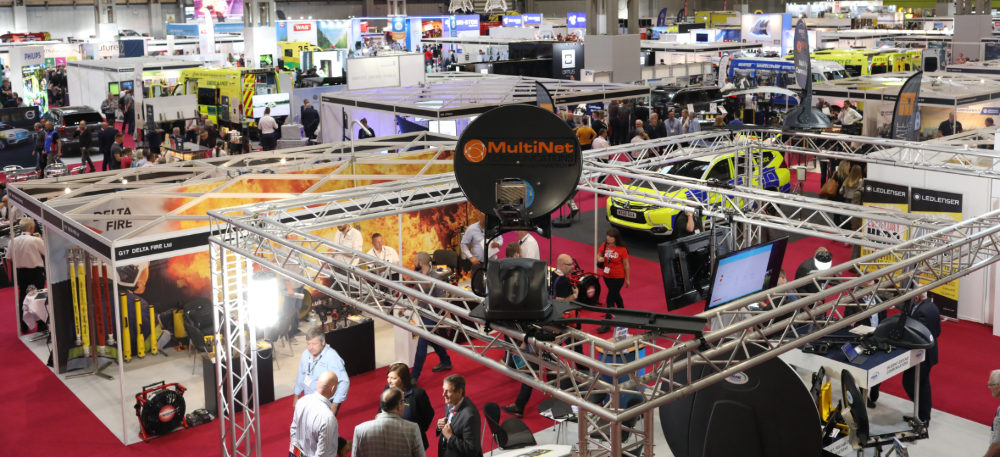
The Emergency Services Show at the NEC, Birmingham, 7 and 8 September 2021 will be the first opportunity for the entire UK emergency services
How Emerging technologies are transforming the emergency services Read More »
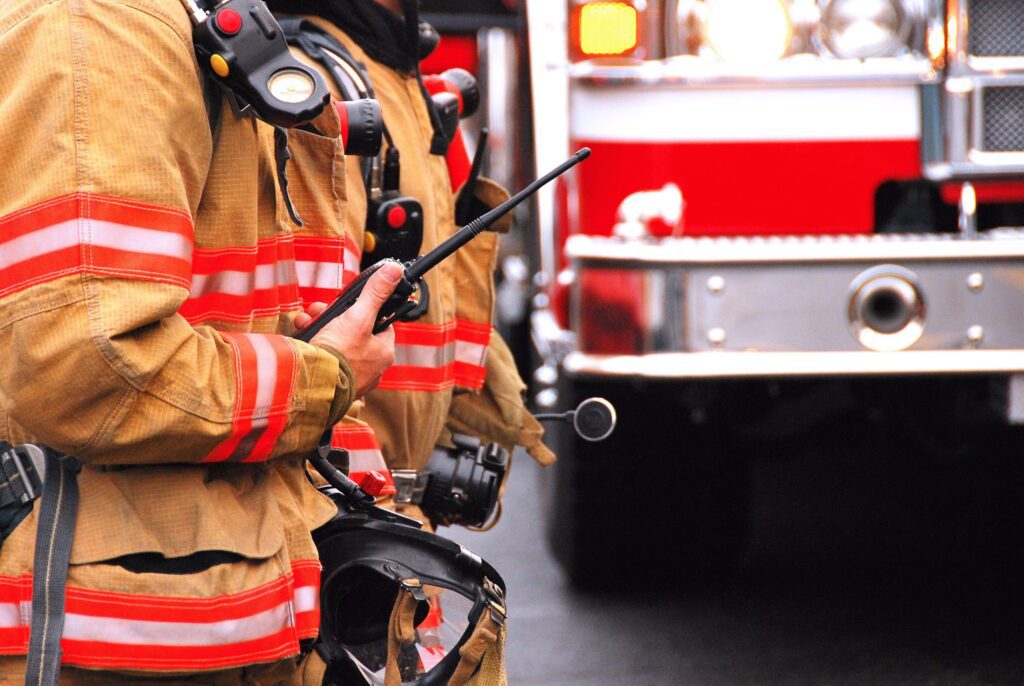
Fire services are on the front line during the fight against COVID-19. Because of this, communication has never been more mission critical
Critical Communication during Covid-19 Read More »
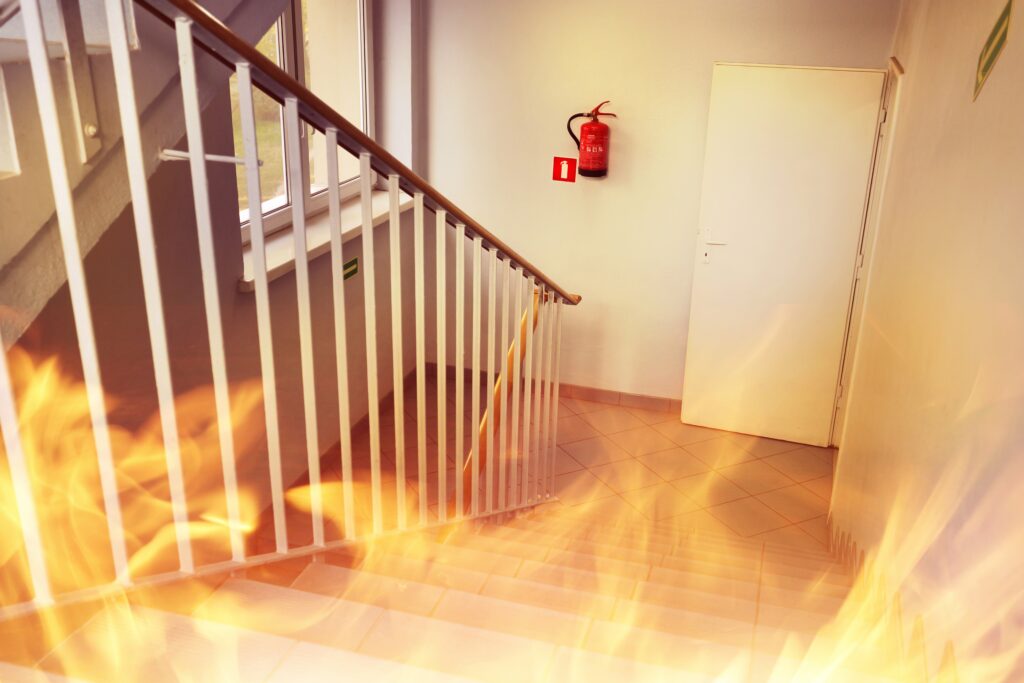
Covid-19 has changed the way that evacuation procedures should be monitored and take place. FIA has released a guidance paper to help aid the industry The Fire Industry Association (FIA) has published guidance on fire procedures during the Covid-19 pandemic. The guidance in this document is intended to clarify the requirements for ensuring that adequate fire evacuation procedures are in place in reoccupied and partially reoccupied premises. It offers answers to some common questions that have arisen due to COVID-19, and it also provides some suggestions as to how these requirements might be achieved. In addition, this guidance also examines the associated fire safety arrangements that support the evacuation procedures and that will need to be maintained while COVID-19 pandemic controls are in place. The guidance states: “Traditionally, the objective of a fire evacuation drill has been to provide staff and building occupants with the opportunity to practise the established evacuation procedures. These procedures would have been first explained as part of the induction training when a person joined the organisation. The fire evacuation drill provided an opportunity to test and time those procedures under simulated fire conditions, and to identify any anomalies that needed to be addressed. “Owing to the potential risk of contracting COVID 19, the testing of procedures through full building evacuations is, in the case of many buildings, considered to present an unacceptable risk of person-to-person infection. Furthermore, the manner in which buildings are used and occupied is likely to have changed, and might have an impact on the pre-COVID 19 fire procedures. “The guidance in this document is intended to clarify the requirements for ensuring that adequate fire evacuation procedures are in place in reoccupied and partially reoccupied premises. It offers answers to some common questions that have arisen due to COVID 19, and it also provides some suggestions as to how these requirements might be achieved. In addition, this guidance also examines the associated fire safety arrangements that support the evacuation procedures and that will need to be maintained while COVID 19 pandemic controls are in place.” Core requirements “Irrespective of the risks arising from COVID 19, any applicable national fire safety legislation remains valid, and the duties arising therefrom are unchanged. However, fire safety legislation is not prescriptive, so providing that appropriate supplementary or alternative fire safety arrangements are implemented, and that they ensure that the overall objectives of the legislative requirements are met, then the Responsible Person will have discharged their duty. “In all cases, the initial starting point must be a review of the existing fire risk assessment, fire safety arrangements and fire procedures to determine whether they remain valid, when considering the changes in the premises that have been introduced in response to COVID 19. Relevant changes to the premises can include, but are not necessarily limited to, the following: Reduced occupancy numbers The absence of key personnel, such as fire wardens, assembly marshals and the like Reduced ability to record the presence of, and account for, staff, contractors and visitors in the event of an evacuation. The implementation of one-way or queueing systems The erection of screens and barriers Waste collection arrangements The size and location of assembly points The ability to establish the evacuation status of parts of the building that are under the control of others The storage of significant quantities of alcohol-based hand cleanser. “Having reviewed the changes that have been implemented within the premises, it will then be necessary to review the fire safety arrangements and amend them so that they remain suitable and sufficient, and most of all, workable under the prevailing circumstances.” The guidance document then begins to outline what changes might be needed to procedures to mitigate the issues of COVID 19? There are many policies and procedures that impact on the fire safety arrangements in a building or organisation. Any changes to the scope, scale and complexity of the activities being carried out within the building, might require amendments to those policies and procedures and will necessitate a review of the fire risk assessment. Matters that need to be reviewed include: Fire wardens: Are there sufficient present at all material times of the day, do additional wardens need to be appointed, do their duties and responsibilities need to be revised? Fire Risk Assessments: These should be reviewed to ensure that changes in occupancy numbers and working practices have been captured and properly assessed. To reduce the time that risk assessors need to spend on site, alternative arrangements for reviewing documents and records, such as electronic transfer of documents (preferably prior to the fire risk assessment) should be considered. One-way systems, safety screens and queuing systems. Do any of these arrangements impact on the escape routes and travel distances? Do screens obstruct fire detectors or sprinkler heads? Are sufficient, suitable fire extinguishers provided on one-way systems? Can fire alarm call points be accessed on one-way systems? In an emergency, can occupants easily leave the one-way system to access the nearest escape route? Does the one-way system lead occupants away from the nearest fire exit? Where considered relevant, there should be consultation with interested parties (insurers, fire and rescue authorities). Doors should not routinely be propped open to reduce contact points. Where it is considered that this is necessary, door hold-open devices are often acceptable, but care should be taken to conform to the recommendations of BS 7273-4 in this respect. For example, a “Critical (Category A)” interface between the fire alarm system and the door hold-open devices is necessary in certain circumstances, such as doors to staircases in single staircase conditions, sleeping risks and assembly or recreation buildings; under these circumstances, acoustically activated hold-open devices would not be appropriate. Assembly points: Does the current assembly point facilitate social distancing? Does the location of the assembly point bring the assembled people into close contact with passing members of the public? Can people safely disperse from the assembly point after they have checked in? Are a number of assembly points required to enable
Evacuation procedures during Covid-19 Read More »
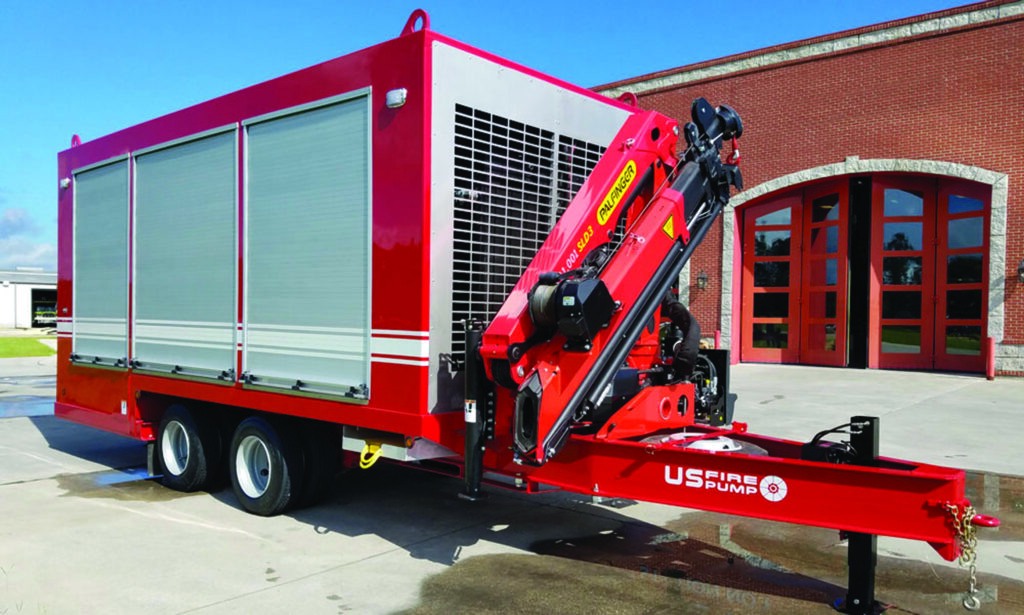
Chris Ferrara, President/CEO, US Fire Pump Company reveals the ins and outs of submersible fire pumps and how they aid emergency response
Ask the Expert: From experience to innovation Read More »