
Ask the Expert: The piping challenge
Graeme Leonard, Director of Sales – Fire Protection, Victaulic talks about the intricacies of the piping market and how to improve efficiency
Ask the Expert: The piping challenge Read More »

Graeme Leonard, Director of Sales – Fire Protection, Victaulic talks about the intricacies of the piping market and how to improve efficiency
Ask the Expert: The piping challenge Read More »
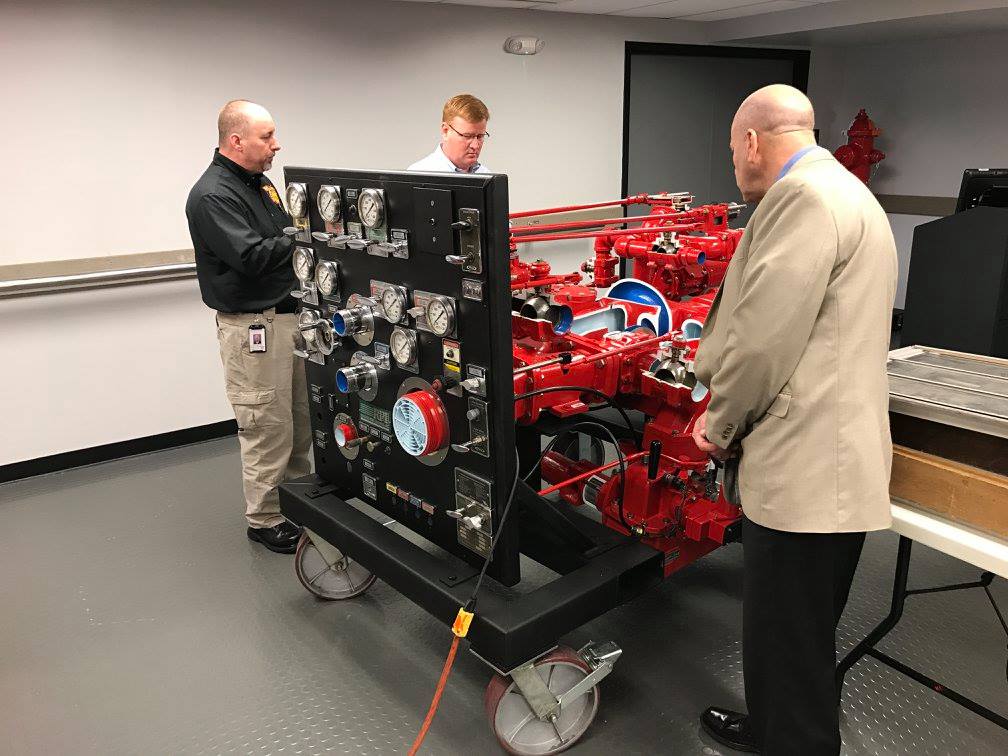
Fire Buyer talks to Derek Simmons, Certificate Assembly Board of Governor Chairman, IFSAC to find out more about the organisation and the accreditation system The International Fire Service Accreditation Congress (IFSAC) is a not-for-profit, peer-driven, self-governing system of both fire service certifying entities and higher education fire-related degree programs. IFSAC’s mission is to plan and administer a high-quality, uniformly delivered accreditation system with an international scope. IFSAC was founded in 1990 to establish a new national accreditation system for fire service certification programs. In 1992, the development of an accreditation system for fire-related degree programs began. The member entities of IFSAC are represented in a congress that deals with the general business of IFSAC and is overseen by an elected Council of Governors. The membership is then separated into two assemblies which specialise in the issues unique to degree-granting institutions and certifying entities. Each assembly has a board of governors, elected from the membership, which acts upon all accreditation applications; ensures accreditation is performed on a valid, credible, nondiscriminatory, and timely basis; suggests guidelines and policies; and clarifies adopted policies. IFSAC’s administrative office handles the daily operations of the organisation and is an outreach department within the College of Engineering, Architecture and Technology at Oklahoma State University. The IFSAC Certificate Assembly provides accreditation to entities that certify the competency of and issue certificates to individuals who pass examinations based on National Fire Protection Association (NFPA) fire service professional qualifications and other standards recognised by the Assembly. The accreditation is made at the state, provincial, federal government, country, or territorial level for firefighter certification programs. The IFSAC Degree Assembly accredits fire science or related academic programs at colleges and universities. Accreditation includes both two-year associate degrees and four-year bachelor’s degrees. An IFSAC accredited program indicates that course offerings, institutional support, and qualified faculty are working together in completing their educational mission. The IFSAC Degree Assembly is recognised by the Council on Higher Education Accreditation (CHEA) as a programmatic accreditor of fire and emergency related degree programs. In both assemblies, accreditation is granted only after an integral self-study is conducted by the entity or institution seeking accreditation, followed by an on-site review by a panel consisting of peer representatives from other member entities or institutions. Currently the certificate assembly has 69 accredited members in the United States, Canada, Egypt, Germany, Oman, Qatar, Saudi Arabia, South Africa and the United Arab Emirates, while the Degree Assembly has 30 accredited members in the United States, Saudi Arabia, Oman, and Canada Fire Buyer talks to Derek Simmons, Certificate Assembly Board of Governor Chairman, IFSAC to find out more about the organisation. You recently celebrated 30 years of fire service accreditation, have there been many challenges along the way? As with any international organisation most of our challenges are due to our success in our growth. Our membership has expanded into the Middle East, South Africa, parts of the EU and recently into Asia. With this expansion comes language and cultural differences that we have to embrace and fine creative solutions which will enable our members to offer certification testing to the fire and emergency services in these regions. One of the strengths of IFSAC is that while most of our members test and certify to NFPA Standards, IFSAC has the ability to recognise other standards that are properly developed and approved within a specific jurisdiction to meet their unique requirements. How important is it for members of the fire industry to be properly certified and qualified? The world is moving more and more toward standardisation as it relates to building construction and products standards which will increase the fire and life safety in our build environment. As fire service professionals we have to ensure that our firefighters and other emergency responders have the necessary knowledge and skills to work safely and effectively in an ultra-hazardous workplace. While proper and adequate training is critical, we must also find a way to test and validate that the firefighters can perform to professional standards. IFSAC has the accreditation system that can provide a third party validation of the member’s testing and certification system. In recent years we have found that more and more employers are looking for employees that are certified by organisations that are accredited by organisations like IFSAC How has Covid-19 changed the way the industry looks at training? (E.g, e-learning/virtual training etc) Covid-19 has affected all of our members and the way they conduct their business. With an international scope we have members who had to suspend operations for various periods of time while others moved to restricted activities with limited interaction between students and instructors/evaluators. IFSAC is responding to the needs of its members by exploring secure and valid testing methods that will provide consistency and security in the certification process. Most of our Degree Assembly members were able to move their higher level educational programs to an on-line platform and continue to offer their services. With the postponement of events over the past year, has it been difficult to communicate with and guide the industry? IFSAC has been fortunate enough that we continued to maintain a strong communications network with our members. While the spring meeting in 2020 was cancelled the fall meeting proceeded as a virtual meeting with members from around the world participating even with the different time zones. This year’s spring meeting is scheduled for April and will be a virtual meeting, however the fall meeting planned to be a face to face meeting in Tulsa, OK, depending on the travel restrictions related to Covid-19. Fire equipment, apparatus, vehicles and more are all becoming more advanced technologically, where do you see the future heading? The changes in building construction and fire protection is also resulting in changes to the standards for professional qualifications for firefighters and other emergency responders. As the research into health and safety identifies potential hazards, standards such as NFPA standards are changed to increase the level of safety for the fire service personnel. IFSAC members
Ask the Expert: Certified and accredited Read More »
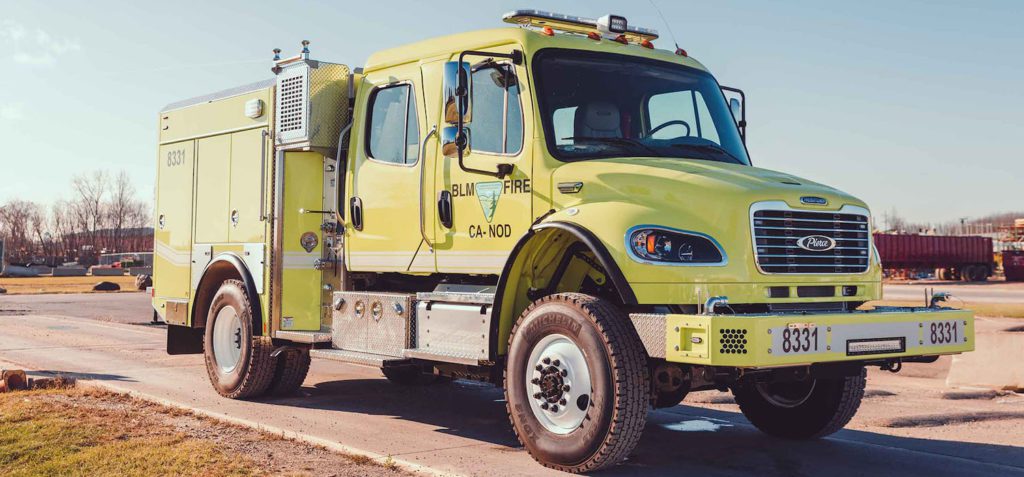
Pierce Manufacturing Inc, an Oshkosh Corporation company, announced it has added RollTek’s Side Roll Protection System as an option in Freightliner commercial chassis. The integration of the RollTek system in the Freightliner commercial chassis is exclusively available in Pierce fire apparatus. The safety feature was first incorporated into specifications for a recent order placed by the Department of the Interior, Bureau of Land Management consisting of 14 Type 3 Interface wildland fire trucks and 25 Type 3 and 4 wildland fire engines.“We have seen an increase in commercial products in various types of fire apparatus fleets, driven by cost, lead time, and chassis preference,” said Jim Johnson, president of Pierce Manufacturing. “Fire apparatus operators must navigate everything from demanding terrain to narrow rural roads, and rollovers are a significant threat, particularly in tanker products. Becoming the only provider of the RollTek system in Freightliner commercial chassis for fire apparatus is one more step in Pierce’s ongoing mission to help protect firefighters by continuing to enhance and improve fire truck safety systems.”Extreme environmental factors and weather conditions have contributed to the recent uptick in fire activity, increasing truck rollover incidents. According to the National Highway Traffic Safety Administration (NHTSA) and the United States Fire Administration (USFA), fire truck accidents are the second leading cause of death for firefighters on the job, and rollovers account for more than 66% of fire truck accidents each year. RollTek side roll protection systems help protect fire truck occupants by allowing for side roll air curtains to be fully integrated into the seating system rather than deploying from the wall in a crash or rollover event.Elden Alexander is the national fire equipment program manager with the Department of the Interior, Bureau of Land Management. He and his team have seen what was previously a summer “fire season” turn into a “fire year” with active fires in all regions of the United States. These circumstances have increased the need for highly mobile firefighting forces throughout the country. As a Federal centralized fire equipment program, the advancement in RollTek safety technology will benefit not only the Department of Interior fire programs but well beyond.“While firefighter safety is at the forefront of everything we do, it is inherently a dangerous job,” said Alexander. “On a single fire dispatch, we can respond 100 miles on the highway, traverse steep mountain roads, and then transition to using equipment off-road while suppressing fire. The addition of the RollTek side roll protection system is a remarkable advancement in firefighter safety and assures us that we are helping to ensure every firefighter returns home safely.”Pierce’s decision to offer the RollTek side roll protection system as an option exclusively offered in its Freightliner commercial chassis was initiated by the Department of the Interior, Bureau of Land Management, when purchase coordinators incorporated the feature into the specifications for recent orders. Pierce worked with IMMI and the Center for Advanced Product Evaluation to develop a program to test and certify the RollTek system and the cab structural integrity of the Freightliner cab. This application was the first in the commercial market for multiple cab configurations.“Vehicle safety technology has advanced to a point where it became possible to push side roll protection features from light trucks and custom cab fire vehicles into the commercial-chassis market, which has resulted in the development of a reliable, comfortable, and affordable solution for the whole vehicle,” said RJ Johnson the national fire engine production manager with the Department of the Interior, Bureau of Land Management. “It was not as simple as bolting a new seat into the cab, there were significant design alterations and testing conducted. It was evident early in the process that all involved understood the significance of what we wanted to do, and we were going to make this happen.”To learn more about Pierce Manufacturing and the RollTek side roll protection system, visit www.piercemfg.com. More Fire Buyer coverage: Browse more News Desk updates from Fire Buyer.
Pierce Manufacturing adds RollTek System Read More »

Improving safety through standards Jim Pauley, President and CEO for the National Fire Protection Association (NFPA) discusses the changing world of standards and regulations A couple of years ago, I was reading the New York Times when I stumbled upon an op ed entitled, The Joy of Standards – Life is a Lot Easier When You Can Plug into Any Socket. The piece espoused the benefits of private, non-governmental organisations facilitating the development of standards that impact everything around us. It pointed to the role that standards play in electrical plugs fitting into any socket, smartphone connectivity to Bluetooth, and the dimensions of a concrete block. It highlighted how a standard laptop incorporates more than 250 standards. As the leader of a standards development organisation (SDO), I don’t have to tell you how thrilled I was to read an article like that in The Times. I am extremely proud of the work we do as an SDO and of the entire standards system. The NFPA standards development process is one of the most long standing and successful public-private partnerships on record – it dates back to 1896. NFPA facilitates the development of more than 325 health and safety standards that provide benchmarks for building and life safety, electrical systems, fire protection, emergency response, industry, worker safety, inspection testing and maintenance (ITM), code enforcement, and job performance, to name a few broad areas of focus. Designers, engineers, trade workers, manufacturers, insurance providers, consumers, regulatory agencies, enforcers, consultants, academics and emergency responders around the world rely on our guidance to do their jobs successfully. All NFPA codes and standards can be viewed online for free at www.nfpa.org/freeaccess. There are more than 9,300 total volunteer seats available for NFPA standards development committees; 223 of those seats are filled by international volunteers. However, the number of global stakeholders participating on technical committees is lower when you consider that many volunteers sit on multiple committees. Currently, there are 157 global contributors from 42 countries involved in the NFPA standards development process. While we are grateful for any level of participation from international subject matter experts, safety is further advanced around the world when there is broad representation. These numbers translate to less than 2% representation from countries outside of the United States. We all should strive to do better to incorporate more global insights into NFPA standards. Afterall, one of the key reasons that NFPA codes and standards are popular all over the world is because they are up-to-date and reflect different insights. Every interest area has a seat at the NFPA standards development table – and every voice matters. Bear in mind, involvement with NFPA standards is not strictly limited to committee work. Anyone, anywhere in the world can make inputs and comments on our standards transparently and electronically via our website. Government and users around the globe appreciate the current NFPA code development system. They recognise that the process has worked for 125 years and results in high quality standards. Internationally, NFPA works with national standard bodies to ensure that stakeholders in various countries have access to the most up to date versions of standards, in language, at a reasonable price. Using recent standards ensures the benefit of the latest research, technologies and learnings from tragedies. Can you imagine if there were no codes and standards? What is at stake? What if there were no standards for chemical processing or for safe electrical installation? How many injuries and deaths would there be? What about fire codes that dictate the number of exits in a building, or adequate fire detection and suppression? What about standards for personal protective equipment to reduce harmful exposure to our first responders? I’m sure you have examples in your mind right now from where you sit. In addition to facilitating the codes and standards developing process, NFPA continues to innovate around ways to deliver more information and to diversify the tools and resources that we offer. After more than a century as a building, fire, and life safety authority, we understand that today those who rely on our information to do their jobs, need more than just the codes and they need it in a variety of ways. So, we offer training, public education materials, and sought-after content. We work hard to raise awareness of safety practices, fire sprinklers, and wildfire preparedness. We generate world-renown research, tackle emerging issues head on, and help inform policy makers. We don’t just react to tragedy; we anticipate the needs brought on by new technologies and innovation that require safety practices. We ensure there is robust discussion amongst those who devote time to the standards process or that share our mission, and then we bring the guidance in our standards to life in ways that resonate with different audiences. We also recognised in recent years that we need to be mindful of trends surrounding the use of codes and standards. Interestingly enough, we’ve learned that a physical book or a static digital version of a book is not the best means to help solve problems on a real-time basis. Today, people are not inclined to read a code or standard cover to cover. Instead, they want information faster via phones, tablets, and laptops; and with an easy- to-use interface. They want context and insights to help understand problems and develop solutions in real time. To meet modern day demand, we introduced NFPA LiNK, our new digital content platform which allows NFPA to be more global and more connected to a broad range of professionals and practitioners. The first iteration of LiNK launched in September and by year end it will feature a complete collection of NFPA codes and standards. Moving into 2022, we will add existing translated content. When fully developed, LiNK will deliver intuitive, seamless, situation and code-based information on demand, as well as enhanced content to help stakeholders better understand safety benchmarks. As new editions of our codes and standards are released, LiNK subscriptions will be automatically updated. And as more in-language documents
Improving safety through standards Read More »
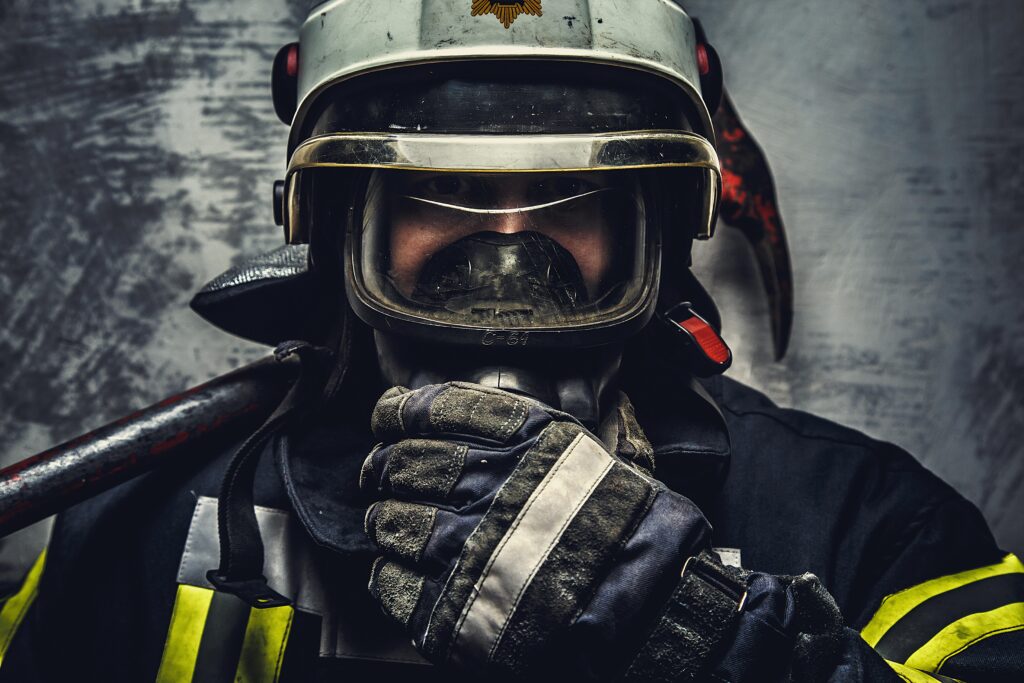
International Fire Buyer takes you through the different stages of firefighting equipment from traditional extinguishers…
From bucket to ARFF Read More »
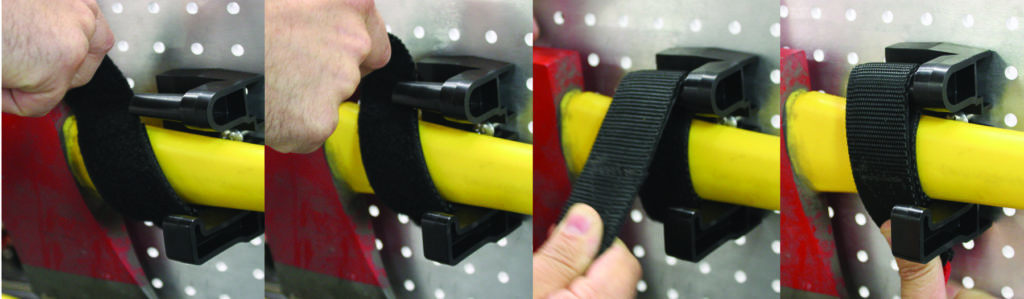
Keith Creely, Ziamatic Sales Manager, talks to Fire Buyer about the latest Ziamatic product innovations and the foundations…
Ziamatic: Reliability in firefighting, the only solution Read More »
Katherine Adrian, President, the Fire Suppression Systems Association (FSSA) discusses the marketplace, best practice…
Big interview – Katherine Adrian Read More »
Exclusive for Fire Buyer Dr. Ian Ross, Technical Director and Global PFAS Practice Lead at Tetra Tech discusses PFAS…
What PFAS are in your fire suppression system? Read More »

Siemens Smart Infrastructure has updated its Desigo CC smart building management platform to version V5.0…
Siemens enables the digital building transformation Read More »
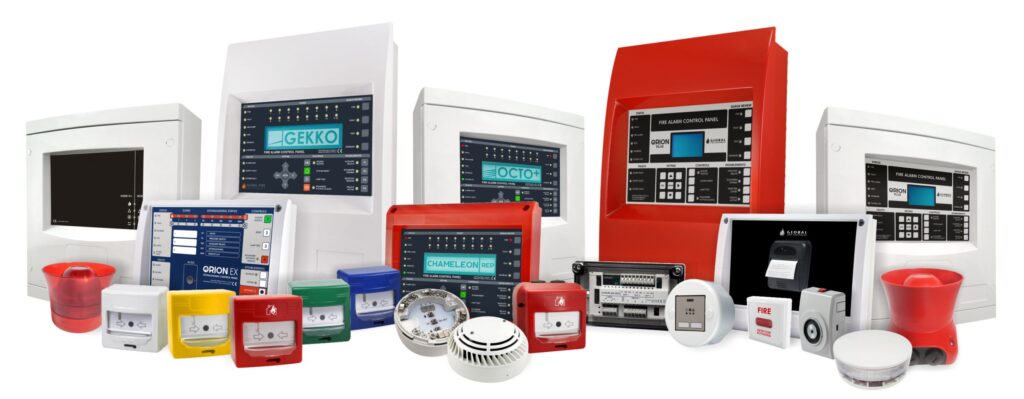
Global Fire Equipment (GFE), has been awarded EN 54-13:2017+A1:2019 system compatibility approval, demonstrating…
Global Fire Equipment (GFE) awarded EN 54-13 2017/2019 approval Read More »