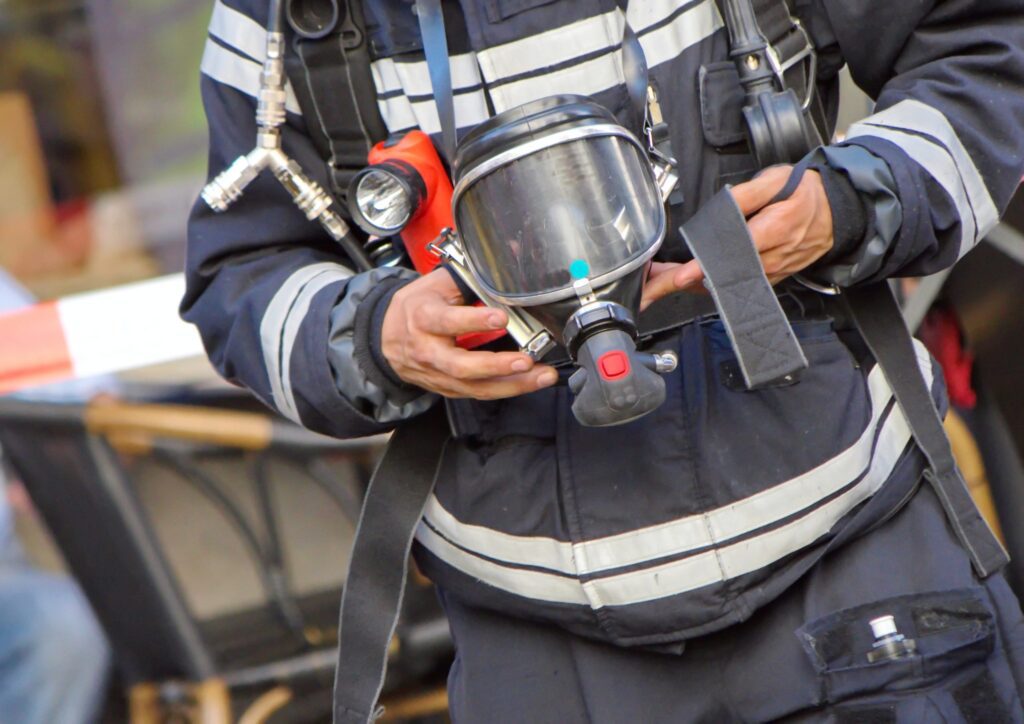
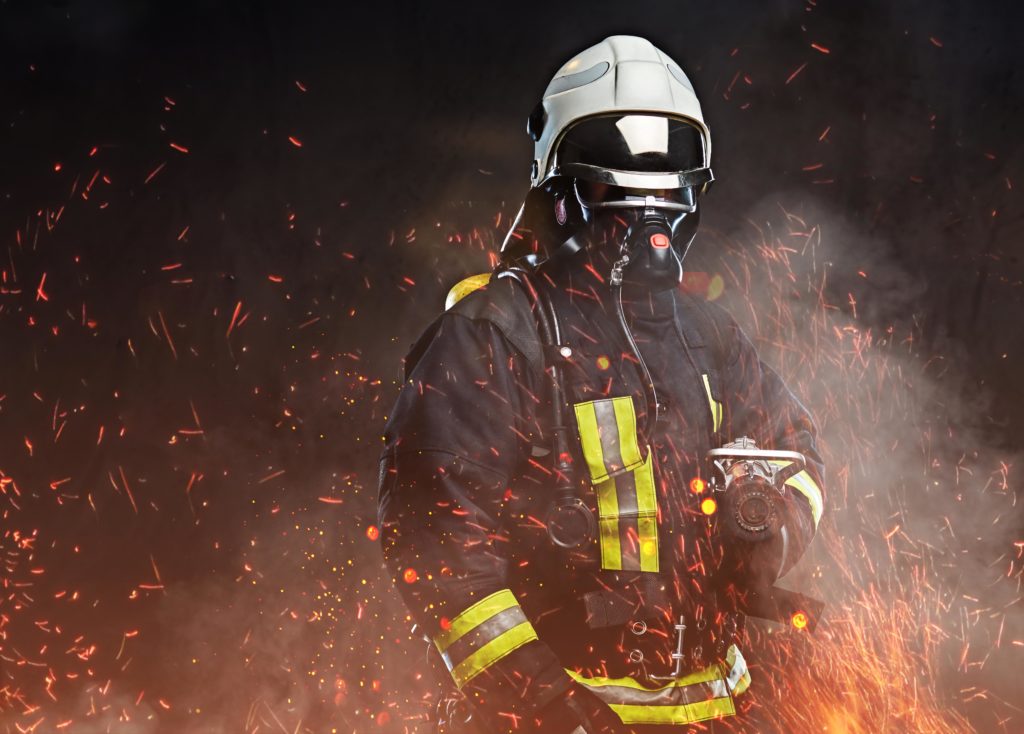
International Fire Buyer takes you through the history of firefighting uniforms and presents how technology and innovation has evolved to protect the modern firefighter Historically, firefighters did not have the same level of protective clothing used today. Because of this most fires were fought from the outside of burning buildings and structures were rarely entered. Early in the history of firefighting, a firefighter’s outer clothing was more for warmth and dryness than for protection from fire. In the early 19th century, felt caps were worn of various designs and were more for decoration than service; this early headgear did not provide any protection against flame or head injury but did keep water off the firefighter’s face. The forerunner of the modern firefighter’s helmet was developed in 1830 by a luggage maker Henry Gratacap who was a volunteer firefighter in New York City. He saw a need for a better designed helmet that was both functional and provided protection to the wearer. This helmet is immediately recognisable today as the “New Yorker” style and little has changed in its general shape. The helmet had a high peaked front to retain a helmet shield which was usually adorned with a company name and number and it also featured eight rib sections on the dome (for added rigidity) and a long rear brim that channeled water away from the wearer’s neck. The early use of long trench coats, made of leather or canvas and later made of rubber, was the forerunner of modern turnout jackets. Early coats had felt or wool liners to provide warmth in the winter. These liners later developed into the thermal protection liners found in today’s modern coats. Earlier rubber coats were much longer than today’s modern turnout jackets, reaching down to a firefighter’s mid thigh and were worn with long rubber boots called “three-quarter boots” which came above the firefighter’s knees. This interface of boot and coat left a large gap of protection against fire. This system has since been replaced by the modern combination of a jacket, pants with suspenders, and shorter rubber or leather boots, although some departments still wear the traditional old style of gear. The combination of modern triple-layer turnout gear with self-contained breathing apparatus (SCBA), personal alert safety system (PASS) device, and modern communications equipment made it more feasible and survivable to enter burning buildings. Modern turnout jackets and pants are made of fire resistant fabrics, mainly aramids such as Nomex and Kevlar or polybenzimidazole (PBI). The standard that the National Fire Protection Association has designated to firefighter protective clothing, NFPA 1971: Standard on Protective Ensembles for Structural Fire Fighting and Proximity Fire Fighting, which specifies “the minimum design, performance, safety, testing, and certification requirements for structural fire fighting protective ensembles and ensemble elements that include coats, trousers, coveralls, helmets, gloves, footwear and interface components The first component of firefighting equipment is the uniform that a firefighter will wear around the station. Its purpose is to provide comfortable clothing that they wear around the station, but will not become an obstruction when a firefighter is required to put on his/her turnout gear. Naturally, turnout gear is to be worn over the station garments during any call that a firefighter is called upon. Another aspect of the station uniform is the station safety shoes, commonly referred to as work boots. These shoes are required to be fitted with safety toes and puncture-resistant soles in most countries in case the firefighter goes out on a call that does not require his/her turnout gear. Wearable technology At the NFFF Firefighter Physiological Monitoring Technology Summit, Casey Grant, Executive Director of the Fire Protection Research Foundation, the research affiliate of the National Fire Protection Association (NFPA)—spoke on the future of wearable technology. Wearable technology is any type of technology that can be worn or built into present uniforms and/or protective clothing for the purpose of collecting data that can be transmitted and monitored that will provide useful information that will enhance firefighter safety. This technology could include physiological monitoring, sensing of gases, location of firefighters, personal alert safety system, etc. The emerging field of firefighter wearable technology, specifically three areas of interest has become a growing topic in the industry: The use of wearable electrocardiogram (ECG) technology to detect early signs of cardiac events following firefighting or training exercises; The use of algorithms to estimate core temperature to reduce the risk of heat-related injuries and fatalities; The use of low-cost, portable technology to monitor air contamination levels on the fireground and in structures post-fire. The ultimate goal will be to use this data to provide near-real-time information to the incident commander (IC), who can then make critical decisions about the safety of their members operating on the scene. Evolution of uniforms The United States follows NFPA 1975, Standard on Station/Work Uniforms for Firefighters. NFPA 1975’s main purpose is that no part of the uniform garment “ignite, melt, drip, or separate” when exposed to a heat of 500°F for 5 minutes By the 19th century there were so many different brigades in operation: insurance, volunteer, parish, institutional, estate, industrial, as well as combined police-fire brigades, it was almost impossible to have any standardisation in uniforms at all. Some wore tight woollen tunics over velvet-like breeches, with leather helmets. Others wore sombre grey trouser suits. Some of the London brigades even adopted naval fashions, wearing low top hats (beavers), white canvas trousers and short double-breasted tunics, similar to a naval midshipman’s jacket. The Metropolitan brigade were different again, adopting blue double-breasted tunics with stout waterproof trousers and Napoleon style leather boots, which were cut higher at the front for added knee protection. Brass helmets began to be more commonly worn, which had raised peaks and broad protective neckpieces for added protection. Higher ranking officers tended to wear silver coloured helmets, as well as gilt badges, gold braiding and shoulder epaulettes to denote their higher status. The clothing firefighters wear to attend incidents and tackle