Saving lives and assets with smoke control
Smoke control remains a fundamental component of fire detection and protection system solutions in buildings. Fire Buyer looks at how and why
Saving lives and assets with smoke control Read More »

Smoke control remains a fundamental component of fire detection and protection system solutions in buildings. Fire Buyer looks at how and why
Saving lives and assets with smoke control Read More »

Pete Davies, Business Development Manager for Fireco discusses exclusively for Fire Buyer the necessities of fire alarm systems. The Regulatory Reform Fire Safety Order and Building Regulations, which form the basis of fire safety law in England and Wales, requires general fire precautions and that occupants of a premises be given sufficient early warning in the event of a fire. With few exceptions, this comes in the form of automatic alarm and detection equipment, commonly known as a fire alarm. The legal requirement for this equipment forms the basic necessity, but the importance of having this type of apparatus extends even further. Fire alarms not only give us the ability to warn people of danger but also to operate automated systems which allow us to protect our buildings. For example, without automatic detection, we can’t use hold-open devices for fire doors. These are vital for ensuring that fire doors are not wedged open and are able to close safely in an emergency, preventing smoke and fire from travelling through the building and causing damage that could bankrupt some businesses. These devices rely on some form of equipment which can detect smoke or heat, which could indicate a fire, in order to operate. We also rely on automatic alarm and detection equipment to operate sprinkler systems, a requirement under Approved Document B of the building regulations in new residential blocks of more than 30m in height. Automatic opening vent systems, used in buildings with complex or long escape routes which force smoke and toxic fumes out of a building, are also imperative. If you’re unsure if your premises needs a fire alarm system, you should have a suitable fire risk assessment carried out and seek guidance from your local fire and rescue authority. I don’t think it’s an overstatement to suggest that it could literally be the difference between life and death, and could save your business from financial ruin, should the worst happen in your building. More Fire Buyer coverage: Browse more Exclusives updates from Fire Buyer.
Why are fire alarm systems necessary and important Read More »
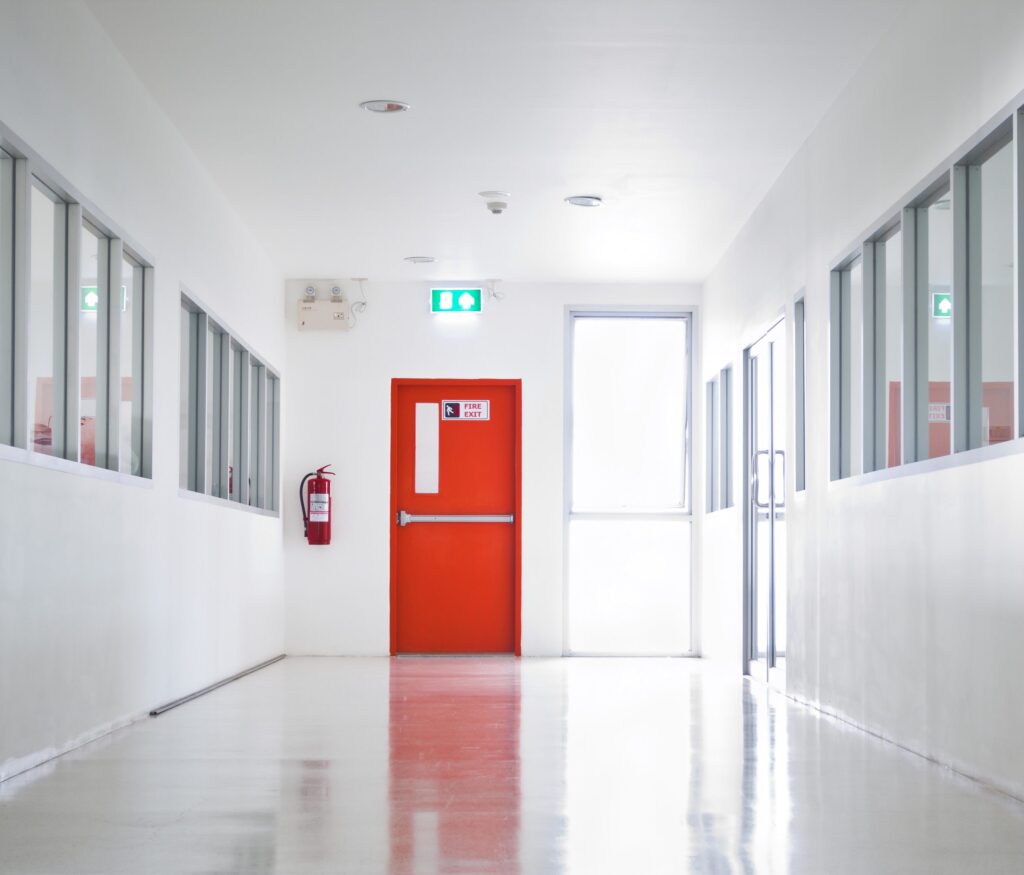
Fire doors are an integral part of fire safety in both residential and commercial buildings, but what regulations and standards do you have to adhere to? All buildings, both residential and commercial, must contain certain doors that are installed to protect their occupants and visitors from the risk of a fire outbreak. The main reason for a fire door is to help save lives and further damage to the property. It is essential that these doors are constructed to a certain standard, so they perform by slowing the progress of any fire outbreak within the building to the specified time limit (at a minimum). The most common fire door installed is an FD30 that provides fire protection for a minimum of 30 minutes, with commercial buildings more commonly having a FD60 (60 Minute door) installed. Where fire doors are required Stating the obvious, it is advisable to fit a fire door anywhere where there is a risk of a fire outbreak. Some areas carry a higher fire risk than others, kitchen areas, rooms that contain any electrical equipment or cupboards containing highly flammable materials for example. Doors allowing access to these rooms should be fire rated. There are legal requirements for all buildings, including domestic properties, and these regulations stipulate that any two-storey building that has a door leading into it from an integral garage, then it must be a fire door. Likewise, any new-build or renovation property with three or more storeys (including loft conversions), must have at least FD30 fire doors leading to and from every habitable room off the stairwell. For added safety, it is advisable to fit doors that provide greater protection, FD60 doors, provide additional safety and greater time for building egress in the event of a fire outbreak. Smoke seals are recommended where a fire door approaches or protects an escape shaft such as a staircase or corridor or where a fire door is between a private area and a common space. A good example is the front door of a flat. Smoke seals should also be used on doors in corridors leading to dead ends. Where a smoke seal is to be used, the threshold gap should not exceed 3 mm. It is important to remember that a fire door is an element of a whole system called a “doorset”. BS EN 12519 defines a doorset as “supplied complete with all essential parts from a single source and for which the main intended use is the access of pedestrians.” Following the tragedy of Grenfell Tower in June 2017, the DHF / Secured by Design / Fire Industry Association published A Guide for Selecting Flat Entrance Doorsets. This makes the point that there is no conflict between fire and security with Building Regulations ADB (fire) and ADQ (security) carrying equal weight with neither taking precedence over the other. It explains why only factory produced doorsets can meet both ADB and ADQ. Fire door construction Different standard fire doors provide different levels of protection. FD30 fire doors must be a minimum of 44 mm thick as opposed to a standard, non-fire door of 35/40 mm. The FD60 doors are constructed as a minimum of 54mm thick. Fire doors have a solid core construction made from different materials such as flaxboard, particleboard and solid timber and their assembly can vary greatly. Many will have timber framing around the chosen core with a veneer finish, whilst others may be composed of a 5 to 20mm lipping around the core with a veneer on top. The actual construction materials could differ providing the desired and required fire protection rating is achieved. How fire doors work The door itself must be fitted with suitable intumescent strips, these strips play a vital role in providing the fire safety and achieving the legal fire door rating. These intumescent strips expand when subjected to heat, sealing any gap between the fire door edge and frame. The seals can be fitted within the door frame itself or grooved into the door edge. The materials used for the door frame must comply with the required standards, together with the ironmongery, which will have their own individual integrity test evidence. Performance All fire doors must be able to provide test evidence for proof of performance for the ratings they proclaim and display. They must be tested by an approved third-party body to either BS 476 Part 22 or to the European equivalent (BS EN1634-1) to resist fire for a minimum period of thirty minutes. Compliance to the FSO/ RRO: Building owners need to comply with Regulatory Reform (Fire Safety) Order 2005 or the FSO. Article 17 of FSO mentions the need for a suitable maintenance regime and ensuring the efficient state of relevant equipment including fire doors and all types of escape doors. Article 18 requires the responsible person to appoint competent people to fulfil preventive/ protective measures. The FSO is closely related to Building Regulations, which include fire safety, ease of access, glazing safety, acoustics etc. Scotland has similar regulations mentioned in Fire Act 2005 while Northern Ireland has similar rules stated in Fire & Rescue Service Order 2006 and the latest Fire Safety Regulations 2010. Fire certificates issued by the local fire brigade have no legal status anymore for any building since the FSO anoints the responsible person in charge of fire safety, the doors and its maintenance. The responsible person needs to carry out fire risk assessment and ensure the residents safety too. The key changes in the FSO have been: Building owners, landlords, managers and the like can shoulder legal responsibility for fire safety. A ‘responsible person’ should be appointed for each building and ensure that every year, a fire risk assessment is carried out with proper documentation. The assessment should demonstrate that all aspects of fire safety management are met, along with respective fire measures; signage; escape door condition and easy evacuation procedures The responsible person can engage someone with expertise to implement on key areas as required. Specifications
Regulation and standard compliance Read More »

What to expect from this years FeuerTrutz event, which will be held in person and in digital, fire buyer explores
FeuerTrutz: On site and digital Read More »
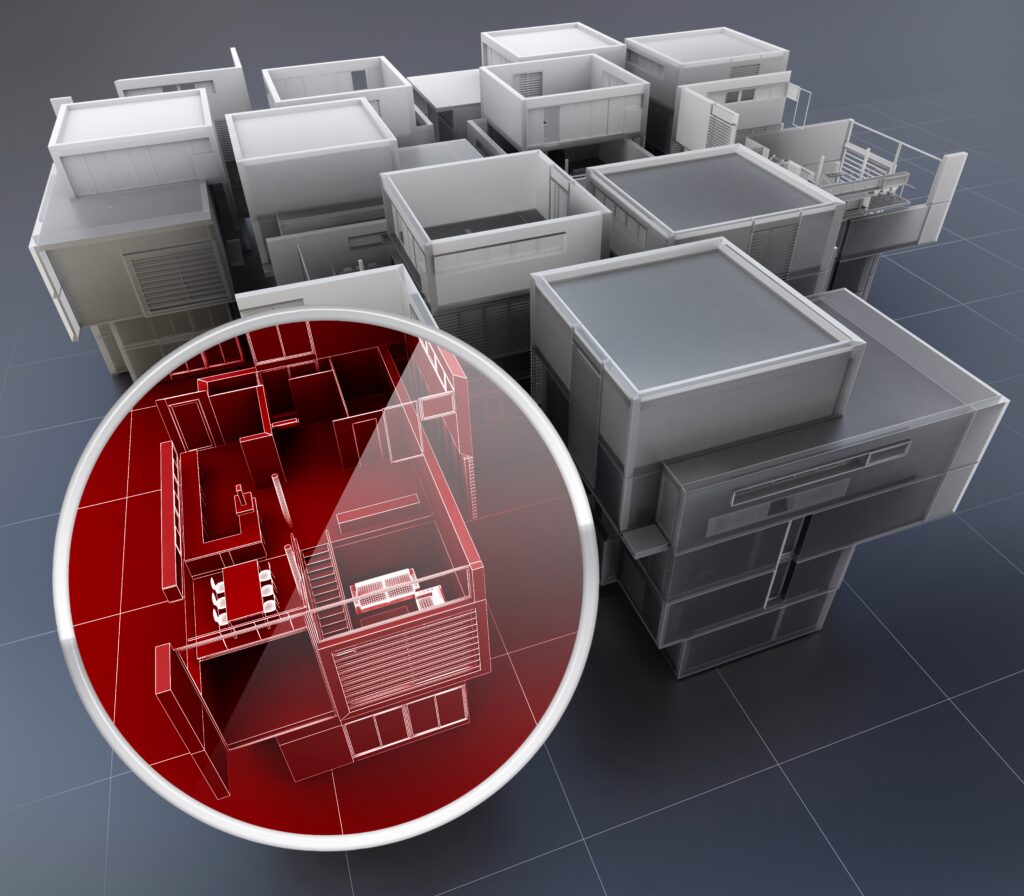
The fire safety industry has evolved to incorporate IoT and smart fire detection systems, which provide added benefits to organisations
The future is smart Read More »
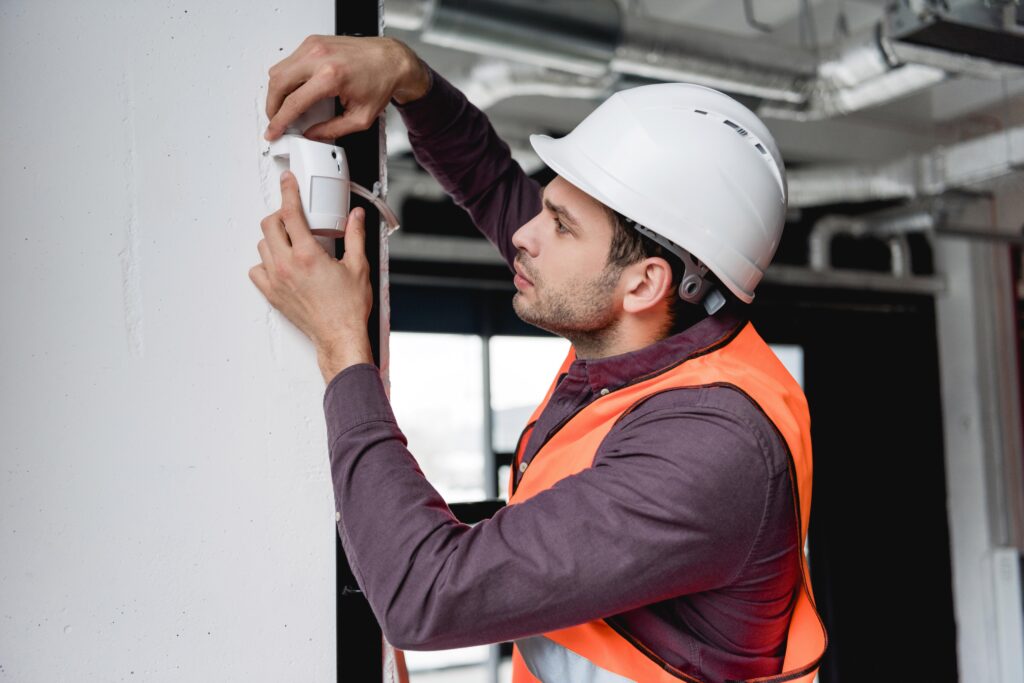
Fire alarms are the first early warning signals of a fire. Fire Buyer takes you through how to choose the best standardised system
The front line of fire safety Read More »

Our latest Quick Fire Questions personality interview was with Kevin Swann, Managing director of Kentec electronics
Quick Fire: Kevin Swann, Managing Director of Kentec Electronics Read More »
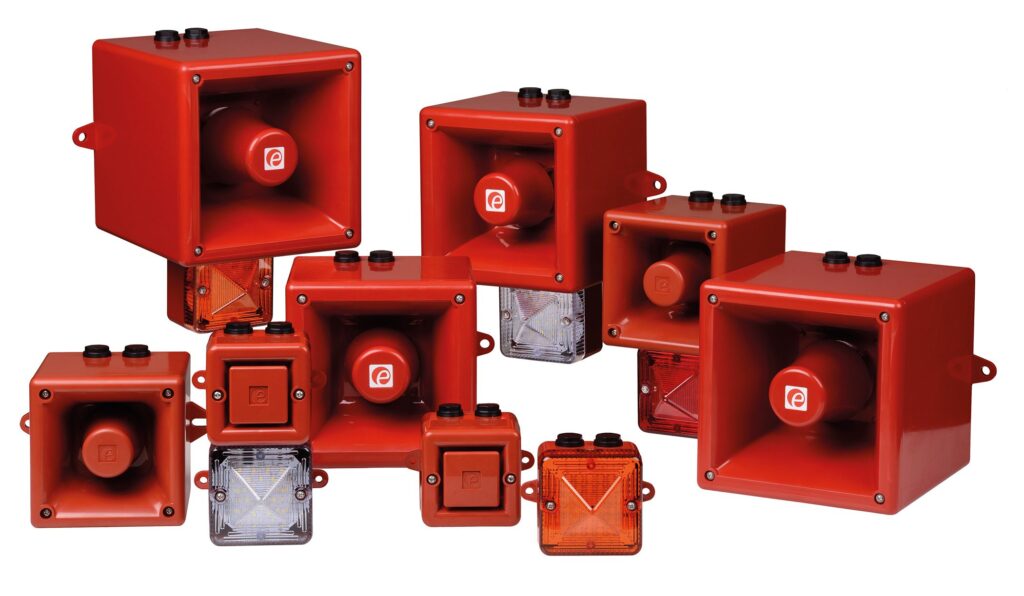
E2S Warning Signals is pleased to announce that the latest iteration of the AlertAlarm, the AlertAlight and the Sonora families are available from 01 June 2021. The alarm horn sounders, beacons and combined units have become synonymous with providing reliable and effective alarm notification in the harshest of environments since the original A100, A105, A110 and A120 product range was launched nearly 30 years ago. E2S have continued to innovate, providing improvements in features, performance and approvals. Upgrades have been introduced to both the enclosures and electronics to create the universal solution for industrial, marine and ordinary location applications. The AlertAlarm and AlertAlight products now contain the standard E2S set of 64 international alarm tones and 4 remotely activated stages/channels. First and second stage tones can be set individually, permitting greater flexibility in tone choice. Voltage supply ranges have been extended to assist with product selection whilst current in-rush has been minimised. Pluggable, duplicated terminals facilitate Class A wiring and reduce installation time. The A100 sounders and the AL100 combined units now produce up to 110dBA, whilst the industry standard A105N/AL105N now utilises a new enclosure design with threaded cable entries to simplify installation. A112N/AL112N and A121/AL121 type products now contain the latest in Class D amplification and feature additional methods of stage control along with up to 124dB(A) sound level output. A choice of two power modes is available during installation, enabling the optimum level of current consumption and sound output to be selected for the application. The L101H has been upgraded to include a new electronic sub-assembly using an array of 18 super bright Cree LED’s and offering a choice of steady mode and seven flashing modes, including a new highly effective temporal pattern. The L101H LED upgrade includes UL and ULC private mode fire approval and is available as a combination signal with any of the AlertAlarm or Sonora type alarm horn sounders. Globally approved to UL and EN standards for fire and general signalling, core products are also now DNV approved and MED compliant to the latest directive for marine applications across all voltages. Third party approvals are provided by default across the ranges to ensure compliance with the latest standards and directives wherever the application is located. To stay up to date on the latest, trends, innovations, people news and company updates within the global fire market please register to receive our newsletter here. Media contact Rebecca Morpeth Spayne, Editor, International Fire Buyer Tel: +44 (0) 1622 823 922 Email: [email protected]
E2S launches major upgrade to its AlertAlight Read More »
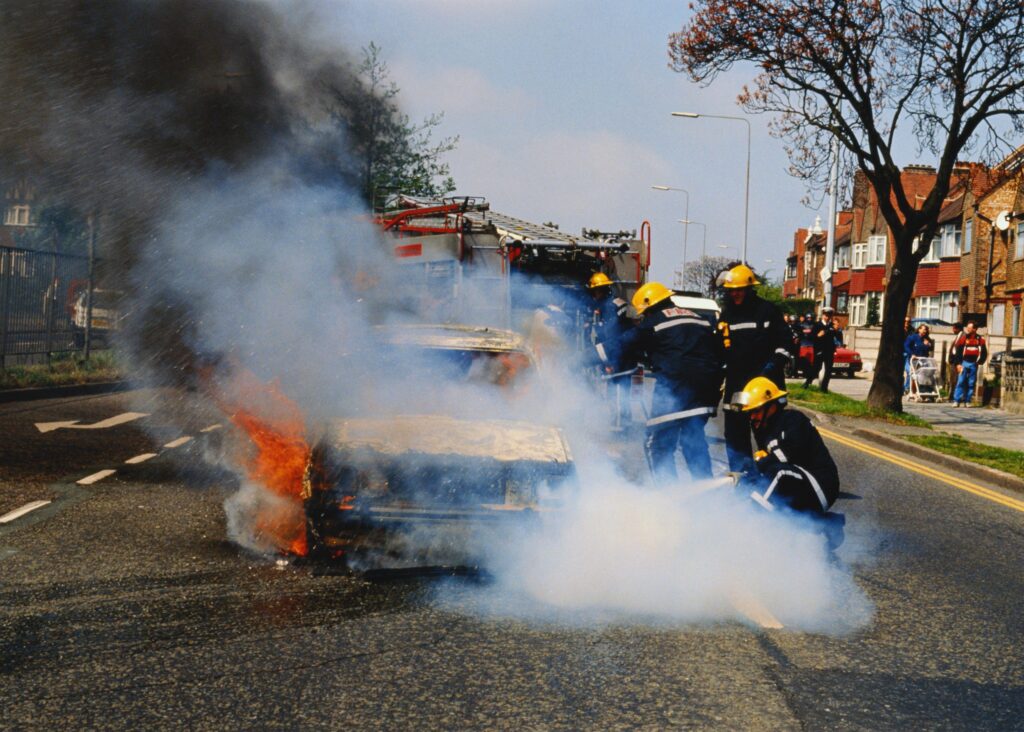
Surrey and West Sussex are the two latest Fire and Rescue Services planning to go live with Capita’s 999eye live video-streaming and location-finding service. Supporting 50 fire stations across both counties and covering an area of almost 1,400 square miles, 999eye enables emergency operators to have ‘eyes’ on the scene to help assess the severity of the incident and ensure the most appropriate response is quickly mobilised. When a 999 call is received, the caller will be asked if they would like to provide a live video stream of the scene using their smartphone. Using 999eye, the control room operator will send a text message with a secure, one-time-use link that opens a live stream direct from the smartphone to the control room. The software will then send the caller’s GPS to the emergency control room to pinpoint their exact location. In the case of some fire emergencies, due to distress or uncertainty, the location and circumstances can be unclear when communicated over the phone to an operator. 999eye reduces the potential for confusion by providing a real-time picture of the incident and its whereabouts. Multiple users can view the 999eye live streams, if required, including control room supervisors, senior officers and the responding crew attending the scene. As such, the software will also enable emergency operators to advise on public safety and warn people away from potential danger. Paul Eggleton, managing director of Capita Secure Solutions and Services, said: “It’s great news for the people of Surrey and West Sussex that their fire and rescue services will go live with our game-changing location-finding and video-streaming software. 999eye is an example of digital innovation working hand-in-hand with local fire and rescue personnel to facilitate the quickest and safest response possible in the event of an emergency.” To stay up to date on the latest, trends, innovations, people news and company updates within the global fire market please register to receive our newsletter here. Media contact Rebecca Morpeth Spayne, Editor, International Fire Buyer Tel: +44 (0) 1622 823 922 Email: [email protected]
Fire Services launch Capita’s emergency video software Read More »
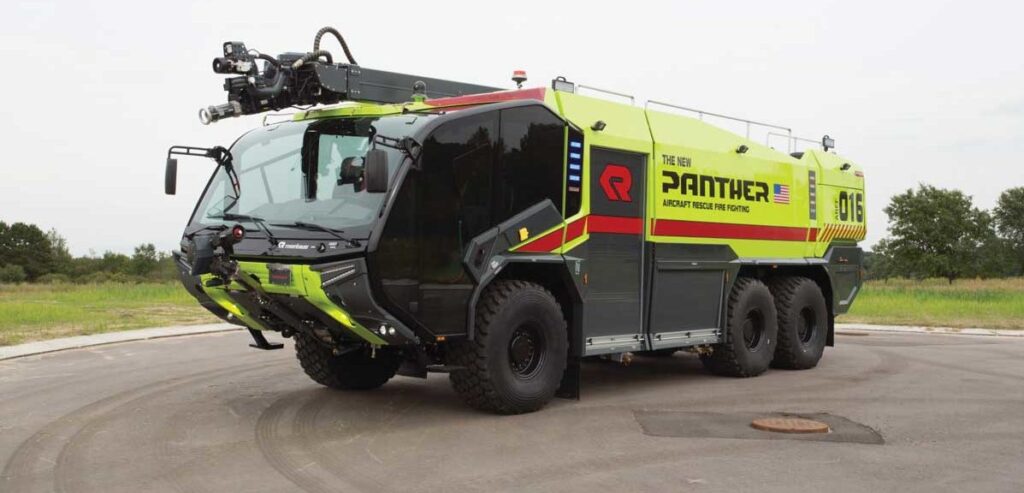
Rosenbauer America announced the Hartsfield-Jackson Atlanta International Airport has ordered three new Rosenbauer 6×6 Panthers. These new Panther vehicles will join the existing fleet of six Panthers that have been working the front lines for the past two years at one of the world’s busiest airports. “We are truly honored to be providing these specialized apparatus to protect the Atlanta International Airport,” said John Slawson, CEO and President of Rosenbauer America. “Receiving an order for three more Rosenbauer ARFF vehicles means we are meeting the needs of firefighters in both production and service.” The capabilities of the Rosenbauer Panthers are second to none. These state-of-the-art firefighting vehicles pack a punch with 700 hp, reaching speeds of 70 mph combined with the ability to throw 2,100 gpm of foam more than 300 feet. These Panthers are also loaded with new safety enhancements, combined with a multitude of agents and capabilities to attack any fire. Cameras and lighting surround these vehicles, so the operator has full visibility day and night. Thermal imaging cameras identify victims and expose hidden fires for the Panthers with Stinger piercing tips to make the best strategic interior attack, all from inside the cabs. The entire fleet is remotely monitored 24 hours a day to ensure the trucks are always operating at peak performance. “Having a front-line of nine Rosenbauer Panthers will be a game changer for the men and women of Atlanta Fire Rescue,” said Slawson. “This will allow for more intensive training and the use of muscle memory when seconds matter.” The three newest Panthers will be delivered in the spring of 2022. To stay up to date on the latest, trends, innovations, people news and company updates within the global fire market please register to receive our newsletter here. Media contact Rebecca Morpeth Spayne, Editor, International Fire Buyer Tel: +44 (0) 1622 823 922 Email: [email protected]
Airport adds three new Rosenbauer Panthers Read More »