
Mastering vision in firefighting with lighting expert Nightstick. In this article Nightstick tackle the necessity and science behind vision in low-light conditions
It’s no mystery light and vision are closely linked. Our eyes have adapted over time to see in various lighting conditions. Low-light environments, such as those encountered in firefighting and emergency response, present unique challenges. Understanding how our eyes work in these conditions is crucial for staying safe and effective.
The design of advanced lighting systems is guided by fundamental light behaviours. It’s important to see how these systems enhance the human eye’s capabilities. This article dives into how our eyes function in low-light conditions and the role of modern LED lights in fire safety. By explaining the interaction between our eyes and light, we explore the reasons behind the development and effectiveness of tools like Nightstick’s exclusive Dual-Light. At the intersection of biology and technology, we see how optimised LED lighting enhances visual clarity and safety in firefighting operations.
Human Vision in Low-Light Conditions
In low-light environments, our eyes work hard to use the available light. This feat relies heavily on the complex design of our visual system. Rods, special light-sensitive cells around the edge of our retinas, help us see in low-light. Unlike cones, which help us recognise colors under bright conditions, rods are highly sensitive to dim light. When light strikes these rods, a pigment called rhodopsin changes, starting a series of reactions that send signals to our brain. Rhodopsin allows us to see at night, but only in shades of gray.
Vision in Dark and Smoky Environments
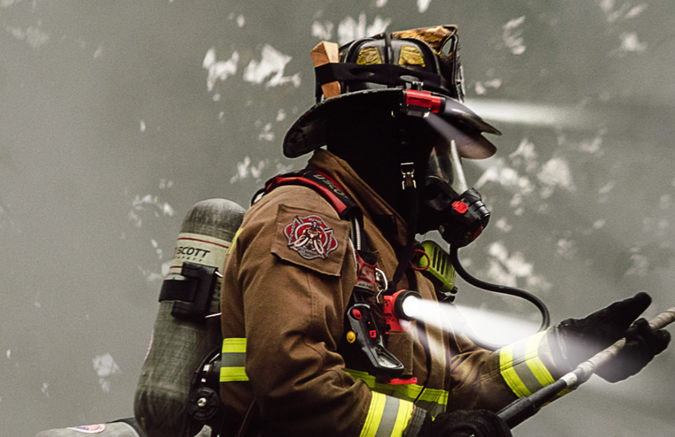
Our ability to notice movement and see more widely in low-light scenarios comes from relying on peripheral vision. This is crucial for firefighters and emergency response teams, helping them spot potential hazards or sudden movements when focused on a task. Another key ability is contrast sensitivity, which helps distinguish objects from their background, like seeing a team member in a smoke-filled room or identifying a fallen item.
The Dark Adaptation Process
Moving from a well-lit environment to darkness involves dark adaptation. As we adjust to dimmer surroundings, the amount of restored rhodopsin in the rods increases, enhancing our sensitivity to low light. However, this transition isn’t immediate. Firefighters might initially struggle with visibility when moving from a bright exterior to a dimly lit building, but their vision improves over a few minutes.
Science of LED Lighting
Light behaves in different ways:
- Reflection: Think of how light bounces off a mirror. That’s reflection.
- Refraction: When light passes through water and seems to bend, that’s refraction. It’s why a straw looks bent in a glass of water.
- Dispersion: Sometimes, light splits into different colors, like the way we see a rainbow after rain. That’s dispersion at work.
Understanding these behaviours is crucial for designing effective LED lights. Our eyes are especially good at picking up the color green in low-light conditions. That’s why Nightstick uses a green “Follow Me” feature on the rear of LED lights. In smoky conditions, this green light stands out, helping firefighters spot their team easier and faster.
Precision and Spread in Light Management
Lighting tools can mean the difference between safety and hazard. Spotlights and floodlights manage light differently:
- Spotlights: Project a focused, narrow beam of light. They minimise the spread of light rays, ensuring the light is intense and can cover long distances effectively. Spotlights are irreplaceable in scenarios requiring pinpoint accuracy and reach.
- Floodlights: Cast a broad light over a large area. They scatter light in multiple directions, covering a wide area but not as intensely as a spotlight. Floodlights excel in situations where an overall view is more critical than distance or intensity.
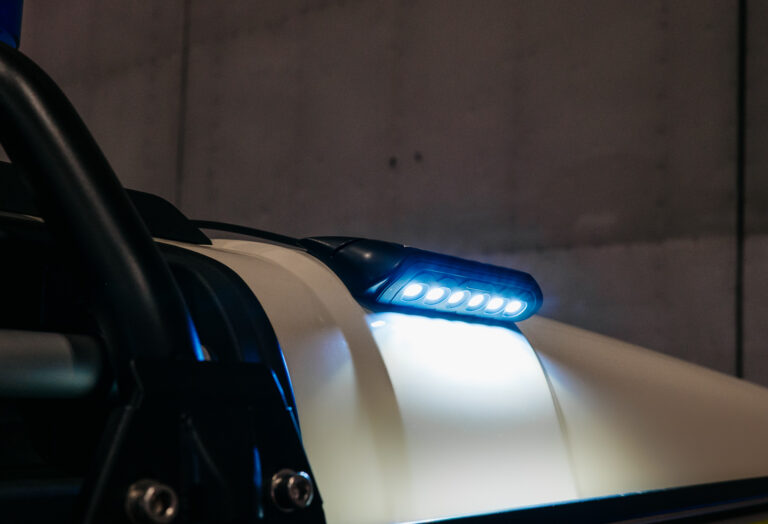
The angles and intensities in LED lighting are grounded in optical physics. For instance, Nightstick’s Dual-Light INTRANT® Angle Light and Dual-Light INTRANT® DUO Angle Light places floodlights at a 45-degree angle to minimise glare and illuminate the ground, highlighting potential obstacles….
To read the full article, see our last issue here.
Never miss a story… Follow us on:
International Fire Buyer
@Firebuyer
Fire Buyer
Media Contact
Rebecca Spayne Managing Editor, International Fire Buyer
Tel: +44 (0) 1622 823 920
Email: [email protected]