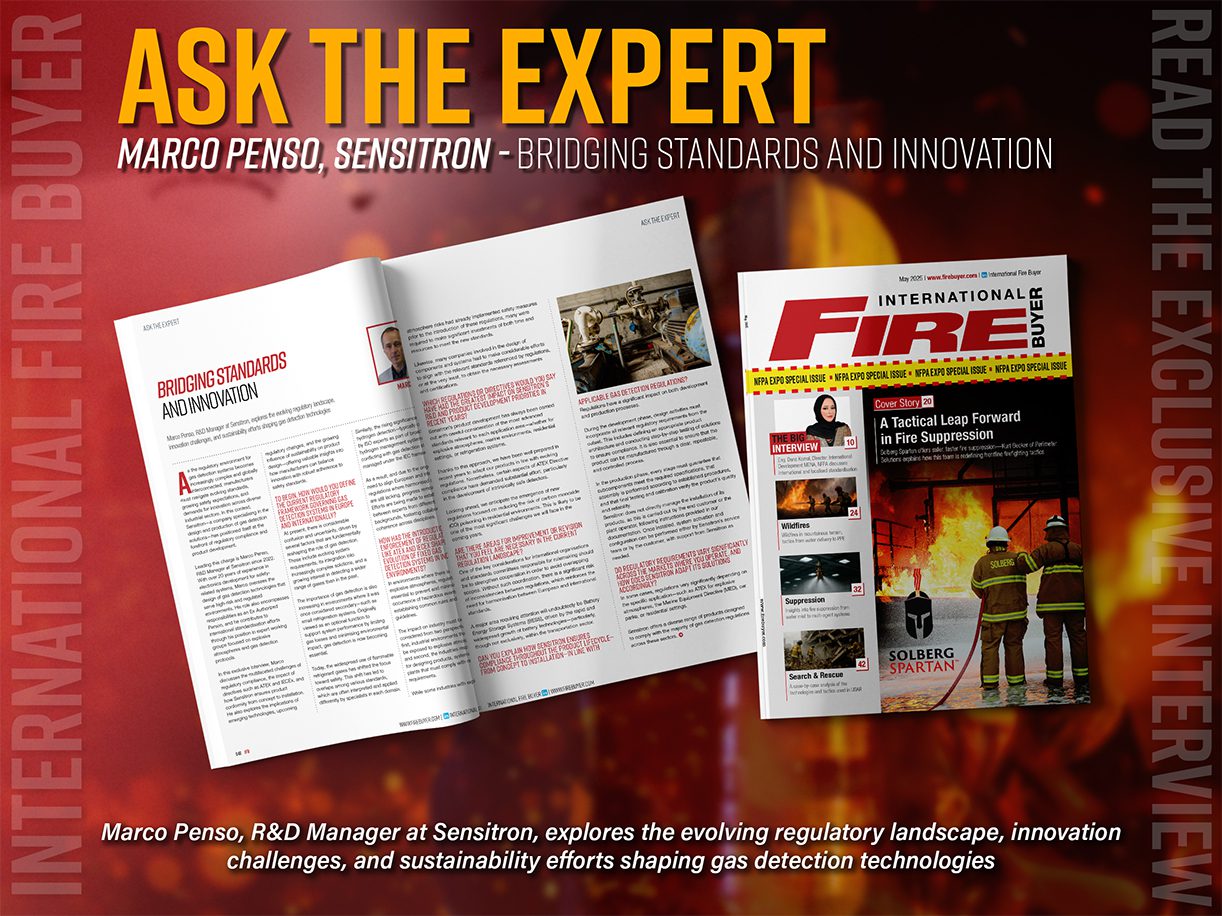

Marco Penso, R&D Manager at Sensitron, explores the evolving regulatory landscape, innovation challenges, and sustainability efforts shaping gas detection technologies.
As the regulatory environment for gas detection systems becomes increasingly complex and globally interconnected, manufacturers must navigate evolving standards, growing safety expectations, and demands for innovation across diverse industrial sectors. In this context, Sensitron—a company specialising in the design and production of gas detection solutions—has positioned itself at the forefront of regulatory compliance and product development.
Leading this charge is Marco Penso, R&D Manager at Sensitron since 2022. With over 20 years of experience in electronics development for safety-related systems, Penso oversees the design of gas detection technologies that serve high-risk and regulated environments. His role also encompasses responsibilities as an Ex Authorized Person, and he contributes to international standardisation efforts through his position in expert working groups focused on explosive atmospheres and gas detection protocols.
In this exclusive interview, Penso discusses the multifaceted challenges of regulatory compliance, the impact of directives such as ATEX and IECEx, and how Sensitron ensures product conformity from concept to installation. He also explores the implications of emerging technologies, upcoming regulatory changes, and the growing influence of sustainability on product design—offering valuable insights into how manufacturers can balance innovation with robust adherence to safety standards. #
To begin, how would you define the current regulatory framework governing gas detection systems in Europe and internationally?
At present, there is considerable confusion and uncertainty, driven by several factors that are fundamentally reshaping the role of gas detection. These include evolving system requirements, its integration into increasingly complex solutions, and a growing interest in detecting a wider range of gases than in the past.
The importance of gas detection is also increasing in environments where it was once considered secondary—such as small refrigeration systems. Originally viewed as an optional function to support system performance by limiting gas losses and minimising environmental impact, gas detection is now becoming essential.
Today, the widespread use of flammable refrigerant gases has shifted the focus toward safety. This shift has led to overlaps among various standards, which are often interpreted and applied differently by specialists in each domain.
Similarly, the rising significance of hydrogen detection—typically overseen by ISO experts as part of broader hydrogen management systems—risks conflicting with gas detection standards managed under the IEC framework.
As a result, and due to the ongoing need to align European and international regulations where harmonised standards are still lacking, progress remains slow. Efforts are being made to establish links between experts from different technical backgrounds, fostering collaboration and coherence across disciplines.