
Victor Stagnaro. firebuyer.com

Remembering Those Who Answered the Call

Victor Stagnaro, Chief Executive Officer of the National Fallen Firefighters Foundation (NFFF), shares his personal reflections on the September 11 attacks. It has been 25 years since the tragic events of the September 11 attacks. The events of that day have left their mark on history and serve as a poignant reminder of the sacrifices made by firefighters and the emergency services every day. One of the organisations that will be leading this year’s memorial efforts is the NFFF. Created by Congress in 1992, the NFFF serves to honour America’s fallen firefighters. For every firefighter who dies in the line of duty, their family receives a flag that has been flown over the United States Capitol and the National Fallen Firefighters Memorial in Emmitsburg, Maryland. The NFFF holds a memorial every May and this year, they paid tribute to 204 fallen firefighters. It also supports the families of the fallen by providing scholarships and retreats for both spouses and children. Its networks for Chiefs and Incident Commanders provide a valuable lifeline for the departments who are left behind after a cherished co-worker passes away in the line of duty. Additionally, the NFFF’s death prevention programmes highlight the ways firefighters can look after their mental and physical health. Victor Stagnaro is the Chief Executive Officer of NFFF. Here, he talks to International Fire Buyer about the legacy left by the September 11 attacks and the efforts his organisation is making to mark this important anniversary. Please introduce yourself and your background. I have over 40 years of fire service experience. I started off as a volunteer in Silver Spring, Maryland, which is a suburb of Washington, D.C. I was then hired by Prince George’s County Fire and EMS Department in 1985. I ran up through the ranks, leaving as the Deputy Chief of Operations. Between being hired and my retirement, I was a Company Officer, Fire Service Instructor, Public Information Officer, and a Fire Marshal. I decided to volunteer in 1997 and that is where I really got connected with the NFFF. I was hired in 2010 as the Director of Fire Programs, which focuses on reducing line of duty deaths and injuries. I then went on to become the Managing Director where I oversaw all the operations, and for the last two and a half years, I have been the Chief Executive Officer. You were working as a firefighter in Maryland at the time of the attacks. What could you say about your memories of that day and the aftermath? For any of us who were around when that happened, it is branded into our memories. On that day, we were preparing to swear in the new Chief. While we were driving to the ceremony, we learned about what was going on in at the Pentagon in Arlington, Virginia, and in Shanksville, Pennsylvania. So, the ceremony was cancelled. We were expecting more tragedies to occur, more attacks to happen. We were sending crews to the Pentagon because we were very close to that incident. The then Executive Director of the NFFF was a retired Chief from Prince George’s County. When 9/11 occurred, he pulled together a group of folks to support the FDNY. I was privileged to be one of those that went to 9/11 and was in New York serving with the Counselling Service Unit, setting up what we thought would be places where families could reunite or get information about their firefighters. Just walking around the pile, it was really seeing the best of humanity in the worst of times. It was very unifying and amazing. How is NFFF marking the 25th anniversary of the September 11 attacks? We have partnered with a group called OOPA’S World of Words. They are a group that works with children and we are helping them teach the history in an age-appropriate way for children who are in kindergarten all the way through third grade using specific words like “anniversary”, “memory”, and “emergency” to teach children about what happened on 9/11. Something that we have been doing since 2011 is hosting stair climbs. We have over 40 stair climbs scheduled to happen across the US and across our borders. Everybody who attends gets a badge with a picture of one of the 343 FDNY firefighters that were killed in the line of duty. They climb 110 floors which is how tall the World Trade Center Twin Towers were. We are very symbolically completing the climb that they could not finish. It is a very moving event and a way to commemorate and remember the courage of those firefighters. Why is it so important that younger generations and those to come understand the significance of the September 11 attacks? One of the values and traditions of the fire service is that we will never forget our fallen heroes. The stair climbs and what we are doing with OOPA’S World of Words helps us to keep that promise. It is important to educate not only the fire service, but the general public of what happened on that day. We are now at a point where we are teaching it as history and those of us who were here understand that unity, the connection and how we saw the best in the worst of times. So, it poses the question of how do we educate and prepare younger generations, and teach them that such unity is still possible without a tragedy? We have heroes walking among us, and they are heroes because they raised their right hand, took an oath, and they said they are going to take care of you when you need help. The level of dedication that firefighters show every single day and we need to live up to that. We need to educate the public and our firefighters that they can still do that today. What are the main ways the September 11 attacks have left a legacy on firefighters in the US and globally? I think the legacies that

Remembering Those Who Answered the Call Read More »

Eutelsat and OroraTech announce parternship. firebuyer.com

Eutelsat and OroraTech announce partnership

Eutelsat and OroraTech have announced a strategic partnership that will see thermal infrared payloads deployed across Eutelsat’s future Low Earth Orbit infrastructure, expanding satellite based monitoring capabilities for applications including wildfire detection. Under the agreement, OroraTech has reserved capacity for 48 payloads, with an option for a further 48. This creates the potential for up to 96 thermal sensors to be hosted on Eutelsat satellites. Thermal monitoring network to expand The partnership combines Eutelsat’s European satellite infrastructure with OroraTech’s thermal sensing technology, payloads and analytics platform. Increasing the number of thermal sensors in orbit is intended to improve revisit rates and reduce the time between observations, potentially allowing thermal events to be identified and monitored more frequently. For wildfire applications, greater observation frequency can support the detection and continued monitoring of developing fires and provide thermal information to organisations responsible for assessing incidents. Hosted payload model supports growth Rather than deploying a dedicated spacecraft for every sensor, OroraTech will use hosted payload capacity aboard Eutelsat satellites. The approach is intended to allow the company to expand its sensing network while distributing its thermal payloads across a broader satellite infrastructure. OroraTech said this would also increase the resilience of its constellation and place a significant part of its future expansion on European infrastructure. Data supports multiple applications The thermal payloads continuously collect data and are designed to support multiple applications and customers using the same underlying infrastructure. Alongside wildfire detection and monitoring, potential applications include critical infrastructure monitoring, maritime awareness, environmental intelligence and security. Expanding the number of sensors could therefore increase the amount and frequency of thermal information available across different geographical areas and operational requirements. European space cooperation The partnership was announced at the International Space Summit in Paris and brings together capabilities from France and Germany. Eutelsat and OroraTech said the agreement demonstrates how European satellite infrastructure and sensing technology can be combined to expand thermal intelligence capabilities through cross border industrial cooperation. Martin Langer, CEO of OroraTech, said: “This partnership is about moving from satellites to infrastructure. Eutelsat has built a unique European LEO infrastructure, while OroraTech has built the world’s leading operational thermal intelligence capability. “By combining both, we create a credible path toward persistent, low-latency thermal intelligence at global scale – built in Europe and available to European sovereign customers.” Jean-François Fallacher, Chief Executive Officer, Eutelsat, said: “The severe wildfires experienced in France, Germany, and elsewhere in Europe this summer highlight the growing threat facing communities and the environment. “We are pleased to work with OroraTech to embark its detection technology aboard our future satellites and contribute to efforts to identify fires earlier. “This partnership will also extend the use of our LEO satellites into an important new area, complementing the role our connectivity can play in supporting emergency teams on the ground.”

Eutelsat and OroraTech announce partnership Read More »

Hunter approved by PPE framework. firebuyer.com

Hunter approved by PPE framework

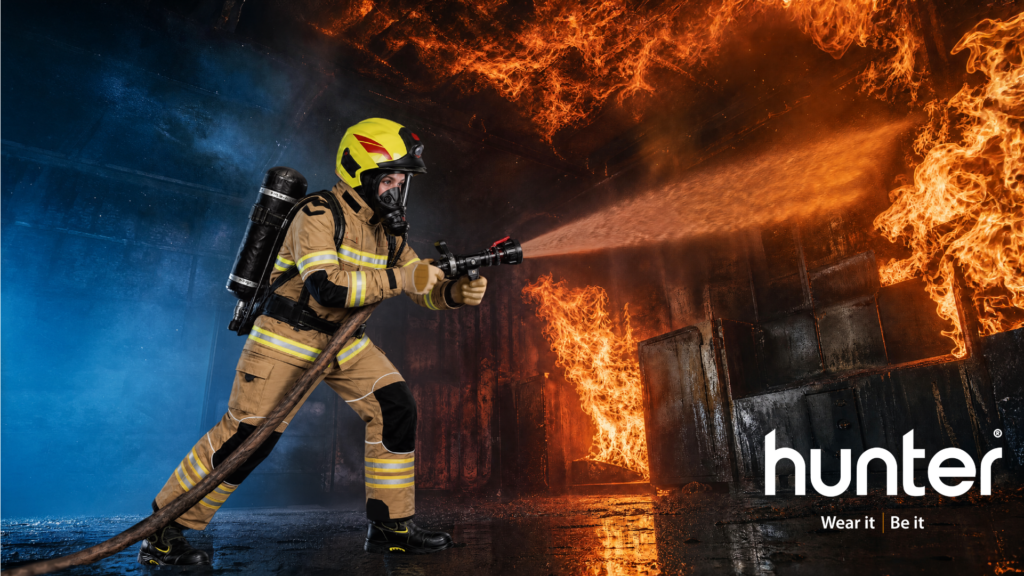
Hunter Apparel Solutions Limited has been appointed to six lots of the NFCC National Firefighter PPE Framework, covering firefighter personal protective equipment, managed provision, lifecycle care and specialist decontamination. The framework provides a national procurement arrangement through which UK fire and rescue services can access firefighter PPE and associated services. It is sponsored by the National Fire Chiefs Council, with Kent and Medway Fire and Rescue Authority acting as the contracting authority. Framework covers complete PPE ensemble Under Lot 1, Hunter can provide a complete firefighter PPE ensemble through fully or partially managed arrangements. Provision includes structural and lightweight PPE, helmets, gloves, boots and FireHunter X treme Gold hoods. The managed service covers the supply, tracking, inspection, repair and cleaning of equipment, with weekly collection and delivery available. Fire hoods, footwear and lightweight PPE can also be purchased separately through Lots 3, 6 and 7. Fire and rescue services that purchase their own PPE can access lifecycle care and specialist decontamination independently through Lots 8 and 9 without entering a managed PPE contract. Lifecycle management included Lot 8 covers cleaning, maintenance and repair through HunterCARE. The service includes inspection, cleaning, care and repair, with activity digitally recorded against individual garments through the HunterPAC system. According to Hunter, its processes for inspection, cleaning, repair and equipment reaching the end of its service life are aligned with BS ISO 23616:2024. Specialist decontamination available Lot 9 covers specialist decontamination through Hunter’s Deconology service. The process uses liquid carbon dioxide rather than water and operates without high temperatures or an additional drying stage. Hunter states that the process can achieve decontamination efficacy of up to 99%, including treatment of the waterproof membrane within protective garments. The Deconology service received a British Safety Industry Federation Safety Solution award in 2025. Framework offer heads to Birmingham Hunter and Texport will exhibit together at the Emergency Services Show at the NEC Birmingham on 16 and 17 September 2026. The companies will exhibit from stands G60 and G62 in Hall 5. Hunter plans to display the PPE ensemble available through the framework alongside information covering its managed provision, lifecycle care and specialist decontamination services. Simon Hunter Esq M.B.E., Chief Executive Officer, Hunter Apparel Solutions Limited, said: “Being named on six of the Lots reflects Hunter’s last nine decades of doing one thing properly, protecting the people who protect everyone else. What matters now is what we do with the opportunity. “Every fire and rescue service in the UK now has a direct, compliant route to the full lifecycle of firefighter protection through a single supplier, and we intend to earn that trusting relationship service by service.”

Hunter approved by PPE framework Read More »

Dräger appoints national resilience business development manager. firebuyer.com

Dräger appoints national resilience business development manager

Dräger has appointed Alex Dryden as Government and National Resilience Business Development Manager, with responsibility for supporting fire and rescue services, government organisations and other emergency responders. The appointment will focus on helping organisations assess how technology and operational capabilities can contribute to preparedness and national resilience. Emergency services experience Dryden brings experience from sales and business development roles covering industrial and firefighting vehicles, alongside military and emergency service technology. He has also served as a retained firefighter in Suffolk, providing additional operational experience relevant to his new position. Supporting Category 1 responders In his role at Dräger, Dryden will work with fire and rescue services, police, ambulance organisations and other Category 1 responders. His responsibilities will include helping organisations understand how Dräger technologies, technical expertise and wider capabilities can support operational readiness. The role will also involve connecting operational requirements with capabilities intended to help organisations prepare for, withstand and recover from major incidents. The appointment reflects the wider importance of coordination between technology providers and emergency services as organisations assess equipment, preparedness and operational requirements relating to national resilience. He said: “What attracted me to Dräger is the opportunity to be part of a business where supporting Category 1 responders is at the heart of what it does. “Dräger has a strong reputation for innovation, quality and customer relationships, and there is a real opportunity to work with customers as a trusted partner.” Matt Evans, Head of Government for UK and Ireland Safety Division, said: “Dräger supports national resilience through technology for life, across the full cycle of preparedness, response and recovery. “Resilience is built by combining the right equipment with training, emergency planning, asset management and ongoing support. “Alex’s ability to connect customer requirements with these wider capabilities will be a real asset as we work with partners across the sector to keep people and critical services ready when they are needed most.”

Dräger appoints national resilience business development manager Read More »

Fire Cadets join firefighters remembrance service. firebuyer.com

Fire Cadets join firefighters remembrance service

Around 30 young people from fire and rescue services across the UK have taken part in the Firefighters Memorial Trust Annual Service of Remembrance and Wreath Laying Ceremony in Staffordshire. Representing the UK Fire Cadets programme, the cadets joined fire and rescue service personnel, bereaved families and colleagues from across the sector on Monday, September 7 to remember firefighters who lost their lives in the course of their duties. Fire service community gathers The annual ceremony took place at the Royal British Legion National Remembrance Gardens and provided an opportunity for the fire and rescue service community to reflect on the courage, commitment and sacrifice of firefighters who died while serving their communities. Organised by the Firefighters Memorial Trust, the service began at midday in the Aspects Building at the Remembrance Gardens. Participants then proceeded to the Firefighters Memorial Garden for the wreath laying ceremony at the Firefighters Monument. Cadets continue remembrance tradition Participation in the annual Service of Remembrance is a longstanding tradition for UK Fire Cadets, with young people travelling from fire and rescue services across the country to attend each year. Around 30 cadets participated in this year’s service and wreath laying ceremony, representing the next generation of the UK fire and rescue service community. Their involvement also reflects the principles of respect, service and remembrance that form an important part of the Fire Cadet programme. The annual ceremony brings together different generations of the fire and rescue service community to remember those who have died in the course of their duties and recognise their service. Lauren Woodward, National Fire Chiefs Council’s (NFCC) Executive Fire Cadet Lead, said: “It is a tremendous honour for our Fire Cadets to take part in the Annual Service of Remembrance. “The event provides a powerful opportunity for young people to learn about the history and traditions of the fire and rescue service, while paying tribute to those who made the ultimate sacrifice in the line of duty. “This year’s service was especially meaningful as two of our Fire Cadets from South Yorkshire Fire and Rescue Service took part in the ceremony by reading the Firefighter’s Prayer. “It is a privilege for them to contribute in such a significant way and demonstrates the respect and maturity shown by Fire Cadets across the UK. It makes me incredibly proud of the young people involved in the programme.” NFCC was represented by Vice Chair Rick Hylton, who laid a wreath on behalf of the organisation. The UK Fire Cadets programme supports thousands of young people across the UK, helping them develop confidence, teamwork, leadership and life skills through activities within their local fire and rescue services. Alongside events such as the National Fire Cadet Games, the UKRO Fire Cadet Casualty Care Challenge and the Remembrance Sunday Cenotaph Parade, the Annual Service of Remembrance provides cadets with the opportunity to represent their communities at a national event and honour the service and sacrifice of others.

Fire Cadets join firefighters remembrance service Read More »

Chimney Fire Safety Week highlights prevention measures. firebuyer.com

Chimney Fire Safety Week highlights prevention measures

The Fire Industry Association is highlighting the steps homeowners can take to reduce the risk of chimney fires during Chimney Fire Safety Week. Effective prevention includes using appliances correctly, choosing suitable fuel, maintaining chimneys and flues and ensuring appropriate fire detection equipment is installed and working. For households burning wood, fuel should be properly seasoned and contain less than 20% moisture. Burning wet wood can produce additional smoke and water vapour, contributing to deposits inside the chimney and increasing the potential for problems. Chimney fires continue across England Although the number of chimney fires has fallen, fire and rescue services in England attended 1,655 incidents during 2025 to 2026, representing an 18% decrease compared with the previous year. Incidents peaked between January and March, demonstrating the increased importance of chimney maintenance during periods when fireplaces and stoves are used more frequently. With winter approaching, Chimney Fire Safety Week – 7 to 13 September – provides an opportunity for homeowners to arrange appropriate inspection and maintenance before regularly using their appliances. Understanding chimney fire risks One of the principal risks is the accumulation of combustible deposits, including soot and creosote, within the chimney or flue. Burning wet or unseasoned wood can accelerate this process. Moisture within the fuel creates additional water vapour and smoke during combustion. As these products cool within the chimney, deposits can accumulate on internal surfaces. Flues can also become obstructed by leaves, birds’ nests and other debris. Blockages can restrict the safe escape of smoke and combustion products and contribute to dangerous conditions. Regular inspection and sweeping can help identify and remove these accumulations and obstructions before they present a greater risk. Steps to reduce chimney fire risk Homeowners should have chimneys and flues regularly swept and inspected by a suitably competent professional, with the frequency determined by the appliance, fuel and level of use. Appliances and flues should be properly maintained and operated in accordance with manufacturers’ instructions. Only appropriate, good quality fuels should be burned, while wood should not be allowed to smoulder for extended periods because incomplete combustion can contribute to soot and creosote accumulation. Homes should also have suitable working smoke alarms and a carbon monoxide alarm, with devices tested regularly. Potential warning signs of a chimney fire include roaring or unusually loud crackling noises, sparks or flames emerging from the chimney, thick smoke, a strong burning smell or an unusually hot chimney breast or surrounding walls. If a chimney fire is suspected, occupants should leave the property, remain outside and call 999. They should not attempt to tackle the fire themselves. Prevention remains essential The decline in chimney fires is encouraging, but more than 1,600 incidents in England during 2025 to 2026 demonstrate that the risk remains. Regular sweeping, suitable fuel, appropriate appliance maintenance and working alarms can all contribute to reducing the likelihood and potential consequences of a chimney fire. As households prepare for increased use of fireplaces and stoves during the colder months, Chimney Fire Safety Week provides a timely opportunity to check that appropriate precautions are in place.

Chimney Fire Safety Week highlights prevention measures Read More »

Administer shortlisted for fire safety award. firebuyer.com

Administrator shortlisted for fire safety award

Hochiki Europe Account Development Representative Zoe Parsons has been shortlisted for Administrator of the Year at the Women in Fire Safety Awards 2026. Parsons was selected from more than 50 entries and is among 12 finalists in the category, with the winner due to be announced in London on 15 October 2026. Awards recognise industry contribution The Women in Fire Safety Awards recognise achievement and contributions made by women working across the fire safety industry. The Administrator of the Year category recognises individuals whose responsibilities extend beyond their core role to provide wider organisational and operational support. Cross functional responsibilities In her position as Account Development Representative at Hochiki Europe, Parsons provides support across several areas of the business. Her responsibilities include documentation management and operational coordination, alongside working closely with the Regional Sales Management team. Parsons also provides additional support to the company’s Supply Chain function during periods of increased demand or staff absence. Her nomination recognises the consistency of this support and her contribution to colleagues across the organisation. Winner announced in October Hochiki Europe also congratulated the other professionals selected for the Administrator of the Year shortlist. The winner will be announced alongside recipients in the other Women in Fire Safety Awards categories during a ceremony at the Mercure London Earl’s Court on 15 October 2026. Zoe said: “Being shortlisted for this award means a great deal, especially knowing the calibre of the other nominees. Most of what I do happens behind the scenes, so being shortlisted from over fifty entries feels like real recognition for the wider team as much as for me. “I’m proud to be part of such a strong group of women, and I want to congratulate everyone else on the shortlist too.” Ian Humby, UK Sales Manager at Hochiki Europe, added: “Zoe’s shortlisting is thoroughly deserved. She has a way of spotting where support is needed before anyone asks, and that has made a real difference to how smoothly our Regional Sales and Supply Chain teams operate. “We’re delighted to see her recognised alongside such a strong shortlist.”

Administrator shortlisted for fire safety award Read More »

Firefighters move into rebuilt station. firebuyer.com

Firefighters move into rebuilt station

Firefighters in Shreveport, Louisiana, have moved into a rebuilt fire station following longstanding concerns about mould, structural deterioration and the health of personnel assigned to the facility. Crews returned to Fire Station 20 on 11 August after the International Association of Fire Fighters (IAFF) and Local 514 raised concerns about conditions at the building with Fire Chief Clarence Reese Jr. and the city administration. Health concerns raised at station Station 20 is located at the Port of Caddo Bossier, approximately four miles south of Shreveport. Firefighters and emergency medical personnel based there respond to incidents at the port and across neighbourhoods in southeast Shreveport. Concerns about conditions at the station had been raised as far back as 2010, including reports of persistent mould, fungus and bacteria. According to the IAFF, at least 16 firefighters who worked at the station were diagnosed with cancer, including colorectal and brain cancers. Four subsequently died. Assessment identifies mould An environmental assessment identified several types of mould inside the station, alongside evidence of moisture intrusion and structural deterioration. The IAFF brought in specialists to review the assessment findings and advise Local 514 on the conditions. The city subsequently closed Station 20 in August 2023 while officials considered how the problems should be addressed. Crews were temporarily relocated during the closure but continued responding to emergencies within the station’s service area. Station rebuilt following closure The city and port carried out extensive work at Station 20, including gutting and rebuilding the facility, remediating mould and addressing deterioration within the building. The project also provided upgraded living quarters and a reinforced storm shelter for personnel. A new fire engine has also been assigned to the station following the completion of the work. The reopening provides firefighters and emergency medical personnel with an updated facility after years of concerns surrounding the condition of their working environment. Local 514 President, Barbara Sellers, said: “This has been a long, tough process, but it was worth it to have a safe working environment for our Local 514 members assigned to Station 20. “We appreciate the cooperation from the city and the port for the testing, clean up, and extensive renovations.” “Hearing about the conditions of Fire Station 20, the IAFF stepped in right way to give us the support we needed. They made every resource available from medical experts to the IAFF General Counsel. “All of us working together for the safety of Local 514 members was really what ultimately made this a success.” General President, Edward Kelly, said: “Rebuilding Station 20 is an important win for our Local 514 brothers and sisters but it came at a terrible cost. Firehouses should not make our members sick. “The IAFF will always put its full weight and resources behind ensuring members have safe workplaces.”

Firefighters move into rebuilt station Read More »

FIA launches new fire risk assessment qualifications. firebuyer.com

FIA launches new fire risk assessment qualifications

The Fire Industry Association (FIA) is introducing a new suite of FireQual-regulated qualifications designed to provide recognised competency pathways for fire risk assessment professionals. The qualifications will cover Foundation, Intermediate and Advanced levels, providing routes for both developing practitioners and experienced Fire Risk Assessors. Three qualification levels introduced The new qualification suite consists of the Level 3 Certificate in Foundation Fire Risk Assessment, Level 4 Certificate in Intermediate Fire Risk Assessment and Level 5 Certificate in Advanced Fire Risk Assessment. The qualifications are being introduced in stages. Professionals developing their careers will be able to progress through the different levels, while experienced practitioners can enter at a level appropriate to their existing knowledge, skills and competence, subject to entry requirements. Level 4 qualification available The first qualification to become available is the FireQual Level 4 Certificate in Intermediate Fire Risk Assessment. The nationally-recognised, Ofqual-regulated qualification has been developed with reference to BS 8674:2025, Framework for Competence of Individual Fire Risk Assessors. It is intended for experienced professionals already carrying out Fire Risk Assessments on buildings presenting a moderate level of fire risk. Candidates should have relevant practical experience, be actively undertaking assessments, have access to suitable workplace evidence and be capable of producing Fire Risk Assessment reports independently. Assessment focuses on existing competence The current Level 4 qualification is available through an assessment only route and does not include classroom or taught FIA training. Candidates instead complete structured online assessments to demonstrate their existing knowledge, practical experience and professional judgement. Assessment activities include scenario-based case studies, written activities, Fire Risk Assessment reports, workplace evidence and explanations of professional decisions. Each candidate is allocated an FIA assessor who reviews submissions, provides feedback and supports them throughout the assessment process. Practical fire safety knowledge assessed The qualification assesses candidates across areas including fire hazards, legislation, standards and guidance. It also covers means of escape, fire detection and alarm systems, emergency lighting, structural fire protection, compartmentation, fire safety management and external wall construction. Candidates must also demonstrate when specialist advice is required and their ability to produce suitable and sufficient Fire Risk Assessment reports containing proportionate recommendations. The FIA said the qualification assesses the practical application of knowledge, skills, experience and professional judgement rather than theoretical knowledge alone. Further qualifications planned An assessment route for suitably experienced professionals working at Advanced level will follow with the Level 5 Certificate in Advanced Fire Risk Assessment. The Level 3 Certificate in Foundation Fire Risk Assessment is expected to launch in early 2027. This qualification will combine FIA training with assessment and will target professionals developing their fire risk assessment knowledge and experience. Further training and assessment options at Intermediate and Advanced levels are also planned as the qualification suite develops.

FIA launches new fire risk assessment qualifications Read More »

Grenfell

LFB completes Grenfell Phase 2 actions

London Fire Brigade has completed all actions required of it in response to the Grenfell Tower Inquiry Phase 2 recommendations, with further changes introduced across organisational learning, firefighter communications and training. The milestone follows the completion in 2024 of every recommendation directed specifically to the Brigade in the Inquiry’s Phase 1 Report. Organisational learning strengthened The Phase 2 work has included changes to how London Fire Brigade identifies, shares and embeds lessons from operational incidents. Drawing on approaches used in sectors including healthcare and aviation, the Brigade has introduced arrangements intended to create a more open and supportive learning culture. Lessons arising from operational incidents, inquests and investigations can now be identified and translated into practical improvements more quickly. Significant incidents are prioritised to enable risk critical information to be shared rapidly with operational personnel. Communications resilience improved The Brigade has also undertaken work to improve the resilience of firefighter radio communications during incidents, particularly within high rise buildings. Training has been strengthened to prepare firefighters to respond to a loss of communications during an emergency. Further training covers water supply systems and hydrants, alongside techniques for increasing water flow and pressure during major incidents. Phase 1 reforms continue The latest changes build on reforms introduced following the Inquiry’s Phase 1 Report, which covered operational policies, incident command, training, emergency call handling, communications and equipment. Investment from the Mayor of London has supported changes to equipment and operational capabilities. New breathing apparatus incorporating radios has been introduced to improve communication between crews during emergencies, alongside measures designed to strengthen communications between London’s emergency services. Equipment and building information upgraded London Fire Brigade has also introduced 64 metre turntable ladders and developed the capability to receive and store electronic building plans for use by crews responding to critical incidents. London Fire Commissioner Jonathan Smith said: “The Grenfell Tower tragedy was a profound moment for London Fire Brigade. We remember the 72 people who lost their lives, and our thoughts remain with the bereaved, survivors and everyone whose lives were changed forever by that night. “Completing all the remaining recommendations from the Grenfell Tower Inquiry is an important milestone for the Brigade. The changes that we have implemented mean that we are now better prepared to respond to incidents, and Londoners today are safer as a result. “We will continue working with our partners across government and the fire and rescue sector to ensure the lessons of Grenfell are learnt and this continues to shape everything we do.”

LFB completes Grenfell Phase 2 actions Read More »

Scroll to Top