Secure Shoring Operations With OmniLock. firebuyer.com

Secure Shoring Operations With OmniLock

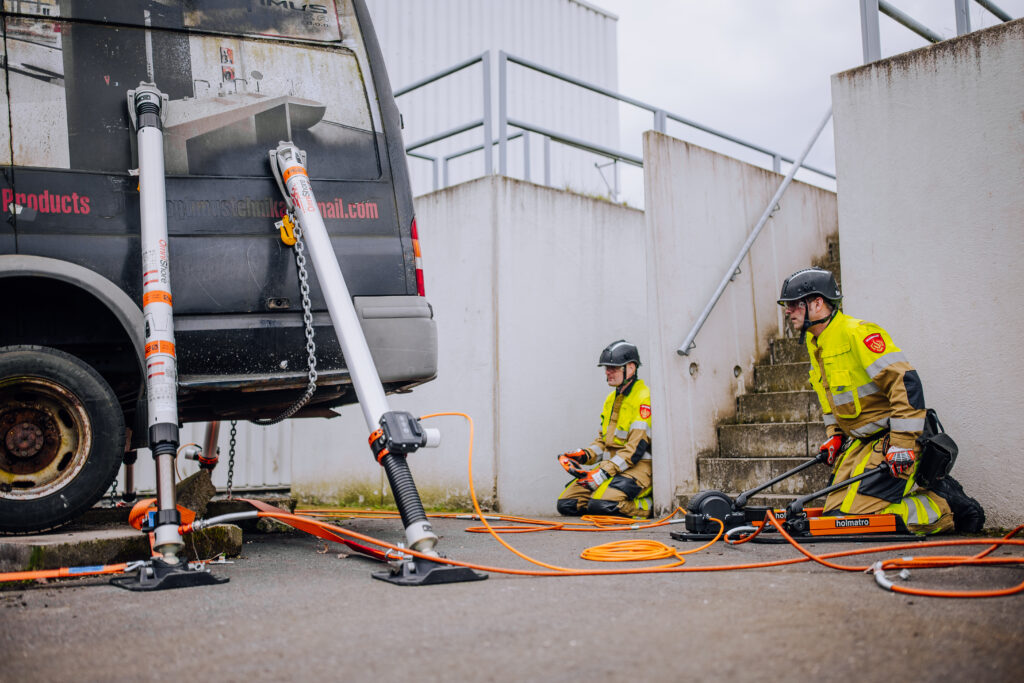
OmniLock technology enables rescuers to remotely control shoring equipment, reducing danger zone exposure during complex rescue operations. In rescue shoring, speed and safety are inseparable. When lifting a truck during a car accident or securing the walls of a trench, rescuers need equipment that can be deployed quickly, while minimising time spent in dangerous areas. How does OmniLock improve safety during rescue shoring? That is where OmniLock comes in, part of the revolutionary Holmatro OmniShore system. The patented OmniLock system comes with some significant features that help rescuers do their job faster, safer and easier. No one needs to be near a moving load: with the OmniLock system, rescue workers can monitor and operate struts from a safe distance, minimising their time in the danger zone. Every OmniLock strut automatically follows a load in upward and downward motion, remaining mechanically locked at all times. So no one is needed to manually operate the lock nuts of the back-up struts. OmniLock struts are operated with a Wireless Controller one, equipped with a Bluetooth connection. The Wireless Controller lets the user control multiple OmniLock struts simultaneously and align them effortlessly. OmniLock, Pentheon tools, the PPV, the Battery Pump and future solutions share the same interchangeable battery. This also means you can always keep the battery on the OmniLock Power Station charged by on-tool and priority charging. What are OmniLock’s key features for vehicle rescue? When a vehicle needs to be lifted to extricate an entrapped person, there is no margin for error. Luckily, the OmniLock system provides the best back-up available, because every OmniLock strut automatically follows a load up and down, while remaining mechanically locked. And because these electronic struts can be used by one person with the Wireless Controller, no one needs to be near a moving load. Resulting in ultimate control and safety. How can OmniLock be used for trench shoring? Trench shoring can pose significant safety risks if not done properly. Holmatro OmniShore offers the safest and most effective way to brace the walls of a trench to prevent collapse and cave ins. With the OmniLock system, we offer you a brand new innovative workflow to position struts against the walls of a trench. The pneumatic OmniShore struts can be operated with a Controller, Pressure Reducer and Air Hoses. OmniLock, however, lets you quickly extend struts electronically, keeping them always locked and saving the valuable time of tightening the locknut manually. The Wireless Controller makes positioning easy and shows you the exact angle of all OmniLock struts. Last but not least: OmniLock struts do not use air pressure, but extend electronically in a very controlled way. Resulting in significantly safer and more stable trench shoring constructions. Why is electronic shoring important for rescue teams? Ultimately, more than a new drive mechanism, OmniLock reflects a broader trend in rescue equipment design: reducing risk through smarter technology. Helping rescuers work faster and safer when speed and safety are indeed inseparable.

Secure Shoring Operations With OmniLock Read More »
Ranger aquires Fire Protection Ireland. firebuyer.com

Ranger acquires Fire Protection Ireland

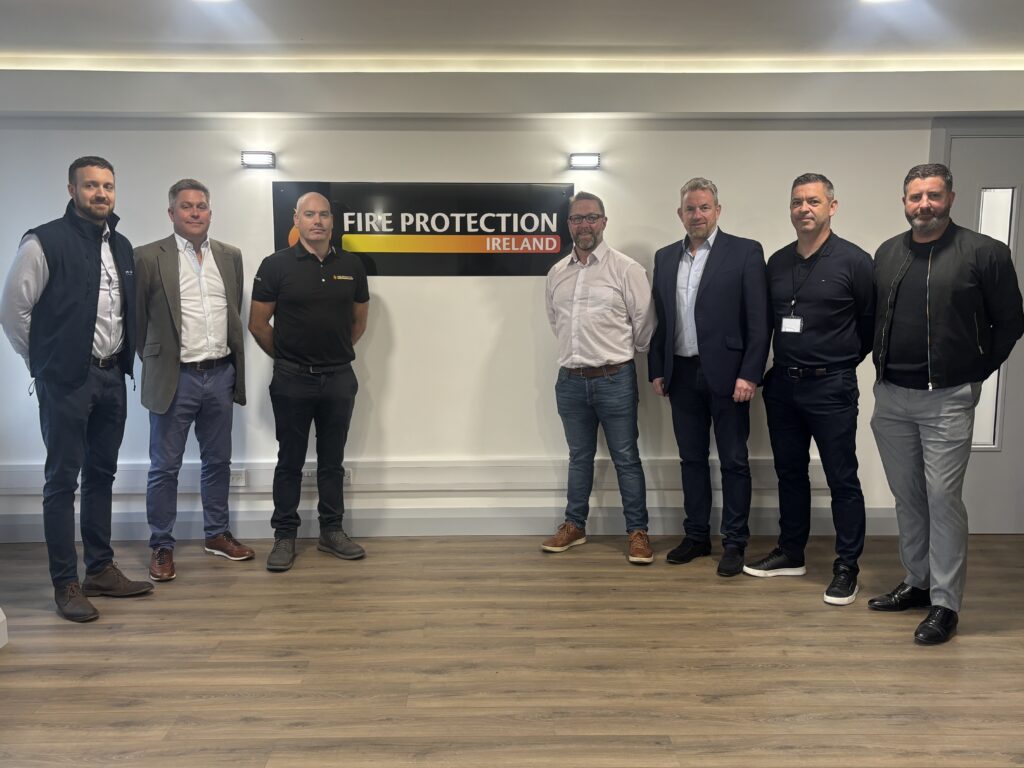
Ranger Fire and Security has announced a partnership with Fire Protection Ireland, bringing the total number of businesses within the Ranger Group to 26. Established in 2011 and based in Cavan, Ulster, Fire Protection Ireland provides fire and security services to public and private sector customers across Ireland. Its capabilities cover the design, installation and commissioning of systems, alongside ongoing fire and security services. Fire and security capabilities Fire Protection Ireland provides fire alarm and extinguisher services, CCTV, fire safety training, nursing call systems, smoke ventilation systems and intruder alarms. The company also provides fire retardant and fire resistant spraying services for materials including fabric and timber. Fire Protection Ireland recently acquired two other fire and security businesses in Ireland, Red Blaze and Red Fire. Both businesses have since been integrated into the Fire Protection Ireland operation. Leadership team remains The existing senior leadership team will remain with the business following the partnership. Sean Sharkey will continue as Managing Director, alongside Sales Director Richie MacKay and Projects Director Andy Redmond. The team will support the continued development of Fire Protection Ireland as part of the wider Ranger Group. Ranger continues Irish expansion The addition of Fire Protection Ireland increases Ranger’s workforce to more than 550 employees. It also strengthens the group’s presence in Ireland following the addition of Galway-based Henderson Fire and Safety and Cork based Emerald Fire Technology earlier this year. Ranger is pursuing a strategy of bringing established regional fire and security businesses together to provide services across the UK and Ireland. Group targets further growth Ranger is backed by investment firm Inflexion and has continued to expand through acquisitions and investment in technology and personnel. The group provides fire and security services at both regional and national level, with its growing Irish presence forming part of its wider expansion strategy. The addition of Fire Protection Ireland gives Ranger further capabilities across areas including fire detection, extinguishers, smoke ventilation, fire safety training and security systems. Mark Bridges, CEO of Ranger Fire and Security, said: “Ireland is a key market for Ranger Fire and Security and the latest addition of Fire Protection Ireland provides a key hub, which will help further broaden our reach to new customers across the Republic of Ireland. “The company brings their leading service and maintenance experience across both security and fire systems to the Group. They will be a key addition to the team and will help us on our mission to become the one stop shop for all fire and security needs in the UK and Ireland.” Sean Sharkey, Managing Director of Fire Protection Ireland: “Over the last fifteen years, we’ve built a strong reputation for quality customer-centric services. Joining Ranger Fire and Security was therefore the logical next step for Fire Protection Ireland, enabling us to continue expanding our business. “We will be working closely with the other Ireland-based Ranger businesses to continue to bring the best quality fire and security services to new and existing customers across the region, and we look forward to working across the whole Group to grow Ranger’s customer base and service offering.”

Ranger acquires Fire Protection Ireland Read More »

Sami Autero, Marioff Corporation. firebuyer.com

Innovator – Sami Autero

Ahead of the International Water Mist Conference next month, Sami Autero, Director, Service and Aftermarket, Global Land Business, Marioff Corporation, talks about the benefits of the technology and preventative maintenance. Please introduce yourself and your background. I have been running Marioff’s service business globally for two-and-a-half years, concentrating on the land applications. Before I joined Marioff, I was working in the global development of service business in publicly-listed companies that were focussed on the flow of goods and people. Please tell us about Marioff Corporation, what it does, and its history. Marioff was started in 1985, however, the water mist technology was introduced in 1991 after a tragic fire in 1990 involving a vessel called the Scandinavian Star in which 159 lives were lost. That was an event that drove Marioff to develop the water mist technology. Marioff as a company is a pioneer of water mist technology and this innovation has been taken further; we have our own research and development, and our own manufacturing in Finland. That is where innovation and very deep knowledge has come from and been applied both to the sea and land applications in very demanding conditions. We have also been servicing thousands of sites over the last few decades, which has enabled us to know how to keep these systems up and running. What are the main benefits of water mist fire protection? There are two main benefits of water mist fire protection. The first is its effectiveness and performance in fire suppression; high pressure water mist uses multiple processes to suppress the fire, whilst traditional sprinklers only have one element which is wetting the material. Secondly, water damage is kept to the very minimum compared to the other technologies that use water. With its high velocity and high pressure, the technology forms a mist curtain that absorbs the radiant heat from the fire, blocking it inside the mist which cools the fire. In this way, we are able to capture the upwards spread of heat from the fire. Unlike traditional sprinklers, the very small water droplets evaporate and the higher the temperature of the fire, the faster the speed of evaporation process which blocks the oxygen. Another element is the wetting of the material, just like traditional sprinklers. So there are three key elements of the technology that suppress the fire. We are able to use a fraction of water compared to traditional sprinklers to achieve the same fire suppression performance. What applications are most suitable for water mist fire protection? Our key sea applications range from large cruise ships and different vessels such as container ships. On the land side, we have industrial customers such as data centres, oil and gas, power generation, gas turbines and different kinds of oil drilling platforms. We also have a very large manufacturing domain for customers such as car manufacturers, robotic factories, and the food industry. We also have buildings such as high-rise offices and hospitals where evacuation during a fire can be very difficult. In terms of heritage sites, we have plenty of landmarks around the world that are priceless. We can build the piping network in the building to be very lean, meaning it is easy to lead through heritage buildings; we can hide the piping network of the water mist because it is much smaller in dimension than traditional sprinklers. Heritage buildings are one very strong area where the water mist can be successful. TO READ THE FULL ARTICLE CLICK HERE. 

Innovator – Sami Autero Read More »

John McGrath- Business Development Manager – ACEDES Autonomous Fire Prevention - Firebuyer.com

Ask the Expert: ACEDES

John McGrath, Business Development Manager at ACEDES explains how FalconEx™ detects abnormal heat and responds autonomously before ignition can occur. Industrial fire protection has traditionally focused on detecting the flames of a fire and then suppressing it as quickly as possible. FalconEx™ takes a different approach: identifying abnormal heat early enough to intervene before ignition occurs. We spoke with John McGrath of ACEDES about why FalconEx™ integrates infrared and visual detection, the importance of autonomous response and how automated targeted cooling differs from systems that rely on remote operators. Many fire detection systems rely on separate infrared cameras, smoke detectors and flame detectors. FalconEx™ combines infrared and visual imaging. Why did ACEDES take this approach, and what advantages does it provide? The first question is: what are you actually trying to detect? Smoke and flame detectors are proven technologies, but they detect products of combustion. If you are detecting smoke or flame, ignition has already occurred. FalconEx™ is designed to intervene earlier, during the period when something is becoming dangerously hot but has not yet ignited. Some competing systems use infrared, smoke and flame detectors, but these are generally separate devices operating independently. Each produces its own alarm rather than contributing to a single, integrated analysis. Simply adding more detectors that are analysed independently may therefore provide very little advantage in identifying the hazard earlier. FalconEx™ takes a different approach. It combines infrared and visual imaging, with both sources analysed together in real time. The infrared image identifies abnormal heat, while the visual image provides additional information about what is happening in the protected area. Because these data sources are evaluated together, FalconEx™ gains a cumulative advantage in both detection and output. It is not simply receiving two unrelated alarms; it combines complementary information to make a more informed and reliable decision. This helps the system distinguish a genuine developing hazard from normal operational heat sources while providing the information needed to locate the hotspot and direct the water monitor. The important issue is not how many detectors a system has. It is whether their information is integrated, how early the hazard can be identified, and what the system can do with that information. If FalconEx™ has already identified and verified a dangerous hotspot, waiting for smoke or flame would simply allow the event to progress further. FalconEx™ is described as an autonomous early fire detection and extinguishing system. What does “autonomous” actually mean, and why is it important in a real fire event? When we say autonomous, we mean that FalconEx™ can go from detecting a hotspot to cooling it without waiting for somebody to make a decision. The system is continuously scanning. If it detects an elevated temperature, it quickly runs through multiple checks to confirm that it is not a false alarm. Once it determines that action is required, FalconEx™ positions the water monitor and begins cooling or extinguishing the hotspot and the surrounding area. Where necessary, it will additionally sound alarms to warn personnel of an incident and that water will be discharged. That all happens automatically and locally at the facility. If a system relies on a remote monitoring centre, there are additional stages. An alarm has to reach the centre, somebody has to review it, decide whether it is genuine, determine what is happening and then take action. None of those individual steps are unreasonable, but they all take time. You are also relying on external communications networks, which may not always be available or reliable. We are trying to intervene at the earliest possible stage. It does not make sense to detect something quickly and then introduce avoidable delays before responding. Operators and fire professionals can still take manual control when necessary. We are not removing people from the system entirely. What we are removing is the need for a person to be involved in that critical initial decision and response. TO READ THE FULL ARTICLE CLICK HERE. 

Ask the Expert: ACEDES Read More »

Enhanced Fire Safety for ADR Vehicles . firebuyer.com

Enhanced Fire Safety for ADR Vehicles

Fogmaker International AB explains how UN Regulation No 181 will strengthen automatic fire suppression requirements for vehicles transporting dangerous goods. ADR vehicles transport dangerous goods by road. This is subject to extensive regulations, but when it comes to fire protection, the responsibility has largely rested on the driver and hand-held fire extinguishers. This presents a challenge – a fire in a vehicle that carries something flammable or explosive can escalate quickly and create a disaster. If the heat reaches a tank containing dangerous goods, pressure can rise rapidly and in the worst-case scenario, result in a violent tank rupture accompanied by the rapid expansion and ignition of the released vapour. This is called BLEVE (Boiling Liquid Evaporating Vapour Explosion). How will UN Regulation No 181 change fire protection? The new UN Regulation No 181 establishes requirements for automatic engine fire-suppression systems on these vehicles. The regulation is designed to reduce the risk of BLEVE, or other catastrophic tank failure resulting of a fire. R181 covers both the fire suppression system itself and its installation in the vehicle. The new requirement will be mandatory on new vehicles manufactured from January 1, 2029, and is encouraged from October 21, 2026. It applies to FL Vehicles carrying flammable gases, flammable liquids, and EX/III vehicles. This applies to the following ADR classes: Class 1, EXIII Vehicles. Class 2, Flammable Gases. Class 3, Flammable Liquids. R181 will be similar to UNECE R107 already in place for buses, with a few additions: Fire tests will be performed without a floor, to maximise resemblance with a truck engine room. There is no re-ignition allowed within 300 seconds, and a safety factor of 1.5 will be added to the suppression agent volume. How can automatic suppression protect dangerous goods vehicles? Fire suppression needs to be timely, reliable, and effective. This is where the Fogmaker system comes into play: Fogmaker International AB has decades of experience in detecting and suppressing fires. Our system is specifically designed to protect vehicles and their most fire-prone components. The specially formulated water-based mist protects engines, hydraulic components, and similar at-risk areas. The system is always active, fully automatic, and independent of electricity, providing continuous protection. For vehicles transporting dangerous goods, this means an additional layer of protection when it matters the most. About Fogmaker International AB: Since 1995, Fogmaker International AB has developed, manufactured and marketed high pressure water-based mist fire suppression systems for engine compartments. Based in Växjö, Sweden, the company has an research and development and manufacturing facility with 100 employees and serves customers worldwide. More than 300,000 vehicles across over 60 countries are equipped with Fogmaker systems. The company is approved to ISO9001:2015, ISO14001:2015 and IATF 16949 standards. Since December 2022, Fogmaker has been part of Dacke Industri. Its vision is to become the market leader in suppression systems for engine compartments and confined spaces, guided by expertise, commitment and integrity.

Enhanced Fire Safety for ADR Vehicles Read More »

Patrick Allinger, WEBER RESCUE SYSTEMS. firebuyer.com

Ask the Expert: WEBER RESCUE SYSTEMS

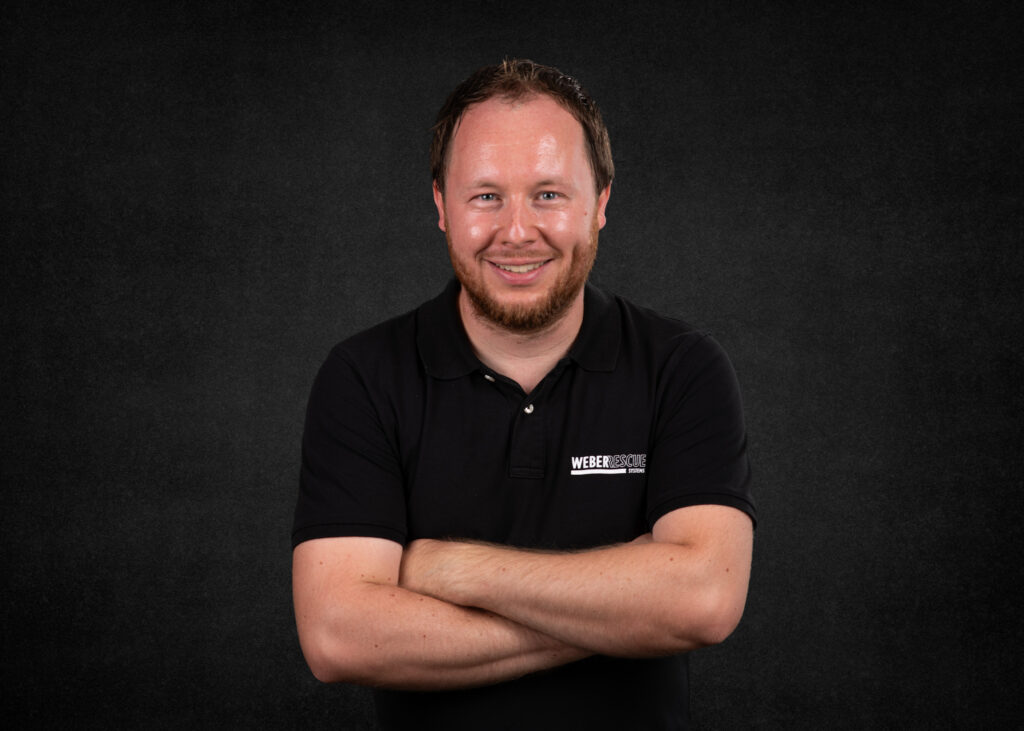
Patrick Allinger, Product Manager at WEBER RESCUE SYSTEMS, talks about some of the key features of the company’s newest extrication solutions. Technical rescue equipment has always been judged primarily by what happens at the point of contact. For a cutter, that means its ability to deal safely and effectively with the increasingly demanding materials rescuers encounter during vehicle extrication. WEBER RESCUE SYSTEMS combines the cutting performance of its CUTTER RSC 200 with SMART FORCE OS, bringing equipment data, training, service and security into one connected rescue platform. The solutions which were officially unveiled at Interschutz 2026 combine mechanical capability with a growing digital infrastructure. The CUTTER RSC 200 pairs high performance cutting technology with the SMART FORCE platform, while the newly introduced SMART FORCE OS extends connectivity across operations, training, maintenance and equipment management. The CUTTER RSC 200 has an opening width of 202mm and uses WEBER RESCUE SYSTEMS’ SMOOTH CUT technology, developed to provide smooth, low stress and safe cutting behaviour. The cutter also incorporates forged blades and replaceable blade inserts designed particularly for cutting modern vehicles containing high strength materials. The significance of those inserts is both operational and financial. According to WEBER RESCUE SYSTEMS, damaged inserts can be replaced within two minutes, including at the scene, rather than requiring replacement of the complete blade. The forged construction is intended to provide additional confidence when a cutter rolls or encounters difficult material. The inserts provide the hard cutting surface required for modern vehicle steels, while allowing a damaged component to be replaced independently. For firefighters, this approach addresses a practical reality of contemporary extrication. Cutting tools must deliver sufficient power, but that performance also needs to be controlled and predictable when crews are operating close to casualties, other responders and unstable vehicle structures. How Smart FORCE OS enhances digital connectivity That operational focus now extends into SMART FORCE OS. The platform connects rescue equipment with a control app, location services and device management software. It allows equipment status, pressure readings and battery levels to be monitored, while training exercises and operations can be documented digitally. The concept is about effectively placing mobile computing capability inside the battery driven SMART FORCE equipment. This enables information from the tool to support not only firefighters, but also technicians responsible for keeping equipment operational. One application is theft protection. SMART FORCE OS incorporates location technology and can deactivate equipment when tampering or unusual behaviour is detected. When theft mode is activated, the system can transmit its location at intervals for up to ten days, using an internal backup battery and localisation through GPS, Wi-Fi and LTE. Patrick Allinger, Product Manager at WEBER RESCUE SYSTEMS, points to Berlin’s fire brigade as an example of customer adoption, stating that the brigade replaced its fleet following problems with equipment theft and highlighting the anti theft functionality as a significant factor. TO READ THE FULL ARTICLE CLICK HERE. 

Ask the Expert: WEBER RESCUE SYSTEMS Read More »

Excelerate Technology Group. firebuyer.com

Resilient Communications for Emergency Services

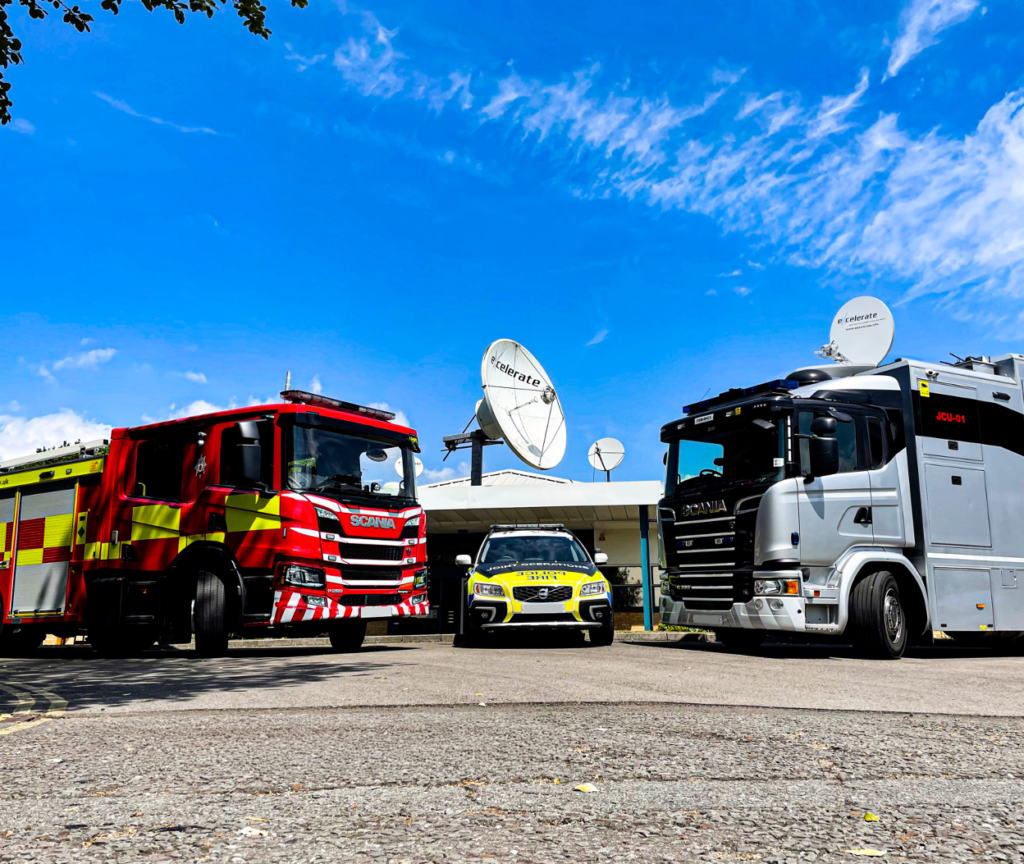
Matt Wroughton, Group Sales Director, and Simon Hill, Chief Technology Officer at Excelerate Technology Group reflect on 25 years in business. For 25 years, Excelerate Technology Group has focused on a challenge that becomes most important when conventional infrastructure is under pressure: keeping emergency responders connected. From its beginnings in specialist satellite communications, the company has developed technologies supporting command, communications and situational awareness across emergency services and other critical operations. Fire Buyer speaks with Group Sales Director Matt Wroughton, a former firefighter, and Chief Technology Officer Simon Hill, who has spent more than two decades with Excelerate, about the company’s evolution, the changing communications landscape, and how resilient connectivity is helping fire and rescue services make informed decisions when it matters most. Please introduce yourselves and your backgrounds. Matt: My career started on the frontline as a firefighter with West Midlands Fire Service, where I spent more than a decade working in operational and leadership roles, including research and development and multi-agency emergency response initiatives. Those experiences gave me a first-hand understanding of the challenges emergency responders face when communications fail, or information is unavailable at critical moments. After moving into technology and public safety solutions, I worked extensively across emergency services and government sectors before joining Excelerate, and later Zebra Technologies, helping organisations modernise their operational capabilities. Today, as Group Sales Director back at Excelerate, I work with customers across the UK and internationally to deliver resilient connectivity and situational awareness solutions that enable better decision-making in the most demanding environments. Simon: I have spent more than 20 years with Excelerate and have had the privilege of growing alongside the business. I began as a Field Installation Engineer and progressed through a variety of technical, operational and leadership roles before becoming Chief Technology Officer. Throughout that journey I have focused on developing communications solutions that work when conventional networks cannot. My experience spans satellite communications, mobile communications, RF technologies, VSAT systems and service delivery, all centred on solving real-world operational challenges for emergency services, government agencies and critical infrastructure organisations. Excelerate is celebrating 25 years of business this year. Could you take us back to the beginning and explain how the company came to be? Simon: Excelerate was founded with a very clear vision: to provide reliable communications where conventional networks could not. In the early 2000s there was a growing need for resilient, deployable communications, particularly for emergency responders and organisations operating in remote or challenging environments. What started as a specialist satellite communications business evolved into a global provider of integrated connectivity solutions. Over the years, we pioneered deployable communications on command-and-control vehicles and developed capabilities that enable organisations to rapidly establish secure communications wherever they are needed. Today, that heritage remains central to who we are. Matt: What is particularly impressive is that the company has never lost sight of its core purpose. While the technologies have changed dramatically, the mission has remained the same: keeping people connected when it matters most. For emergency services, that commitment has meant continuously innovating while maintaining an unwavering focus on reliability and operational effectiveness. TO READ THE FULL ARTICLE CLICK HERE. 

Resilient Communications for Emergency Services Read More »

Sep 2026 issue corrected

International Fire Buyer unveils September issue

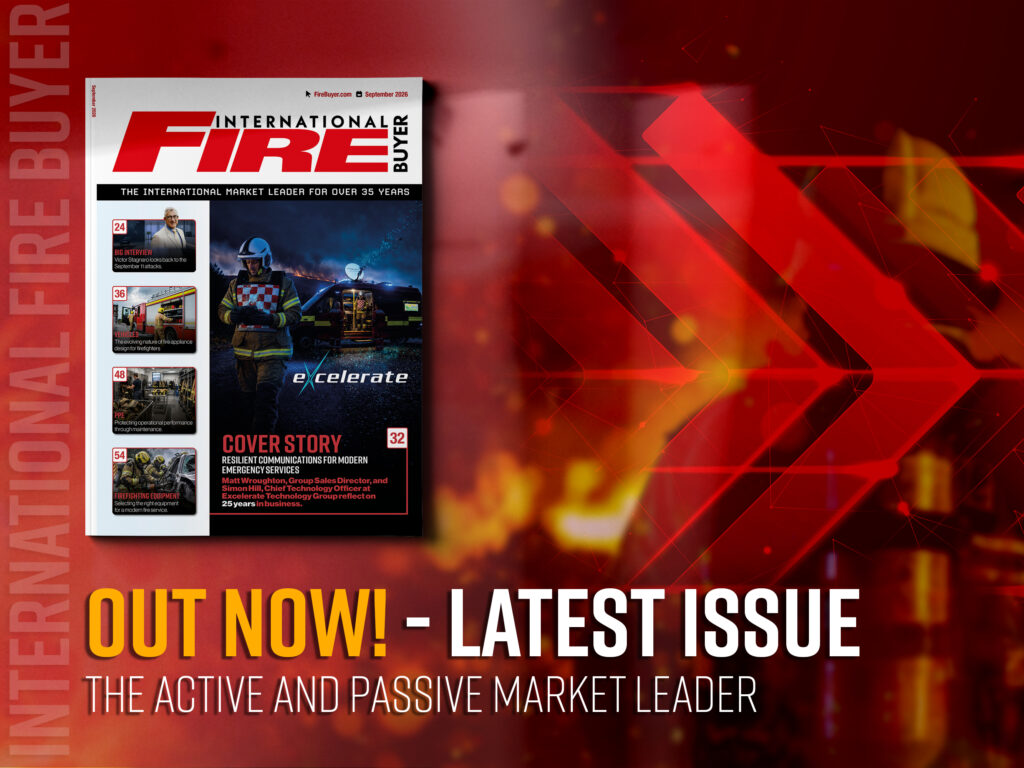
Hand Media International is proud to unveil the new look International Fire Buyer. This issue marks an exciting step forward for our publication as we embrace a more digital-first approach to both our editorial content and magazine design. While our commitment to authoritative journalism remains unchanged, we are continually adapting to ensure our content is more accessible, engaging and aligned with the way today’s professionals consume information across print, digital and multimedia platforms. Marking the 25th anniversary of the September 11 attacks This month marks the 25th anniversary of the September 11 attacks, a day which has left its mark in history and on the firefighting profession. This month, fire services across the US and the world will be taking time to reflect and pay tribute to those who were lost both on that day and in the years that followed. Victor Stagnaro from the National Fallen Firefighters Foundation gives his reflections on the aftermath of the tragedy and reveals how the organisation continues to pay tribute to those who made the ultimate sacrifice. International Water Mist Conference As we turn our attention to this year’s International Water Mist Conference (IWMC) in Prague, we draw our focus towards this evolving suppression method. In this issue, you will find a complete round up of the event programme for this year. In addition, this month’s Innovator with Sami Autero from Marioff Corporation, who will be delivering a talk at the IWMC, provides a fascinating insight into the capabilities of water mist technology. An increasing area of application for these types of technologies is in battery energy storage systems which are a topic of one of this month’s features. Effective suppression combined with integrated fire safety systems are key to ensuring safety in these complex and expanding environments. Equally, as the proliferation of data centres continues to be a trending topic both within and outside of the fire safety industry, we examine the ways integrated fire protection systems enable coordinated incident response. Excelerate celebrates 25 years in business Elsewhere, Excelerate Technology Group, who feature on this month’s cover, is marking 25 years in business. Matt Wroughton and Simon Hill reflect on how much emergency services communications capabilities have evolved and consider what comes next in the world of resilient connectivity. As these types of technologies continue to advance, so too do the vehicles which often serve as the command base. In this month’s vehicles feature, we look at the ways fire appliances are modernising to enhance frontline incident response capabilities. Read now!

International Fire Buyer unveils September issue Read More »

Sherwin Williams expands coating range. firebuyer.com

Sherwin-Williams expands coating range

Sherwin-Williams Protective and Marine Coatings has launched FIRETEX FX5092, a water based intumescent coating developed for the passive fire protection of structural steel in internal environments. The new formulation builds on the company’s existing FIRETEX FX5090 product and provides up to 120 minutes of fire resistance while requiring a lower coating thickness than its predecessor. Fire protection for structural steel FIRETEX FX5092 has been developed to provide a broader scope of protection, allowing a single material to be specified across a wider range of requirements within a project. According to Sherwin-Williams, this can reduce the complexity associated with specifying, purchasing and applying multiple materials. The coating provides up to two hours of fire resistance for internal applications and can be used in environments classified up to C3 under ISO 12944 2. Higher film builds are also intended to reduce the number of coats required, potentially reducing application time and labour requirements. Lower VOC formulation The new formulation has a VOC content of 0.66 g/l, which is lower than its predecessor. Sherwin-Williams said the reduced VOC content can support projects working towards green building requirements including LEED and BREEAM, while also reducing odour and emissions during application. The coating is intended for use on both concealed and exposed structural steel and has been formulated to provide a smooth finish where steelwork remains visible within a building. Shelf life extended FIRETEX FX5092 has a shelf life of 12 months, compared with six months for FX5090. The extended period is intended to provide greater flexibility for distributors and contractors managing stock, particularly where weather conditions can restrict opportunities to apply water based coatings. It can also provide additional time for international distribution and subsequent use following delivery. Application process retained Sherwin Williams has retained the application process associated with FIRETEX FX5090, allowing contractors familiar with the existing product to transition to the new formulation without substantial changes to application procedures. FIRETEX FX5092 is manufactured in the UK and is also available through NBS Source, providing architects, engineers and specifiers with access to technical product information during the specification process. Alex Tsiolas, Fire Protection Portfolio Manager at Sherwin-Williams Protective & Marine Coatings, said: “FIRETEX is the leading brand for structural fire protection in the UK because of decades of trusted products and service that architects, contractors, and applicators know they can rely on, project after project. With continuous development, we make sure that trust extends across the whole specification: that FIRETEX is the answer whatever the requirements are. “Our new FIRETEX FX5092 reflects that perfectly, closing the gap for thin hollow sections in our water-based on-site offer. It brings improved coverage, lower dry film thickness requirements, reduced VOC content, and a longer shelf life, delivering real efficiency gains across the chain. “Following our recently introduced new solvent-based on-site product, FX1008, this launch continues the work of strengthening what’s already the leading on-site fire protection offer in the UK: one specification, one trusted supplier, from design through to application.”

Sherwin-Williams expands coating range Read More »

Dräger to showcase solutions at Emergency Services Show. firebuyer.com

Dräger to showcase solutions at Emergency Services Show

Dräger will focus on national resilience and emergency preparedness at this year’s Emergency Services Show (September 16 and 17), examining how government organisations and emergency responders can prepare for changing risks and complex incidents. The company is headline sponsor of the Resilience 360 stage, where it will deliver two sessions covering challenges associated with prevention, preparedness, response and recovery. CBRN lessons under discussion Stephen Fallon, Global Business Development Manager, Defence and Security at Dräger, will present a session titled “Looking Back to Stay Ahead: CBRN Lessons for National Resilience”. The presentation will consider lessons from chemical, biological, radiological and nuclear incidents and how previous experience can inform future resilience planning. Martyn Standering, Business Development Manager, Industrial Breathing Systems at Dräger, will present “Are we ready for the next health emergency?”. Together, the sessions will consider how organisations can learn from previous events, anticipate emerging risks and develop capabilities to support emergency preparedness. Preparedness before an incident Dräger will use its presence at the show to highlight the importance of resilience planning before an emergency occurs. Areas under consideration include early detection, planning, logistics, asset management, training and maintaining operational readiness. The company will also examine the protection of emergency responders and the importance of maintaining essential services during prolonged or complex incidents. Learning from previous emergencies and incorporating those lessons into future planning will form another part of the approach. Supporting emergency responders Dräger will also discuss its work with Category 1 and Category 2 responders to identify potential capability gaps and maintain equipment and resources over their operational life. Support available includes equipment, technical advice, training, servicing and additional capacity during periods of increased demand. Asset visibility will also form part of the discussion, particularly where organisations need to understand the location, condition and availability of equipment required during an emergency. The company’s presence at the Emergency Services Show will provide visitors with an opportunity to discuss these areas alongside broader requirements surrounding preparedness, response and national resilience. Matt Evans, Head of Government for UK and Ireland Safety Division at Dräger, said:  “National resilience is built over time through partnership, planning, data, training, rehearsal and communication, with the right capabilities ready and supported throughout the PPRR cycle. “At Dräger, we work with emergency services, government, industry and healthcare organisations to understand operational requirements, identify capability gaps and help turn capacity into sustainable capability. “That means contributing earlier in planning, bringing operational insight into decision-making and helping ensure support remains available as an incident changes shape. “The Resilience 360 stage provides an important opportunity to share insight and encourage the joined-up thinking needed to keep people and critical services ready when they are needed most.”

Dräger to showcase solutions at Emergency Services Show Read More »

Scroll to Top