Integrated wildfire intelligence. firebuyer.com

Integrated wildfire intelligence

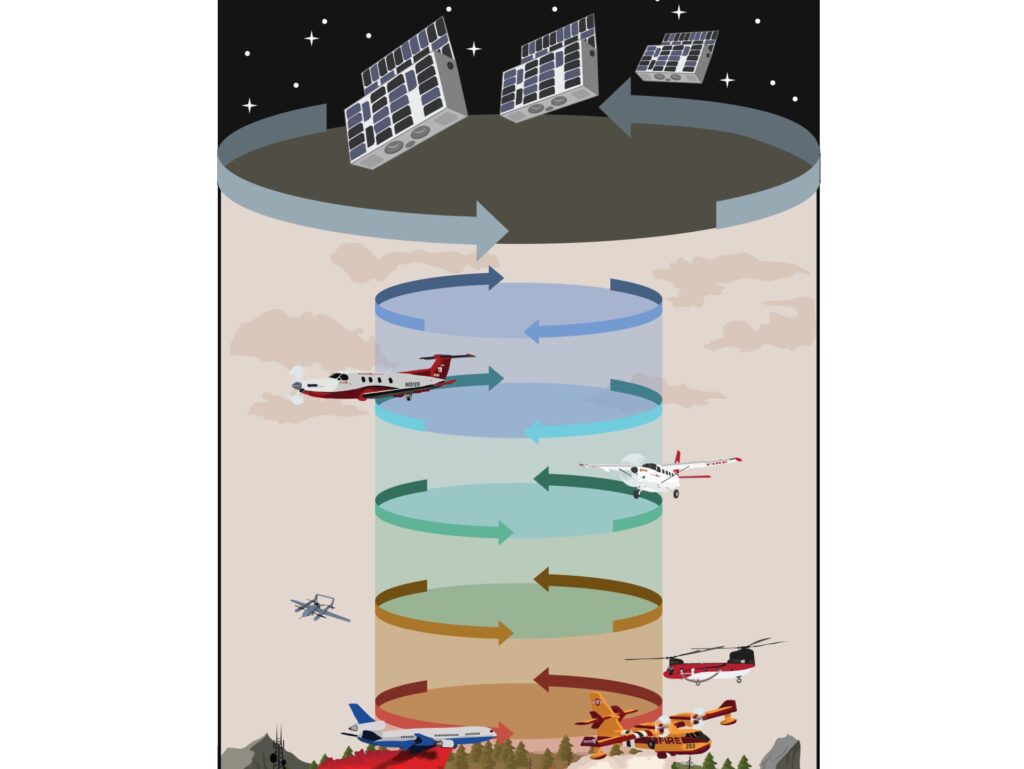
Bridger Aerospace Group Holdings has announced a partnership with OroraTech USA to integrate satellite-based wildfire intelligence into its IGNIS wildfire operations software platform. The collaboration will bring OroraTech’s wildfire detection, thermal mapping, fire intensity and predicted fire spread capabilities into IGNIS, which provides situational awareness to state, federal, county and municipal wildfire agencies. Satellite data supports wildfire response OroraTech’s Wildfire Solution platform gathers information from more than two dozen public satellites alongside data from its own thermal imaging satellite constellation, which is dedicated to wildfire detection and monitoring. The information will be incorporated into IGNIS to provide incident management teams and personnel in the field with near real time information to support operational decisions during wildfire incidents. Technology tested during Oregon wildfire The companies recently tested the integration during the Grasshopper Fire near Mount Hood in Oregon. A Bridger Fire Behavior Analyst used a fire perimeter generated from OroraTech satellite heat detections as an input for a fire spread prediction model. The resulting analysis was distributed through the IGNIS platform and application, providing an assessment of anticipated fire progression during the incident. Partnership targets faster intelligence Bridger Aerospace and OroraTech said the collaboration will focus on improving the speed at which wildfire agencies receive actionable information following new fire ignitions. The companies also intend to provide an independent satellite mapping layer alongside existing agency monitoring, support rapid fire spread modelling and consolidate data sharing, reconnaissance requests and record keeping within the IGNIS platform. The two organisations plan to pursue joint customer engagements, further validation of wildfire detection and monitoring performance and wider collaboration with wildfire agencies. Sam Davis, Chief Executive Officer of Bridger Aerospace, said: “This relationship with OroraTech represents a major step toward the future of wildfire response, where the best intelligence from space, the air, and the ground comes together into one operating picture. “By bringing OroraTech’s satellite-based thermal intelligence into IGNIS, we are working to identify threats earlier, understand fire behavior and put critical intelligence into the hands of crews and incident commanders before our aircraft even reach the fire. “That has the potential to fundamentally change how quickly and effectively we respond. Together, we are building the intelligence backbone for the modern fire line, connecting information from orbit to the cockpit to the crews on the ground so decision-makers have the clearest, most comprehensive operating picture.” Thomas Grübler, Co-founder of OroraTech and Chief Executive Officer of OroraTech USA, said: “By partnering with Bridger, we are closing the gap between space, air, and the fireline. We are delivering better intelligence to responders when every minute matters. “By combining satellite and aerial intelligence, the partnership will help firefighters better understand where a fire is, how it is changing, and where it may spread next, giving incident teams a more complete picture to make faster, more informed decisions.”

Integrated wildfire intelligence Read More »

IFE launches redeveloped CPD Hub. firebuyer.com

IFE launches redeveloped CPD Hub

The Institution of Fire Engineers (IFE) is launching a month long campaign to highlight its redeveloped CPD Hub and reinforce the importance of continuing professional development across the fire safety sector. Running from 2 September to 5 October, the campaign will demonstrate how members can use the platform to access learning resources throughout their careers. New features support professional development The redeveloped CPD Hub includes an improved search facility designed to help users identify content relevant to their roles, interests and development objectives. Resources now include estimated completion times, expanded descriptions and learning outcomes, helping members plan activities according to their schedules and professional requirements. The platform also introduces International Fire Professional technical articles, providing access to additional specialist knowledge and learning opportunities. Campaign highlights importance of CPD Alongside the platform changes, the campaign will examine the role of CPD within the fire profession, including its contribution to maintaining knowledge, achieving professional registration and supporting lifelong learning. The IFE represents more than 15,000 members globally and provides learning opportunities intended to help professionals maintain knowledge and develop skills as fire safety requirements evolve. Wider learning opportunities showcased The campaign will also highlight CPD opportunities available through the IFE’s international branches and groups, technical events, webinars and online resources. The organisation said the redeveloped hub is intended to make professional development easier for members to discover, plan and access.

IFE launches redeveloped CPD Hub Read More »

EU extends firefighting support to Serbia. firebuyer.com

EU extends firefighting support to Serbia

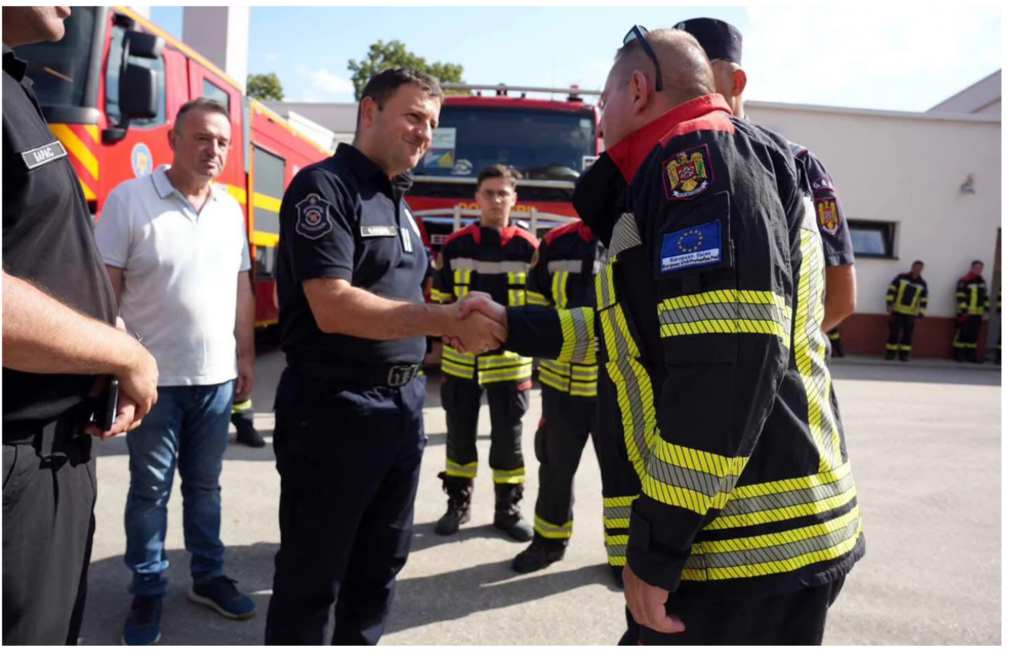
European Union firefighting assistance to Serbia has been extended until 5 September after wildfires affected the country. Four helicopters from the rescEU strategic reserve in Czechia, Romania and Slovakia will remain deployed, alongside a ground firefighting team from Romania. Wildfires burn thousands of hectares Severe wildfires affecting the Deliblato Sands Special Nature Reserve and other areas had burned approximately 13,920 hectares, according to Copernicus data. The continuing fires have placed pressure on local response capabilities and threatening one of Serbia’s important natural areas. European resources rapidly deployed Serbia requested assistance through the EU Civil Protection Mechanism on 21 August. The EU said European firefighting helicopters were mobilised and airborne within 24 hours of the request. The Copernicus Emergency Management Service had previously been activated on 8 August to provide satellite mapping and analysis to support emergency assessment and operational planning. Coordination continues on the ground The EU is continuing to coordinate with Serbian authorities through its Emergency Response Coordination Centre. A liaison officer is also operating on the ground to support coordination between Serbian authorities and European firefighting teams as operations continue. Commissioner for Preparedness and Crisis Management, Hadja Lahbib, said: ‘These wildfires are putting enormous pressure on Serbia’s firefighters and communities. “At this difficult time, Europe stands firmly with Serbia and its people: our teams and aircraft continue to work side by side with Serbian responders to bring the fires under control. “This is European solidarity in action, and we will continue to provide support as the situation evolves.’

EU extends firefighting support to Serbia Read More »

Fire Chiefs call for stronger telecare regulation. firebuyer.com

Fire Chiefs call for stronger telecare regulation

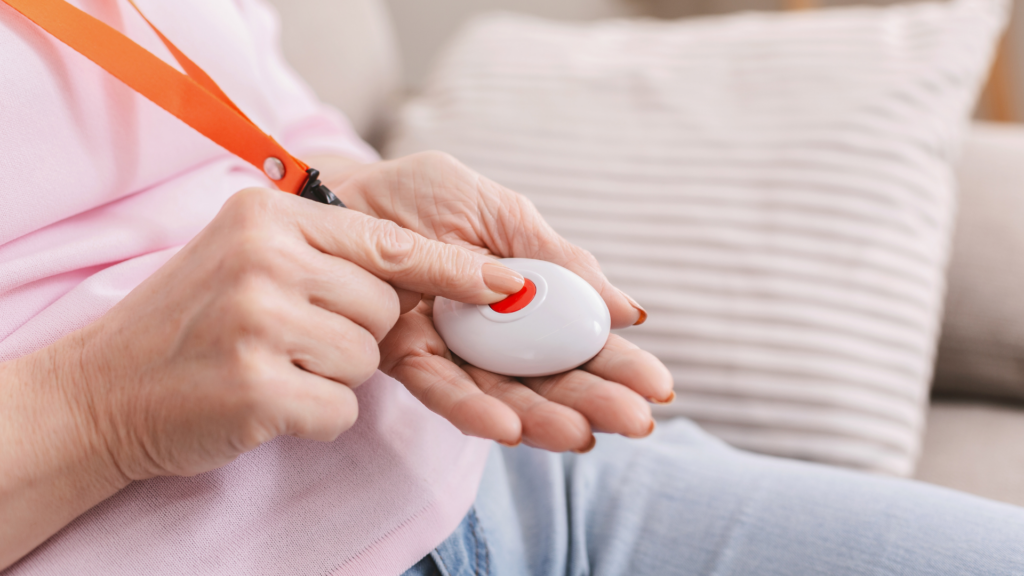
The National Fire Chiefs Council (NFCC) has called for stronger regulation and oversight of Technology Enabled Care services, warning that vulnerable people could face increased fire safety risks as reliance on home care technology grows. Around two million people across the UK use telecare to support independent living, including older people, people with disabilities and those with long term health conditions. Vulnerable residents face greater risks NFCC said many telecare users are also among those most vulnerable to fire. Over the past decade, more than a third of fire fatalities in England involved people aged over 65 who were living alone. Fire and rescue services have raised longstanding concerns about Technology Enabled Care services following incidents involving vulnerable people who have died in fires. Coroners’ Prevention of Future Deaths Reports issued during the past two decades have identified recurring problems. These include fire risks not being identified, linked smoke detection not being installed, alarms not being connected to monitoring systems and critical information not reaching emergency responders. Demand for telecare expected to increase Demand is expected to grow as the population ages and more care is provided within people’s homes. More than a quarter of the population is projected to be aged over 65 by 2065, while an estimated 9.1 million people in England are expected to be living with a major illness by 2040. NFCC is calling on the UK and devolved governments to review and strengthen regulation covering Technology Enabled Care services, including standards, accreditation and quality assurance. Fire Chiefs seek greater accountability Terry Pinto, Technology Enabled Care Lead at the NFCC, and Prevention Lead at Norfolk Fire and Rescue Service, said: “Telecare can be life-saving, but only when a person’s needs and fire risks are properly assessed and equipment is installed, maintained and monitored in accordance with recognised British Standards. “Having personally reviewed fatal fires in Norfolk and supported other fire and rescue services with similar cases, I have seen the same concerns arise repeatedly. “It is deeply concerning that issues identified years ago are still occurring, particularly when we know that getting these systems right can save lives. “We need stronger oversight, consistent standards and clear accountability across the sector. People who rely on telecare should be able to trust that these systems will provide the protection they expect when they need it most.” NFCC said accreditation remains voluntary across many areas of the sector. Less than two thirds of Technology Enabled Care alarm receiving centres are currently certified through the TEC Services Association’s Quality Standards Framework. Standards and training recommended NFCC is calling for all Technology Enabled Care providers to hold third party accreditation, alarm receiving centre staff to receive accredited training and providers to demonstrate compliance with relevant British Standards. Fire prevention and mitigation measures should also form part of health based risk assessments for vulnerable people. NFCC said this should include linked and monitored smoke and carbon monoxide detection where residents may be unable to respond appropriately or evacuate without assistance during a fire. Alyson Scurfield OBE, Chief Executive of the TEC Services Association (TSA), said: “NFCC’s position is a strong endorsement of the importance of standards, independent certification and quality assurance in technology enabled care. We particularly welcome its call for TEC providers to be independently certified through a UKAS-accredited body. “TSA has long supported higher and more consistent standards across the sector, and through TEC Quality and the Quality Standards Framework we are helping providers demonstrate that they meet recognised standards and give commissioners and people who use TEC greater confidence in the services they rely on. “We look forward to continuing our work with NFCC to support safer, higher-quality TEC.” Digital switchover creates opportunity NFCC has also called for continuous and adequate government funding for local authorities supporting Technology Enabled Care provision, alongside independent academic research into patient safety and fire risk. The organisation said the ongoing digital switchover provides an opportunity to improve resilience, safety and standards as Technology Enabled Care services continue to modernise.

Fire Chiefs call for stronger telecare regulation Read More »

LFB issues plug in solar panel safety advice. firebuyer.com

LFB issues plug in solar panel safety advice

London Fire Brigade (LFB) has issued safety guidance for households considering plug in solar panels following the introduction of a new Government scheme making the technology available to homes across the country. Alternative to traditional solar panels Unlike conventional solar panels, which are typically wired into the roof of a property, plug in panels can be positioned on terraces, sheds or balconies and connected through a wall socket. The Brigade is advising consumers to purchase equipment from trusted manufacturers and retailers to reduce the risk associated with poor quality or counterfeit products, which could overheat or fail. Safe installation remains essential Households should follow the manufacturer’s guidance when installing, operating and maintaining systems. Where electrical work is required, a qualified installer should be used. Panels and associated equipment should not obstruct shared balconies, common areas, walkways, windows or fire escape routes. Tenants should also contact their landlord, housing provider, freeholder or property management company before purchasing or installing equipment. Building works require consideration LFB recommends that plug in solar panels are not installed while a building is undergoing, or is due to undergo, cladding works or other remediation. Users should never tamper with cables, plugs, inverters, batteries or other parts of the system. Equipment should be taken out of use immediately if there are burning smells, signs of overheating, buzzing noises, visible damage or repeated electrical tripping. Assistant Commissioner Pam Oparaocha said: “As with any new to the market electrical appliances, there may be associated fire risks, and as Londoners start installing the new plug-in solar panels, we urge them to look at our safety tips to keep themselves and others safe. “Ensure your appliance meets the UK safety standards and is installed correctly – being careful not to block any fire escape routes. During an emergency, firefighters need unrestricted access to your property, so make sure you aren’t blocking emergency exits, doors, balconies or windows. “If you notice your device overheating or any other signs of a fault, stop using it immediately and report the issue. Should your appliance catch fire call 999 and inform the operator that solar panels are installed at the property. Doing so will help our crews respond as quickly and safely as possible.”

LFB issues plug in solar panel safety advice Read More »

IDS brings PPE decontamination service to UK. firebuyer.com

IDS brings PPE decontamination service to UK

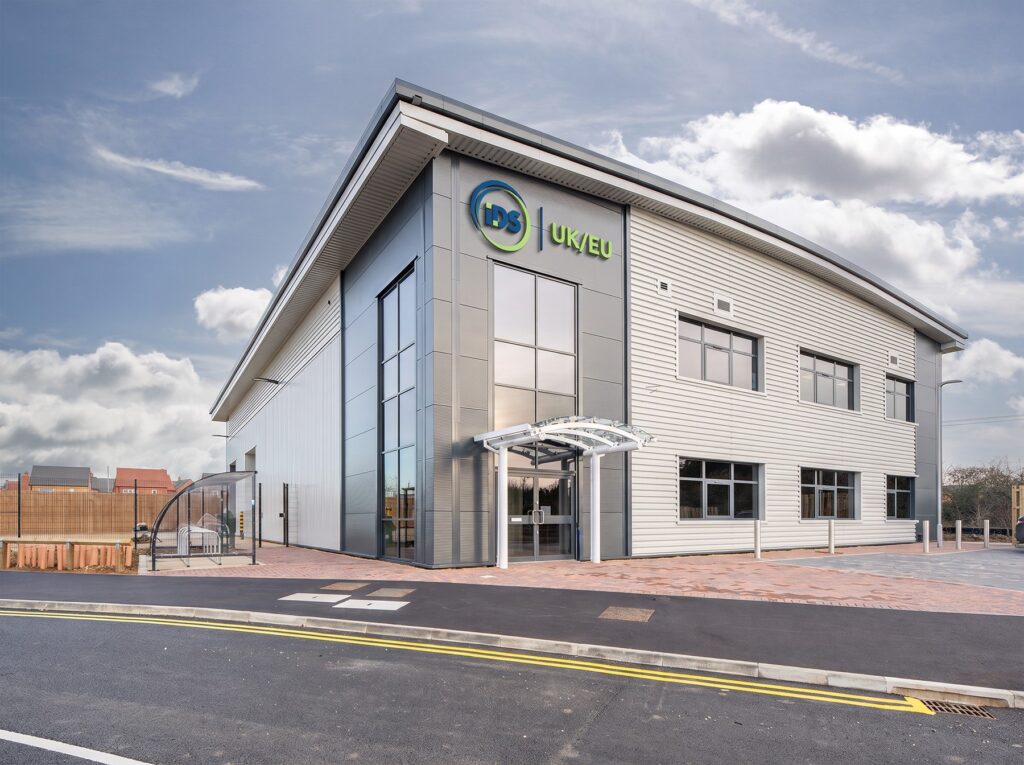
Industrial Decontamination Services (IDS) is preparing to open a PPE decontamination facility in Northamptonshire, bringing its cleaning and lifecycle management services to UK fire, emergency services and industrial organisations. Northamptonshire facility planned The facility is expected to open by the end of the year and will provide cleaning, decontamination, repair, tracking and lifecycle management for protective clothing and equipment. IDS UK is backed by more than 30 years of experience in Australia and is establishing the UK operation to support organisations managing PPE across operational environments. PPE decontamination and care The company uses specialist low temperature processes designed to reduce contamination while protecting the integrity and service life of PPE. Once operational, the Northamptonshire facility will provide decontamination to NFPA 1850 standards, alongside asbestos level decontamination. The service will cover protective clothing and equipment including operational jackets, trousers, SCBA masks, boots and helmets. Independent PPE support IDS UK will operate independently of PPE manufacturers and suppliers, allowing organisations to use the service across equipment from different providers. The company is also targeting a 48 hour turnaround for equipment passing through the facility. Digital PPE tracking A live asset tracking platform will allow firefighters and administrators to monitor equipment throughout its lifecycle. The system is intended to provide visibility over the status of individual assets as they move through cleaning, decontamination, repair and return processes, supporting equipment management and recordkeeping. The combination of specialist decontamination and asset tracking is intended to help fire and emergency services maintain oversight of PPE condition, servicing and availability throughout its operational life. Ben Jones, Managing Director of IDS Group, said: “IDS UK combines world-leading technology, proven sustainable processes and competitive, simplified pricing to help fire and rescue services to protect their people, extend PPE life and gain confidence that critical equipment is ready when it matters most. “In the UK, the debate around cleaning and decontamination is intensifying. Whilst some advocate for high-temperature cleaning, we do not. “The challenge for fire and rescue services is to achieve effective PPE decontamination without compromising the life span of the PPE. “At IDS, we have found the right balance. Our low-temperature decontamination process has been shown to extend the typical life of a firefighting ensemble and consistently cleans to asbestos-level standards, removing the guesswork around the level of cleaning required. “This also ensures complete transparency and eliminates hidden costs. “Our conversations with UK fire and rescue services also tell us that operational resilience is a key priority: they want real-time PPE tracking and tracing and minimal downtime, and with tight budgets, this is more important than ever.” “IDS has been doing this in Australia for over 30 years and our tried and tested complete care service works. “Our Northants facility is just the start, we plan to establish more sites across the UK as business grows.” Louise Christie, Emergency Services Logistics Coordinator and customer in Australia, said:  “The speed and reliability of the IDS service has had a significant impact on our operations. Their efficient collection, decontamination and return process consistently delivers outstanding turnaround times, helping us to keep our teams equipped and operational.” Mark Teale, Emergency Services Procurement Lead and customer in Australia, said:  “The quality of decontamination and garment care provided by IDS has helped extend the lifespan of our PPE while giving our teams greater confidence in the safety of their equipment.”

IDS brings PPE decontamination service to UK Read More »

FSi Promat gains training recognition. firebuyer.com

FSi Promat gains training recognition

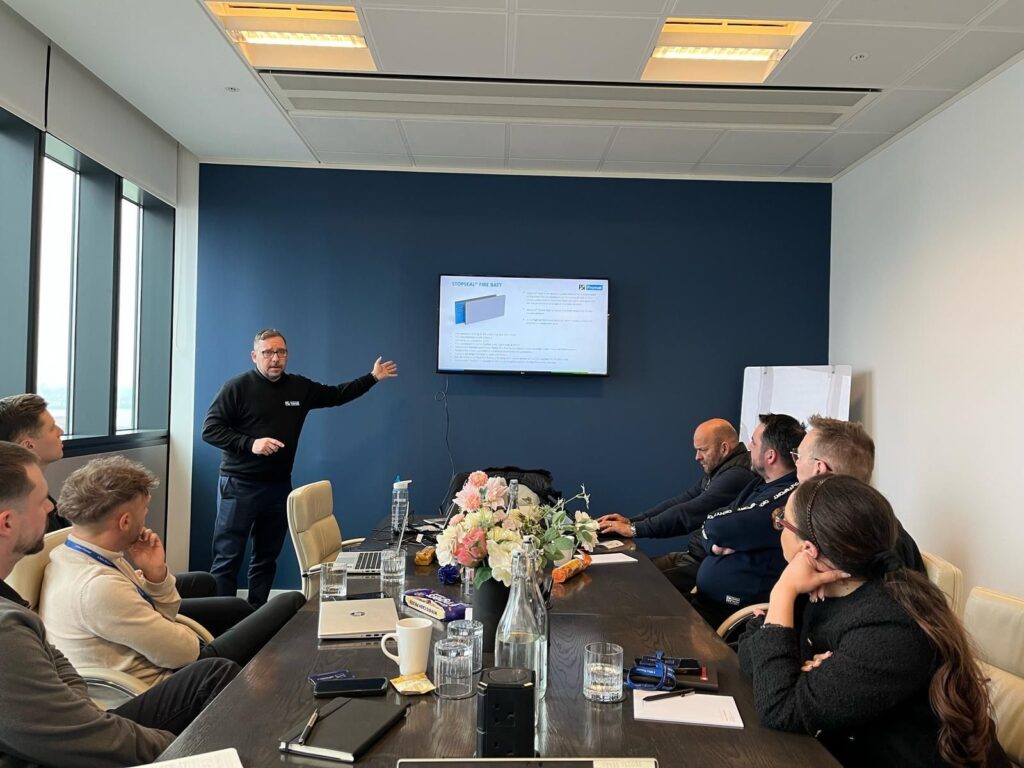
FSi Promat has become the first internal fire stopping manufacturer to achieve Recognised Provider status under the Association for Specialist Fire Protection (ASFP) Training Recognition Service. The company’s theory courses are now officially recognised by the ASFP, providing independent recognition of the quality and consistency of its passive fire protection training. The training is designed to support customers in developing their knowledge and competency in passive fire protection. Training undergoes technical assessment FSi Promat completed an accreditation process through the ASFP Training Recognition Service, which assesses course technical content, the competence of trainers and the quality management systems used to maintain consistent standards. The process included a technical audit and independent review of FSi Promat’s procedures for developing, approving and delivering training. The company was also required to provide evidence covering data protection, insurance and liability, alongside its methods for assessing delegate understanding at the end of each training session. Accreditation supports fire safety competency The accreditation provides installers, contractors, specifiers and other construction professionals with additional assurance that FSi Promat’s technical training has been independently assessed and meets ASFP standards. Competence is reviewed regularly and supported through ongoing CPD to ensure the technical information provided through the courses remains current. Ashley Britt, Technical Advisor at FSi Promat, said: “Customers often come to us with complex fire stopping questions where there is no single, straightforward answer. “The correct approach depends on the construction, the service penetration, the required performance and the scope of the available test evidence, so good training must help people understand how to apply that information in practice. “Achieving this accreditation required us to demonstrate both the technical competency of the people delivering the training and the systems behind it. That includes how content is checked, approved and kept up to date, as well as how we confirm that delegates have understood what has been covered. “Being accredited by the ASFP gives customers additional confidence in the training and guidance they receive from us. It also supports our wider commitment to education, competency and higher standards across the passive fire protection industry.” Mike Ward, Managing Director of the ASFP, added: “FSi Promat’s successful achievement of recognised provider status reflects a strong commitment to raising standards through structured, industry-focused training. “We are pleased to welcome FSi Promat as an ASFP-recognised training provider, and look forward to seeing the company continue to support best practice across the passive fire protection sector.”

FSi Promat gains training recognition Read More »

IFE Primary Logo Red and Blue.jpg - Fire Buyer

New group to focus on mental wellbeing

The Institution of Fire Engineers (IFE) has established a new Special Interest Group (SIG) bringing together professionals from across the fire and emergency services sector to support knowledge sharing, networking, professional development and collaborative action around psychological wellbeing. The group will officially launch with a webinar on Tuesday, September 15, introducing its vision for strengthening psychological wellbeing throughout the global fire and emergency services community. Wellbeing and operational performance Attendees will hear about the SIG’s programme of work to raise awareness of the relationship between wellbeing, safety and operational performance. The webinar will also introduce the group’s tools and resources and highlight opportunities for international collaboration. SIG Chair, David Ware, FIFireE, said: “I am thrilled to see our new SIG ready to be launched. Promoting mental health and wellbeing has not always been at the forefront of the fire sector, a fact that we will hopefully soon remedy. “In this sector, many professionals put both their general and mental health on the line to help others. There should always be the support needed to ensure they can reach out on an ongoing basis for the resources and information they need.” Supporting healthier working environments The creation of the SIG reflects growing recognition of the importance of mental health and wellbeing within fire and emergency services. Through international collaboration, research and professional development, the group aims to support individuals and organisations in creating healthier working environments while strengthening operational effectiveness and resilience. Paul Adams, IFE CEO, said: “We are excited to see the launch of this new Special Interest Group. Good mental health is an important consideration for everyone working within the fire sector to ensure a healthy and safe working environment, including the public and fire professionals. “This new IFE SIG will provide a valuable platform for collaboration, learning and embracing better mental health across our global community.”

New group to focus on mental wellbeing Read More »

Hochiki

Hochiki Europe Highlights Detection Range at FSIE

Hochiki Europe will exhibit at FSIE, running from the 3rd to 5th September, bringing its trusted fire detection and life safety range to one of South Asia’s largest fire and security gatherings. Founded in Japan in 1918, Hochiki has spent over a century designing and manufacturing fire detection technology. As international standards such as EN 54 and UL become more widely specified alongside domestic requirements on major Indian projects, the show is an important opportunity to introduce that heritage to a wider Indian audience. Proven fire detection expertise for complex projects Hochiki devices are designed to reduce false alarms, install quickly and maintain easily, and the range is built with flexibility in mind so specifiers can scale a system to match the size and complexity of the project. That combination of reliability and simplicity is central to why the brand has earned trust across the markets it already serves, supported by the Hochiki Training Academy, which now has over 2,000 users worldwide accessing free product and application training online, wherever they are based. Sujeet Kumar Singh, Senior Regional Sales Manager, and Richard Wharram, Sales Manager, will lead the show, supported by the local Hochiki sales team and dedicated technical support. Every visitor to the stand will have direct access to both commercial and technical expertise. Visitors will see a broad cross section of the range, including: Latitude – addressable and modular fire control panel, available in EN 54 certified and UL listed versions for projects across India and international markets FIREscape Nepto – emergency lighting Extinguishant/Suppression control products Ekho – hybrid wireless fire detection for buildings where cabling is difficult IS and SIL2 – intrinsically safe and SIL2 rated detection for hazardous environments FIREbeam – beam smoke detection for large open spaces Marine – fire detection approved for maritime and offshore applications Hochiki Training Academy – free online product and application training, available wherever customers are based Hochiki strengthens long-term commitment to India Sujeet Kumar Singh, Senior Regional Sales Manager at Hochiki, said: “India is a market we are investing in for the long term, and this show is a great opportunity to show visitors what over 100 years of our expertise and precise engineering can bring to their projects. Our team will be on the stand throughout to answer any technical questions, showcase our product range or discuss training requirements via the Hochiki Training Academy.” Visit booth B26 to speak with the team or learn more about Hochiki’s range and training opportunities by visiting the Hochiki website.

Hochiki Europe Highlights Detection Range at FSIE Read More »

Beam Lifestyle shot

Comelit-PAC Launches New Smoke Detectors

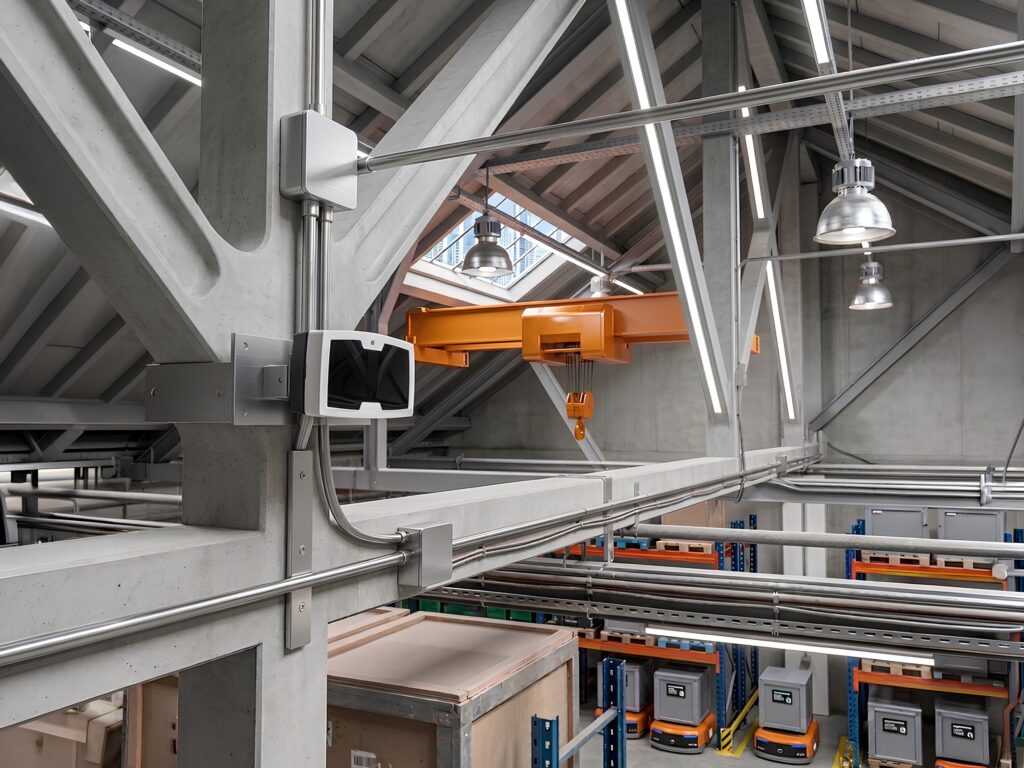
Comelit-PAC has launched a new range of linear beam smoke detectors designed to simplify the protection of large, open spaces, combining easier commissioning with compatibility across both addressable and conventional fire alarm systems. Developed for applications such as warehouses, atriums, industrial facilities, sports halls and other high-ceiling environments, the new detectors use reflective infrared beam technology to monitor for the presence of smoke over distances of up to 120 metres. The range comprises four models, with addressable and conventional variants covering applications from 5 to 60 metres and from 50 to 120 metres and is compatible with Comelit-PAC’s Logifire addressable panels alongside conventional fire systems. Simplifying protection in large spaces Says Mandy Bowden, Fire Systems Business Manager UK & ROI at Comelit-PAC: “As warehouses become larger, industrial facilities more complex and public spaces increasingly multi-purpose, there’s growing demand for technologies to deliver reliable coverage without adding unnecessary complexity. Our new beam detectors are giving customers access to a broader range of solutions from a single trusted partner, making it easier to specify and support the right system for every application.” Certified to EN54-12, with the addressable models also incorporating EN54-17 certified short-circuit isolation, the detectors have been designed to support straightforward installation and reliable performance. Smart alignment technology automatically optimises the signal during commissioning, reducing the need for fine calibration, while an integrated laser pointer assists with setup. The detectors automatically compensate for environmental changes that could affect performance over time, including dust build-up, minor structural movement and temperature fluctuations. This helps maintain stable sensitivity and reduce the risk of unwanted alarms, with maintenance alerts generated when cleaning or servicing is required. Supporting long-term reliability and performance Addressable versions offer additional functionality through the control panel, including programming, real-time alignment display and dual sensitivity settings for day and night operation. They can be powered directly from the loop or via an external power supply and are designed with low current consumption. Mandy concluded: “Every site varies considerably in scale and complexity, which means fire detection technologies need to respond to very different operational demands. The focus of this launch is to present solutions to maintain consistent performance despite changing environmental conditions over time. Long-term reliability and suitability for the environment are now just as important as meeting the initial design requirements.” Across the range, the detectors are IP65 rated and suitable for operating temperatures from -20°C to +60°C. Remote indicator connections are provided, while the conventional models can also be integrated with third-party systems.

Comelit-PAC Launches New Smoke Detectors Read More »

Scroll to Top