Fire & Security Pakistan
Teaser: Karachi Expo Centre, Karachi, Pakistan Website: http://www.firesecurity.com/pk
Fire & Security Pakistan Read More »

Teaser: Karachi Expo Centre, Karachi, Pakistan Website: http://www.firesecurity.com/pk
Fire & Security Pakistan Read More »
Teaser: Birmingham NEC, Birmingham, UK Website: http://www.internationalfirex.co.uk
International Firex 2011 Read More »
Teaser: Expocentr’s Fairgrounds, Moscow, Russia Website: http://www.mips-expo.com
MIPS 2011 – The 17th International Exhibition Protection, Security and Fire Safety Read More »
Teaser: Jeddah Centre for Forums & Events, Saudi Arabia Website: http://www.protex-arabia.com
Teaser: Indiana Convention Centre & Lucas Oil Stadium, Indianapolis IN, USA Website: http://www.fdic.com
Teaser: Dubai International Convention and Exhibition Centre, Dubai, United Arab Emirates Website: http://www.intersecexpo.com
The People’s Republic of China is on a one-way highway to becoming the superpower of the twenty-first century. Many Western businesses underestimate the challenges they will face when trying to navigate commerce and trips to China. I have learned from my travels that prior to arriving in a foreign country; the more aware you are of that culture, the more respect you will earn as an American (westerner). An effort to understand and value their culture, values and tendencies (both business and otherwise) will go a long way. I will tell the story of my adventures in China; the successes, the failures, the highlights and even the near-death experiences. If you or your company has plans to enter the Chinese market, hopefully this article will give you insight into the challenges and the opportunities of doing business in the world’s most populated country. I arrived in Shanghai late on a Tuesday evening in October after a 13 hour plane ride from San Francisco. My business partner was sending a driver to pick me up from the airport. A voicemail indicated the driver will be one hour late due to an accident on the freeway he was on. I was about to find out first hand why my trip to China to train stabilisation in extrication was justified. I thought the craziest drivers were in Lima, Peru but I ‘When travelling to Asia, it is appropriate to bring a gift, usually regional or industry related, to the owner of the company.’ had never been to Asia. He bumped two cars and then turned the wrong way down a three-lane interstate! Then proceeded to make a U-turn while three lanes of traffic were speeding towards us at 95 km/hr! I came here to sell extrication tools… not be extricated. In the one hour drive from the airport to the hotel my driver was in two separate fender-benders and we witnessed a collision next to us on the freeway exit. Research aside; it is confirmed there is a need in China for extrication tools. I was taken to a restaurant and introduced to my translator, Rick. In the two week period of my trip, Rick proved to be a great resource and friend. He is very knowledgeable on his country’s history and politics and has a desire to educate me in Chinese culture. During my first meal in China, I already began my paradigm shift as Rick taught me Chinese table etiquette. First, it is rude to touch your mouth with your hands during a meal. Second, don’t set your chopsticks facing your plate. It is bad luck. They should be placed on the holders, parallel to the plate with the ends that touch your mouth facing away. My first day in Shanghai, I was to have a meeting with the business owner we have negotiated with to sell our tools in China. When traveling to Asia, it is appropriate to bring a gift,usually regional or industry related, to the owner of the company. I had purchased a traditional American helmet and had a custom shield made for my business owner’s company. It is more appropriate for the gift to be given on behalf of the whole company you represent and is for the whole group on the receiving end. I therefore made sure the company name was written in Chinese on the shield of the helmet. After the meeting, Rick took me on a tour of Shanghai. This is an incredibly vast city, with a population approaching 19 million people. That is the size of America’s top 5 cities… combined. Almost the entire city is under construction, as the 2010 International Exposition will be held there. Shanghai is seeing a metamorphosis similar to Beijing a few years ago prior to the 2008 Olympics. We flew to Beijing that evening to begin setting up the tradeshow booths at China Fire 2009. While at the tradeshow, I noticed many interesting things. First, the Chinese love sales demonstrations. I have attended many tradeshows, but have never seen more things crash, bang and explode. Regardless of the practicality of a demonstration, if it makes a loud noise or causes a scene, it will attract the very short attention span of a crowd. Dozens, sometimes a hundred or so Chinese firemen orusually regional or industry related, to the owner of the company. I had purchased a traditional American helmet and had a custom shield made for my business owner’s company. It is more appropriate for the gift to be given on behalf of the whole company you represent and is for the whole group on the receiving end. I therefore made sure the company name was written in Chinese on the shield of the helmet. After the meeting, Rick took me on a tour of Shanghai. This is an incredibly vast city, with a population approaching 19 million people. That is the size of America’s top 5 cities… combined. Almost the entire city is under construction, as the 2010 International Exposition will be held there. Shanghai is seeing a metamorphosis similar to Beijing a few years ago prior to the 2008 Olympics. We flew to Beijing that evening to begin setting up the tradeshow booths at China Fire 2009. While at the tradeshow, I noticed many interesting things. First, the Chinese love sales demonstrations. I have attended many tradeshows, but have never seen more things crash, bang and explode. Regardless of the practicality of a demonstration, if it makes a loud noise or causes a scene, it will attract the very short attention span of a crowd. Dozens, sometimes a hundred or so Chinese firemen ormilitary personnel will crowd around a demonstration that pushes a tool to its limits. Once the demonstration is over, they will rush around the tool to get a closer look, take a picture of it, and then move on. I walked around the show two separate times and noticed some very interesting things. Every product that has shown any popularity
Look both ways before crossing the street Read More »
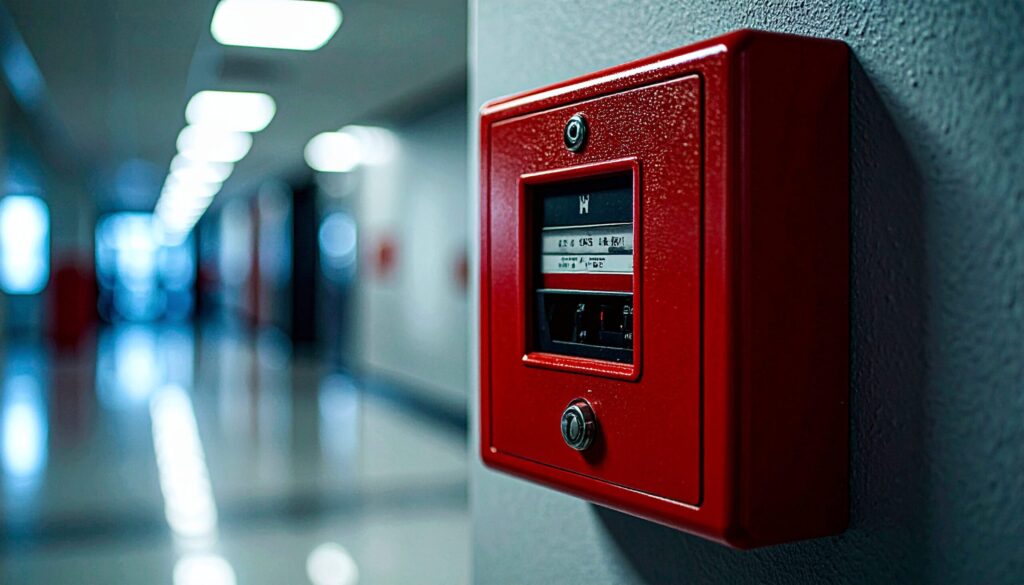
Source Capture technology Plymovent has over 30 years of experience and tens of thousands of source capture ventilation and filtration installations worldwide. With subsidiaries and distributors in over 45 countries, Plymovent is your knowledgeable partner for source capture technology. Over 50,000 Plymovent source capture systems across the world have been installed to reduce hazardous vehicle exhaust emissions in a variety of sectors including: · Volunteer and paid fire departments · EMS departments · Training facilities · Private and corporate fire stations · Airport ARFF stations · Military installations Plymovent are proud of the fact that fire fighters around the world find their vehicle exhaust systems reliable, easy to work with whilst at the same time ensuring a healthy working environment. The control equipment included in their automatic systems enables an on demand use of the system. The result is a reduction of electricity consumption and a lower heating cost due to the fact that the system is only used when needed. ‘Obviously a lower energy consumption will also have a positive effect on the global environment, reducing your stations carbon footprint.’ Obviously a lower energy consumption will also have a positive effect on the global environment, reducing your stations carbon footprint. Investing in a Plymovent system will not only save you money by reducing your use of energy, it will also enable you to help reduce global warming. One of their satisfied customers in the volunteer and professional fire department sector is the fire brigade in Kassel, Germany. In order to provide a cost effective system ensuring a healthy working environment for the Kassel Fire Brigade personnel Plymovent installed 2 types of fully automatic disconnect systems, the back in system (Sliding Balancer Track – SBT) and the drive thru system (Straight Rail – STR). The functionalities of the automatic Plymovent SBT / STR exhaust extraction systems are installed in line with the vehicle on the tailpipe side. The system can be installed on a ceiling, roof girders or wall, depending on the respective parking area of the vehicle. The system is custom made, keeping a number of variables in mind, such as the length of the vehicle which is normally parked in that position and its engine volume. ‘The Sliding Balancer Track (SBT) system uses a hose which is connected to a fixed duct.’ The Sliding Balancer Track (SBT) system uses a hose which is connected to a fixed duct. The exhaust gasses are captured when the vehicle starts and transported out of the building viathe ducts installed. The STR system uses a round profile which transports the exhaust gasses to the installed ducting at various points. This enables 2 vehicles to be parked behind each other in the same bay and by using a trolley, the exhaust gasses are also extracted from the start of the vehicle to the exit at the door. In order for the hoses to be handled in an efficient manner, the balancer and saddle keep the hose from the ground. This makes operating the system easy. The Pneumatic Grabber® is installed at the end of the hose and forms the connection from the system to the truck. The Grabber® operates by using compressed air, ensuring a virtually 100% seal between the system and the vehicle, this ensures that virtually all exhaust gasses are captured and removed, thereby protecting the people inside the station. Just before a vehicle enters the station, the Grabber® is positioned around the tailpipe; the fan will automatically start by using pressure switches. The Grabber® is manually inflated using the Pneumatic valve positioned on the hose, creating the seal around the tailpipe. The vehicle can now enter the station without any harmful exhaust gasses entering the building. The Plymovent systems will automatically activate via pressure sensors or can be activated manually. When a vehicle exits the building, the system will follow the truck inside the building and automatically disconnect when the vehicle exits. After a vehicle has exited the system will run for a moment and then automatically turn off. The Plymovent exhaust extraction system SBT and STR are TÜV certified for product safety in Germany. The Plymovent production facility is ISO 9001 certified. Benefits of the systems: · Virtually 100% source capture of dangerous exhaust gasses · Easy to operate · Clean air in the building · Low-noise level · Possible to exchange vehicles between bays and stations at all times · Low maintenance cost · Automatic de- and activation of the system · Fully automatic disconnect when exiting the station · Patented Safety disconnect · TÜV-Certified (Germany) For more information visit: www.plymovent.com Email [email protected]
Source Capture technology Read More »
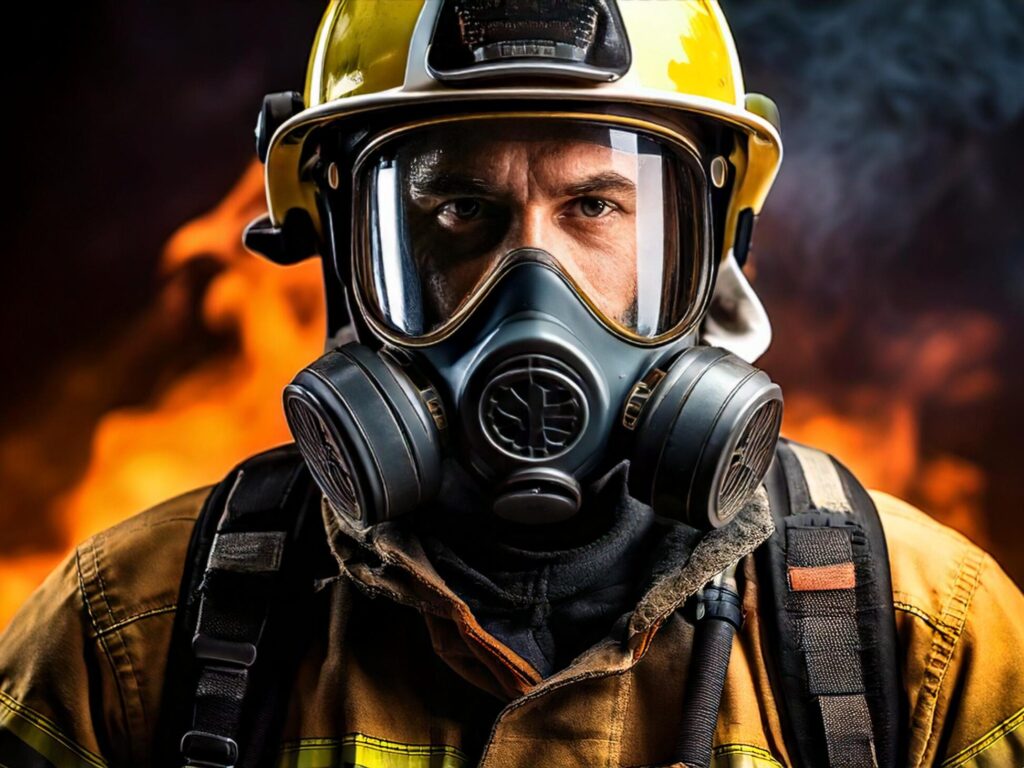
Detection and control systems To supplement each Janus Fire Systems® Fire Extinguishing System, Janus Fire Systems® offers a full line of alarm, detection, and control products. Detection Available detection devices include a selection of point type ionisation and photoelectric smoke detectors, point type or linear heat detectors, as well as hybrid detectors that combine several of these detection methods. Manual Stations Manual releasing stations and abort stations are available in models appropriate for each unique installation, whether indoor, outdoor, or in potentially explosive areas. Lockout and transfer switches are also available. Notification Varying types of horns, strobes, and horn-strobe combinations provide numerous alarm and notification options in standard, weatherproof, and explosion-proof models. Control Panels Janus Fire Systems® carries conventional and addressable control panels and the associated detection and accessories for both. The Janus Fire Systems® JFS-C1 conventional releasing panel provides a series of preset programs for a variety of common system arrangements as well as custom program capabilities. Janus Fire Systems® addressable panels support a variety of modules and auxiliary components allowing for diverse systems to fit the requirements of each extinguishing system. Air Sampling For unique early warning detection, Janus Fire Systems® offers the VESDA® Air Sampling Detection System. Air sampling detection differs from point type detection in that it uses piping lined with special orifices to draw air from the protected space to a detector that utilises a high-precision laser to analyse incoming air. The detector can detect background dirt and debris levels in order to adjust for and differentiate between dust and smoke particles. The orifices in the air sampling piping network are located in accordance with NFPA 72 and each orifice is listed as an individual detection device. The use of sample tubing allows for detection in very small spaces such as those found in switchgear, circuit breakers, and capacitor enclosures. It also makes the VESDA® detector immune to EMF and RFI emissions generated by high voltages and frequencies. VESDA® detectors are well suited for highly secure facilities such as clean rooms, underfloors, and ceiling spaces where vacuums or plenums exist with high air flow conditions. Chemguard Fire Suppression Foam Janus Fire Systems® is an authorized designer of suppression systems utilising Chemguard Fire Suppression Foam. Fire suppression foam is comprised of three parts: foam concentrate, water, and air. When mixed correctly, these parts form a homogenous foam blanket that extinguishes flames by the combined mechanisms of cooling, separating the flame source from the product surface, suppressing vapors, and smothering. Foam systems are used in protecting flammable and combustible liquids in locations such as airplane hangars, cable tunnel, tank farms, flammable liquid storage, warehouses, and loading facilities. Vortex Hybrid Watermist Systems Rounding out the Janus Fire Systems® product offering is the Vortex Hybrid Watermist Suppression System. This Hybrid watermist system utilises a homogenous mixture of water and nitrogen to extinguish fire using very small quantities of water; less than 1.5 gpm (5.67 lpm) for a volume of 2000 cu. ft. (56.63 cu.mt.). The average droplet size is less than 10 microns, virtually eliminating wetting. Applications include turbine compartments, machinery spaces, flammable material storage, and transformer vaults. Due to regional approvals this product may not be available in all areas. Engineering and calculation software Janus Fire Systems® employs an experienced staff of engineers and designers for all areas of special hazard protection who work together with authorised Janus Fire Systems® integrators to provide ideal solutions for each individual system and each unique hazard area. Janus Fire Systems® has also developed the Janus Design Suite™ Flow Calculation Software. This user-friendly program has been tested by both UL and FM and allows Janus Fire Systems® integrators to design and calculate agent systems precisely and accurately. Quality products combined with experience, innovation, and the Janus Fire Systems® commitment to service and excellence make Crown Point, Indiana, USA, the epicenter for special hazard fire extinguishing systems. Contact Janus Fire Systems ® at 1-219-663-1600 or visit our website: www.janusfiresystems.com
Janus Fire Systems Read More »
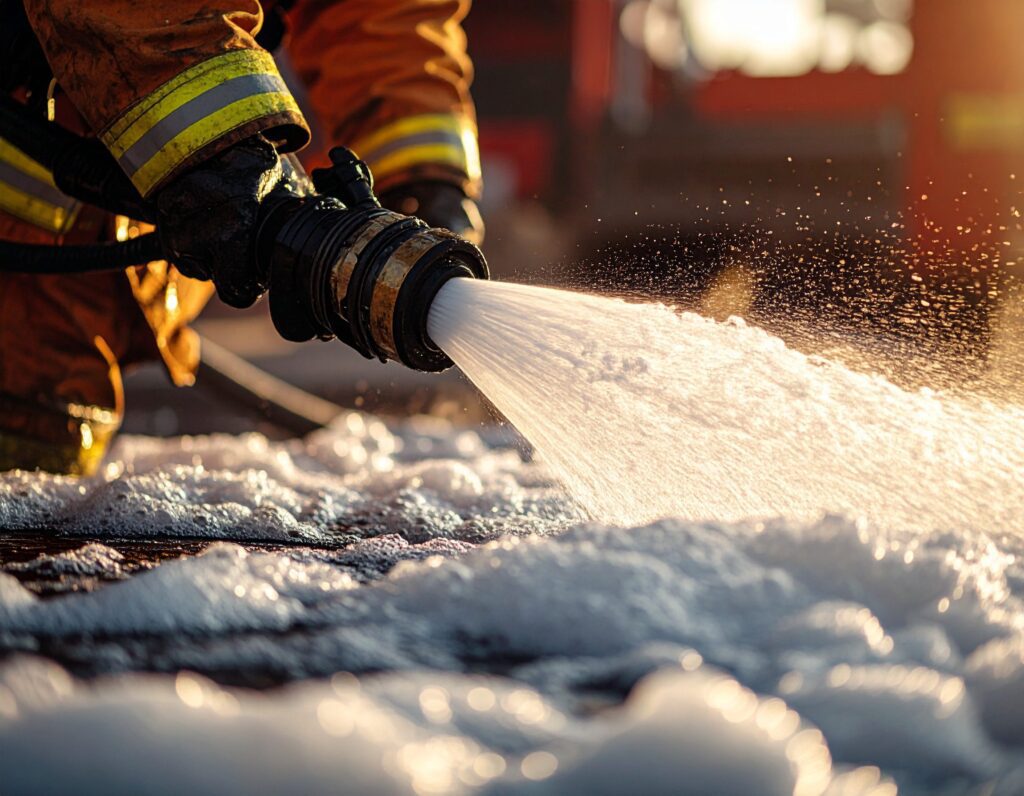
By Ray Mccormack Winning fires with water is based on several key factors such as: the amount of water brought to the battle, from supply volume to actual usage volume, to proper targeting of each individual water stream, and the selective placement of streams for maximum coverage and timely extinguishment. Firefighting is war. To win our individual daily battles, we must strategise on which tactics will safely and effectively give us the upper hand against the enemy. We can have multiple streams in operation, but if they are missing the target, we are loosing the battle. We must use our primary attack tool (water) effectively in both the advanced tacticalmode and in offensive/defensive platforms in order to win. Water supply both upon arrival and after supplementation gives us a foundation and reserve for continuous operations. The higher the number of supply and supply methods used the higher our level of safety should be. Supply provided by only a single source no matter what the number (volume) is never as prudent as having multiple sources. All of our water sources should be maximised with total volume pulled surpassing need. When we arrive with our pumpers, provide a static amount of water to initiate some type of fire operation. If you feel that your fire race is equal to 1,000 gallons then starting off with a pumperthat only contains 500 gallons can lead to a disappointing finish. We must be able to judge the effect of our actions prior to implementing them. A fire that requires thousands of gallons of water for extinguishment may be quickly reduced if the sweet spot is hit with those 500 gallons of water. These are judgment calls based on many factors; two of the leading contributors being urgency and growth potential. Having a sustained water supply is one of the keys to an effective offensive/defensive operation. Many times our offensive water demand will later be dwarfed by the increased water supply demand of defensive operations. Defensive operations that switch from small handline suppression to appliance assisted suppression require a tremendous increase in water volume to work effectively. This transition time can allow for exponential fire spread. When larger handlines are used, this transfer works better because these lines double nicely as supply lines for appliances, thereby saving time and effort. Any appliance that can be feed from multiple supply lines with separate water sources allows for a fail safe(r) operation. When we miss the target by not hitting the seat of the fire we have a problem. You can lob all the water you want at the fire but if it is not getting there it is a wasted effort. Many times we follow standards of line placement that embrace interior attack; when we move to defensive operations, hoseline placement considerations change. We must place stream ‘having a sustained water supply is one of the keys to an effective offensive/defensive operation.’ reach high on our list of priorities to keep us outside the collapse zone. Proper stream placement helps to prevent many things including collapse, due to reduced burn time and water/ absorption. Fires don’t exist in a vacuum; most times they leave behind a debris field for us to examine. If you are not standing on top of or amongst a pile of burned out rubb, then you may still have more work to do. An even bigger problem is when we think we have extinguished the fire and we have not. I once had this happen to me. Just as I reported “all visible fire knocked down” I knew I had spoken too soon. The IC quickly countered with “What about the fire blowing out the window into the shaft”? I replied “I haven’t gotten to the invisible fire yet!” We must make sure that we also understand volume. The volume of space contained within the fire compartment and the need for effective hoseline selection and a heightened awareness for usage. Compartment height is often a dimension that gets little consideration for its relationship to dramatic fire growth, and potential fireground emergencies. Water does a great job of extinguishment; it is up to us to know the correct amount to bring to the battle, to reinforce the battle and to win the battle. Redundancy and independence are the two foundational blocks of water supply that increase tactical safety on any fireground Biography Ray McCormack is a 27 year veteran of the FDNY and currently a Lieutenant with Ladder 28 in Harlem. He is a contributor to WNYF (With New York Firefighters) magazine. He has presented at FDIC and FDIC East, Firehouse Expo, Firehouse Central and Firehouse World. His video tips on engine tactics appear on FireEngineering.com. He is a lead instructor at FDTN’s Engine Company Operations class. He is the founder of liveburntraining.com which provides firefighter training and benefit seminars. He lectures frequently on the role of the company officer, engine and ladder company tactical operations. He has a BA from the New York Institute of Technology. Email Ray McCormack on [email protected]
Winning fires with water Read More »