Image of Wildfire - Fire Buyer

DLK 55 CS

Model number: DLK 55 CS Make: IVECO Magirus Weblink: http://www.iveco-magirus.de Key features: Increased active and passive safety through the introduction of proven computer technology and the sensitive, self-levelling turntable which functions without any readjustment Development of operational possibilities due to VARIO-jacking system and gliding overhang-control Increased ease of movement & reduction in set up time, via the new load-sensing hydraulic system Disruption-free digital signal processing Ladder platform and equipment manufactured using the unique MAGIRUS AluFire modular system to allow optimum utilization of interior space and save weight Ergonomically designed weatherproof seat Multi-functional joysticks for ladder control Colour operating display for all ladder functions / status messages Permanently installed rescue cage with quick-access facility Specification Attachment: IVECO-Magirus-DLK-55-CS.pdf Teaser: TURNTABLE LADDER Turntable ladders with a 55 m working height are vital pieces of rescue equipment which must fulfil the toughest of requirements. For a safe and secure way upwards, both the jacking technology as well as the stability and statics of the ladder set are of the greatest importance. More than 145 years of know-how from MAGIRUS in the development and manufacture of ladders is a further guarantee that operation personnel can climb quickly and problem-free. In addition to a 2-person elevator, the DLK 55 CS features a permanently mounted folding rescue cage which has been approved for 3 persons.  

DLK 55 CS Read More »

ARFF Vehicle image - Fire Buyer

Allrounder

Model number: Allrounder Make: Bronto Skylift Oy Ab Weblink: http://www.bronto.fi Specification Attachment: AllRounder.pdf Teaser: Full Capability Aerial Vehicle The ALLROUNDER® concept allows for adding all conventional aerial capabilities to those of a conventional fire truck, thus creating a significantly more versatile vehicle, without adding to the running costs. The vehicle allows for high customization in order to comply with the operational requirements of most environments. ALLROUNDER® can be effectively used as: front line water tender high rise rescuer / fire fighter light tower high rise ventilation tower unmanned extinguishing tower crane – thus considerably increasing the utilization of the vehicle. As a water tender the unit can be equipped with midship or rear mounted water pump up to 6000 l/min with single/multi pressure and a large water and foam tank up to 11000 l. ALLROUNDER® units have an integrated corrosion-resistant water way. Added aerial capabilities: Max rescue height up to 30 m Continuous rescue capability by platform with 3-men capacity, safe working load up to 270 kg Mass rescue with rescue ladder Automatic levelling of the vehicle by one-push button Interactive control system Visual guidance for aerial operations Fully proportional controls for all aerial movements Smooth adjustable and customizable take-off s and slowdowns Visual trouble-shooting system

Allrounder Read More »

ARFF Vehicle image - Fire Buyer

Mini-Pumper

Model number: Rosenbauer Make: Mini Pumper Weblink: http://www.rosenbauer.com/ Key features: Mini-Pumper Specification Options: Body Choices: Central™, General™, Fireline™, Centurion™ Storage Capacity: Variable Body Material: 1/8", 3/16" Aluminum, 12 & 10 Ga. Steel Pump Capacity: 10 – 1250 GPM Pump: Rosenbauer™, Darley, Waterous™, Hale™ Pump Mount: Side, Top, Rear Commercial Chassis: All major manufacturers Specification Attachment: minipumper_eng.pdf Teaser: Built to fit your needs There’s nothing wrong with arriving on-scene in the best looking unit in the county! Rosenbauer knows custom, including how your finished unit looks with shades. Stellar aluminum wheels, custom front grill cover, LED warning light packages, diamond plate, fire engine red paint, z reflective striping, roll-up doors, topping off with ground ladder storage.  

Mini-Pumper Read More »

Firefighting foam being sprayed from fire hose image - Fire Buyer

Interschutz 2010 and Rosenbauer

Capturing the industry’s imagination This year, no other program item has captured the attention of the international fire industry to the extent achieved by the leading “INTERSCHUTZ 2010 – Der Rote Hahn” trade fair, which took place in Leipzig from June 7-12. Taking a look back at the INTERSCHUTZ 2010 in Leipzig, a total of 125,000 trade show visitors, a number which exceeded the expectations of the exhibitors by far, made the numerous preparations for this big event of the year well worth it. Rosenbauer displayed its complete performance and product range on nearly 5,000 m² of floor space and was rewarded with approval from all sides. The new AT – the municipal fire service vehicle of the future The AT from Rosenbauer has been a byword among fire services for more than 15 years. Moreover, ever since the first generation, it has been subject to ongoing improvements and in the meantime, over 2,000 vehicles are in operation worldwide. Now, this year’s INTERSCHUTZ is to witness Rosenbauer’s presentation of the latest AT generation. Two characteristics speak volumes about the new AT, namely compactness and quality. The ratio of the storage space volume to the external dimensions has been further increased and for the first time, the entire room available in the superstructure can be used with absolute flexibility. The extinguishing technology of the new AT “thinks”. A central water axis undertakes logical water distribution precisely where and whenever it is required, whether this be to the tank, the pump, or both simultaneously. Such distribution can also be supplemented by feed pressure control, which is regulated automatically. A further AT highlight is the Rosenbauer Electric Power System (EPS), a hybrid system developed especially for use in firefighting vehicles. This provides up to 140 kVA at a constant 400 V and 50 Hz. EPS stands for a modular system consisting of an integrated generator, converter and the respective electrical consumers in various performance classes. Not only can the consumers in the vehicle be fed via the EPS, but also an external emergency supply. PANTHER – The leading international airport firefighting vehicle For almost 20 years, the PANTHER has represented the global benchmark for airport firefighting vehicles and not only due to its media presence, is one of the global standard-bearers of the Rosenbauer Group. Accordingly, as the world’s most famous ARFF, the PANTHER was also be on display at this year’s leading “ INTERSCHUTZ – Der Rote Hahn” trade fair. The PANTHER series consists of 2-, 3- and 4-axle chassis with permanent all-wheel drive, 500 -1,260 hp engines and tank volumes of 6,000 -19,000 l. The optimum system integration of chassis, superstructure and extinguishing technology on a one-stop shopping basis is also a decisive element in the PANTHER’s world market success. The fact that for many years, with regard to performance, extinguishing capacity, model diversity and design there has been no comparable product on the market, distinguishes the PANTHER as a top international product. Perfect interplay between chassis and superstructure. The chassis are a Rosenbauer in-house development and are continually adapted to the steadily increasing demands with regard to performance and emissions by means of company know-how. This guarantees that the chassis and the superstructure match perfectly, and extreme torque resistance is achieved by means of closed box frame sections and welded transverse supports. Together with individual axle suspension and progressive coil springs, this provides maximum on- and off-road driving safety and mobility. The two- and three-axle chassis are produced by Rosenbauer Motors in Wyoming, Minnesota, while the four-axle versions are manufactured in Europe. The PANTHER is available in single- and double-engine versions with outputs of 500 – 1,260 hp. The selected engines correspond with the respective, current exhaust gas regulations (e.g. EURO 5 with TÜV certification). With an operational weight of almost 50 t, the enormous engine performance provided by the four-axle, double engine configuration permits acceleration of 0 – 80 kph in less than 25 seconds and a top speed in excess of 135 kph. In the double engine version, during start- up both motors are mechanically linked and the entire output split among all four axles. In addition, the futuristic appearance and formally demanding lines of the vehicle generate high levels of product recall and Rosenbauer has received numerous international design prizes as a result. In 2006, the PANTHER even won the coveted “iF design award“, the “red dot award”, the “Focus Energy in Gold” and the IDEA design prize in the USA. Perfect extinguishing technology The entire extinguishing technology represents a completely integrated and efficient system and offers pump output of up to 10,000 l/min. All PANTHER models allow simultaneous and independent extinguishing and driving (pump & roll). In the case of the four-axle, double engine model, during extinguishing the engines are disconnected, one supplying the drive train to all four axles and the other, the pump system. Roof and front monitors have an output of up to 10,000 l/min and a throw range of over 90 m. As an option, the PANTHER can be equipped with the Rosenbauer STINGER turret. Düsseldorf Airport receives a new PANTHER 8×8 SWB This year, the PANTHER family has been supplemented with another brand-new model. As the global market leader, Rosenbauer will be supplying the PANTHER 8×8 with a shortened wheelbase and the airports in both Leipzig and Düsseldorf will already be putting this multifunctional vehicle into operation in 2010. The most obvious visible change in the PANTHER 8×8 SWB (Short Wheel Base) as opposed to the standard version is the wheelbase, which has been shortened by around a meter. Nonetheless, the top quality features remain exactly the same with engine output of 1,260 hp and permanent eight-wheel drive. The extinguishing technology is also free from limitations with an N100 pump, FOAMATIC RVME 600 foam system, RM60 roof monitor, RM25 roof monitor, etc. and in addition, the vehicle can be fitted with STINGER turret. The most important differences to the PANTHER with a long wheelbase derive from the fact that SWB

Interschutz 2010 and Rosenbauer Read More »

Firefighting foam being sprayed from fire hose - Fire Buyer

World leaders in flame resistant cellulosic manmade fibres

Prominent at Interschutz were Lenzing, the world leaders in flame resistant cellulosic manmade fibres for fire fighters and other workers in hazardous environments. The company’s principal product for the fire fighting market, Lenzing FR®, is a natural fibre derived from wood with a track record covering 30 years. It offers protection from heat and flame in a variety of applications. Unique thermal insulation properties combined with permanent flame resistance make Lenzing FR® a ‘heat protection fibre.’ The fibre offers protection from all kinds of heat – which see it used at foundries and smelting plants as well as by fire crew – and its properties assist in preventing heat stress and heat stroke. Metal workers who are accustomed to high levels of conductive and radiant heat as well as the possibility of convective heat combined with a risk of liquid metal splashes appreciate the fibre more than most. In addition to protection, benefits include breathability and improved moisture management through wicking, the process by which perspiration leaves the skin’s surface and subsequent evaporation has a cooling effect. Advances by the Austrian company means that there is no longer a need to agonise over trade-offs between protection and comfort. Similarly, personnel and safety managers do not need to worry unduly over workers not wearing protective garments since the fabric is likely to be more comfortable than regular clothes. in tests conducted by lenzing and by external partners and standards authorities, the fibre has been shown to lower heat transfer since it carbonises.’   Staff at the Lenzing booth at Interschutz explained to Fire Buyer that their product is used in blends with other high performance fibres. As part of the outer shell of a fire fighter’s garments, the fibre brings heat protection as well as comfort due to the softer touch of the fabric. Used as a base layer material in underwear absorbing moisture rapidly, the product can cool a fire fighter’s body down rapidly in action. It may be a platitude but it needs to be remembered that the skin is the body’s largest and most fragile organ. In tests conducted by Lenzing and by external partners and standards authorities, the fibre has been shown to lower heat transfer since it carbonises. Stability is also brought to the fabric of the fire fighter’s outfit as heat shrinkage is reduced. Medical personnel experienced in treating burns will often highlight the forearm as a problem area, usually because of the tightness of the garment. A fire fighter’s tunic must be tight around the cuff so that flames do not enter by the sleeve but this makes the forearm vulnerable to burns. The same is true of the calf area since a garment will be body-hugging around the ankles. Regular fabrics do not carbonise but simply swell and shorten in dimensions in fire conditions. A garment with a Lenzing FR® mix has dimensional stability; it retains its proportions and carbonises, so avoiding the disintegration that is associated with fabric becoming brittle. The natural raw material used to produce Lenzing FR® is beech wood and the entire manufacturing process is monitored strictly in terms of ecological integrity. The company can therefore be proud of its green credentials since a principal content is a renewable resource. Production of the Lenzing FR® fibre sees a halogen- free flame retardant agent incorporated into the spinning mass and the creation of an inherently flame-resistant fibre. Lenzing FR® is often introduced to overall fabric composition at just 30 percent but leads to radical improvements and does not impact on durability of the garment or the ability to apply dies and launder it regularly. The flame retardant content is incorporated throughout the cross section of the fibre; it lasts the lifetime of the garment and is not compromised by friction in everyday use. Natural bacterio-static content even reduces problems with trapped body odour. The incorporated pigment is free from brominates and antimon-trioxides. While the most common application of the fibre is tunics, jackets and trousers… ‘Convective, conductive and radiant heat are all relevant, and the spectrum is far more complex than simple flames.’ it can also be used in protective hoods, hats, t-shirts, underwear, gloves and socks. Far from making uniform and industrial clothing unpleasant to wear, the fibre renders fabrics soft and comfortable on the skin. Lenzing FR® feels immediately cool, even after severe flame and heat exposure. Items made from a blend of the Lenzing product and other high-performance fibres offer excellent resistance to abrasion as well as resistance to liquid fuels and alkalis that can all be hazards encountered by a fire fighter. The incorporated fame retardant agent is free from halogens so that no toxic gases are produced on exposure to heat and flames. Anti-static properties are also of a high order and the wide-ranging improvements in comfort can help a worker focus on a task and reduce the risk of industrial injury from other factors. There is also a wide range of protection from potential risks such as radiant heat, electrical arcs, short-term flames, sparks and metal splashes. Although Fire Buyer saw the Lenzing products at the fire trade fair Interschutz, the company was keen to stress the applications in any environment involving heat and controlled flame as part of an industrial process. Convective, conductive and radiant heat are all relevant, and the spectrum is far more complex than simple flames. Molten metal operatives have long appreciated the heat controlling properties of garments with a Lenzing FR® component and are aware that there is no tendency for the material to stick to metal. Casting, re-melting and many maintenance activities are all areas where staff can benefit, and major metal producers endorse Lenzing FR® -based garments as providing optimum molten aluminium and cryolite protection. Observing crews performing timed exercises in the heat wave that accompanied the Interschutz show in Leipzig, Fire Buyer reporters quickly appreciated the importance of wickability in crew uniform. (Members of the general public at the trade fair who had not exerted

World leaders in flame resistant cellulosic manmade fibres Read More »

Firefighting equipment image - Fire Buyer

Optimal rescue operations

“The new liberty in rescue” is the marketing strapline for current LUKAS products, a reference to the company’s ability to allow fire fighters access to cramped areas using powerful hydraulic tools without hoses. The ability to effect rescues without the restrictions imposed by power units and hose length is undoubtedly a life-saver. Where vehicles are involved in remote off-road accidents, it can often be difficult for rescue teams to get sufficiently close to the site and the problem is even greater in the case of major accidents, as rescue workers need to be virtually everywhere at once. Up until now, hoses and the location of the power unit limited how far rescue workers could go when accessing such incident sites and extricating victims. But with electrohydraulics, rescue workers have a new freedom that makes them more effective. LUKAS pride themselves on providing crews with the means for optimal rescue operations through attention to detail, ergonomics, innovation and the ultimately reliable performance of their products which make rescues faster and safer. The company’s revolutionary eDRAULIC technology impressed every visitor to the stand during the Interschutz trade show. LUKAS was the first manufacturer to produce a hydraulic cutter and the company continues to be at the leading edge of development. The units are used by fire services in over 120 countries. The product range includes a large selection of cutters,spreaders, combination tools, and rescue rams. ‘through innovation and design, luKas remains the market leader and the largest manufacturer of hydraulic rescue equipment worldwide.’   Footage of a LUKAS eDRAULIC unit cutting through the ‘A’ post of a Mercedes S Class was the single most dramatic image that Fire Buyer reporters remember from the recent Leipzig trade show. Through innovation and design, LUKAS remains the market leader and the largest manufacturer of hydraulic rescue equipment worldwide. The company places particularly high demands on its products and submits them to rigorous testing. This testing not only meets but exceeds the requirements of international standards bodies such as such as EN,DIN, NFS and NFPA. LUKAS’s eDRAULIC series of next-generation rescue tools are completely portable units that still match the hydraulic performance of conventional devices using hoses. The company has applied a global development initiative to how power is used within rescue. In combination with the patented star grip, the products allow crew to follow ergonomically sound working methods, Making operating methods easier for the user is helping to save lives. The revolutionary eDRAULIC products require only half the space and weight of conventional hydraulic sets as they do not need hoses, hose reels and heavy power units. Typically there is a saving of 70-80 kilos for a fire crew responding to a call out. With trucks often packed to the limits, rescuers are now able to take more lifesaving equipment to the rescue scene. With their lithium-ion energy source, the eDRAULIC tools become completely mobile and facilitate rescue in off-road and large-scale accidents. Speaking to Fire Buyer, LUKAS engineers stressed how in a multiple highway pile-up, fire officers using hydraulic equipment that is not fettered by a hose can weave between vehicles and access areas where their trucks cannot proceed. For years there has been excessive focus on use of hydraulic hoses in the rescue sector. But the hoses have never rescued anybody and LUKAS have focused on the core task of freeing victims by using portable cutting and spreading devices. Fire crews have quickly recognised that despite their portable nature, these are full-performance tools. ‘fire crews have quickly recognised that these are full-performace tools.’   Products demonstrated on the Interschutz stand included the S 700 E cutter which has been developed for current and upcoming vehicles with stronger and wider structural posts demanding more power if they are to be dismantled as crews try to rescue those inside. The S 700 E’s C-shaped blades combine a cutting and pulling effect, while intelligent cutter geometry means the mechanism automatically adopts an optimum position. This unit weighs only 52.9 lbs (24.1 kg.) LUKAS engineers have even included performance reserves to anticipate developments in vehicle technology. The ‘little brother’ of the S 700 E, the S 311 E also uses sophisticated blade geometry and rescue workers are already appreciating its combination of cutting performance and blade opening as well as the minimised weight of 38.6 lbs (17.5 kg.) A product that employs the same portable hydraulic technology is the R 411 E rescue ram whose claws can be rotated through 360 degrees, so allowing precise application. Accessories include a robust extension piece that brings the R 411’s fully extended length up to 47.4 in (1,205 mm.) Dimensions (l x w x h) are 21.5 x 5.9 x 10.4 in or 545 x 150 x 265 mm. Aimed directly but not exclusively at passenger accident extrication is the SP 300 E top spreader which offers an optimum combination of strength, spreading distance and weight. The spreader’s innovative diamond tips are very flat for better access to narrow gaps. Their special ‘diamond’- shape surface structure provides exceptional grip. The simplicity of LUKAS’s design principles means that there is one battery type for all the tools with fast change from mains power cable to battery operation. The battery compartment is illuminated for night work. The units described here met the immediate approval of fire brigades and rescue workers when they were demonstrated in Leipzig, with observers immediately commenting on the fact that the products offer independence from power units and hoses without compromising functionality. This range of portable devices is the culmination of 15 years of development in electrohydraulics, with the company’s engineers co-operating closely with international rescue teams and making note of feedback. The thoroughly positive reception at Interschutz has been an endorsement of these efforts. Telephone: +49 9131 6980 Web: www.lukas.com  Email: [email protected]  

Optimal rescue operations Read More »

Firefighting foam being sprayed from fire hose - Fire Buyer

Company Profile – Innovative Oshkosh

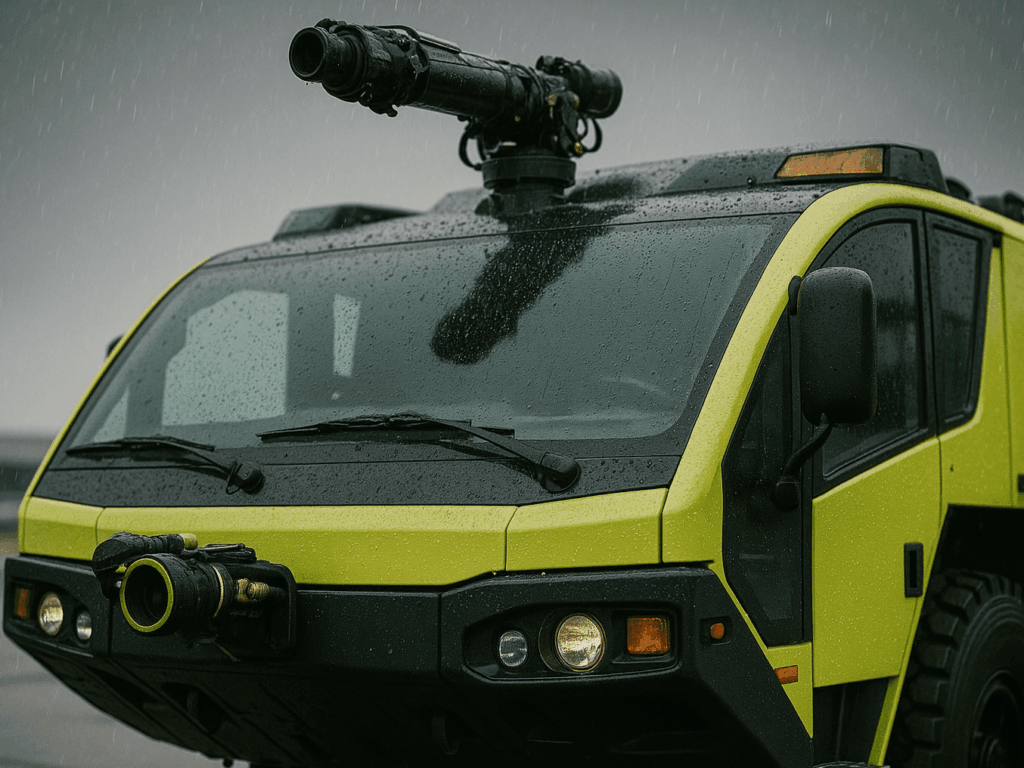
At Interschutz 2010, Oshkosh Corporation Fire & Emergency segment, which includes Oshkosh Airport Products and Pierce Manufacturing, introduced new products to the European market. Attracting huge interest from visitors to the show in Leipzig, Germany, was the new Striker Aircraft Rescue and Fire Fighting (ARFF) vehicle. Under development for more than three years, the new Striker delivers innovative fire suppression technology through unmatched chassis performance and advanced safety systems. Aimed at both civilian and military sites, the vehicle features a 700-horsepower engine and a wheelbase of 236 inches. With hydrants often unavailable at airport locations, there is a high demand in this sector for vehicles than can hold significant volumes of water and the Striker carries 1,500, 3,000 or 4,500 gallons. Direct input from customers during product development is a hallmark of the Oshkosh research and development cycle. “The new Oshkosh Striker was designed and built to meet the most demanding fire rescue environments faced by our airport customers,” said Robert G. Bohn, Oshkosh Corporation chairman and chief executive officer. He continued: “The final design of this vehicle is testament to the input from airport fire chiefs and fire fighters around the world. We integrated their ideas and needs with our technical, engineering and manufacturing expertise to create an aircraft rescue and firefighting vehicle that will protect fire fighters and help save lives in airport emergencies.”As Fire Buyer inspected the vehicle at Interschutz, company development engineers illustrated Striker’s many innovative features such as Pulse Delivery® technology that allows crew to deliver truly dry chemical powder over 90 feet (27metres), more than three times the capability of other dry chemical delivery systems offered by competitors. Airport trucks frequently use more chemical agents than municipal vehicles, and capacity for dry chemical agent is 500 pounds. There is also electronic foam proportioning and a high-reach extendable turret. The foam tanks carry 420 gallons. Depending on customer requirements, the water system can operate at as low as 300 gallons per minute. The vehicle is pushing functionality to it limits while maintaining Oshkosh’s pedigree of reliability. No less than seven customer focus groups were involved in the end-user feedback mentioned here by Robert G. Bohn, with Oshkosh even visiting their competitors’ customers as well as their own client base to find out what was needed in the field. Patented suspension Pierce developers and research staff were aware that incidents seldom occur on flat parts of a runway or apron; aircraft tend to crash in ravines and ditches around an airport’s perimeter. Striker can access difficult areas, having 16 inches of wheel travel for improved off-tarmac mobility. The suspension is Oshkosh’s patented TAK-4® all-wheel solution with dual control arms. From a driveline standpoint the only components that Oshkoshpurchase are the engine and transmission. At 2,000 pounds lighter than its predecessor, the new Striker is generally more manoeuvrable over difficult terrain, has good acceleration and brings fuel usage economies. The model is designed to exceed National Fire Prevention Association (NFPA) requirements for static side slope stability and the cab is also built to meet Europe’s stringent standards for structural integrity. Oshkosh looked at regulatory requirements across the globe during development. Many clients asked for a vehicle that could if necessary be operated by two crew members. International usage meant that colour-coded controls were crucial for multi-language usage. ‘the Pierce PuC is ideal for municipal fire fighting and emergancy response challenges.’ From past experience Oshkosh knew that succinct translation of control descriptions into Far Eastern languages was difficult and intelligent use of graphical symbols was crucial. Similarly, ergonomic studies revealed that the average height of a fire fighter in the Pacific Rim is six inches less than that of their counterparts in the US and Europe, so there step access to upper compartments was incorporated. With 20 new airports currently being built in China, such attention to detail is crucial. The vehicle configuration ensures that all controls in the mission console can be reached from a seated position. Oshkosh were aware of the demands on vehicle captains during incidents and that frequently the captain will be listening to three radios, these being the airport tower, the fire chief and ambulance services. A vehicle may well approach an aircraft at 100 kilometres per hour. Observing a situation and making life- critical decisions based on a quick summary of the site demands optimum visibility from the cab, especially when the view may be obscured as hoses are deployed and crew work near the vehicle. Also on display from Pierce Fire & Emergency at Interschutz was the Pierce Ultimate Configuration (PUC) vehicle. The PUC is an industry-changing multi-purpose response vehicle that is engineered to eliminate the need for a bulky pump house. With a wheelbase as short as 172 inches for improved handling, the PUC also provides up to 500 cubic-feet of storage. The PUC is available on all Pierce custom chassis in side and top mount configurations, as well as on aerial ladders, aerial platforms, pumper/tankers, PUC rescues and custom Contender® vehicles. First introduced in 2007, the PUC – which is engineered to operate on a short wheelbase while also being able to carry extensive emergency equipment – is among the most successful products in Pierce manufacturing history. Fire departments had indicated to Piece that what they wanted in a first response vehicle was a truck that could dramatically reduces operational steps. Clients wanted something that was safer to use and easy to operate. They also needed free access throughout for easier servicing. Users wanted better organisation and ergonomics with more compartment space. But all in a rig that remained highly manoeuvrable. A frequent plea was: “Eliminate the pump house so the truck can be built around our needs on the ground and not the pump.” Jim Johnson, Oshkosh Corporation executive vice president and president, Fire & Emergency said: “The Pierce PUC is ideal for municipal fire fighting and emergency response challenges. Our innovative technologies and compact design made it a prime attraction for fire and emergency departments attending

Company Profile – Innovative Oshkosh Read More »

Modern fire fighting truck in city - Fire Buyer

Full Face Mask C 607/F (Class 3)

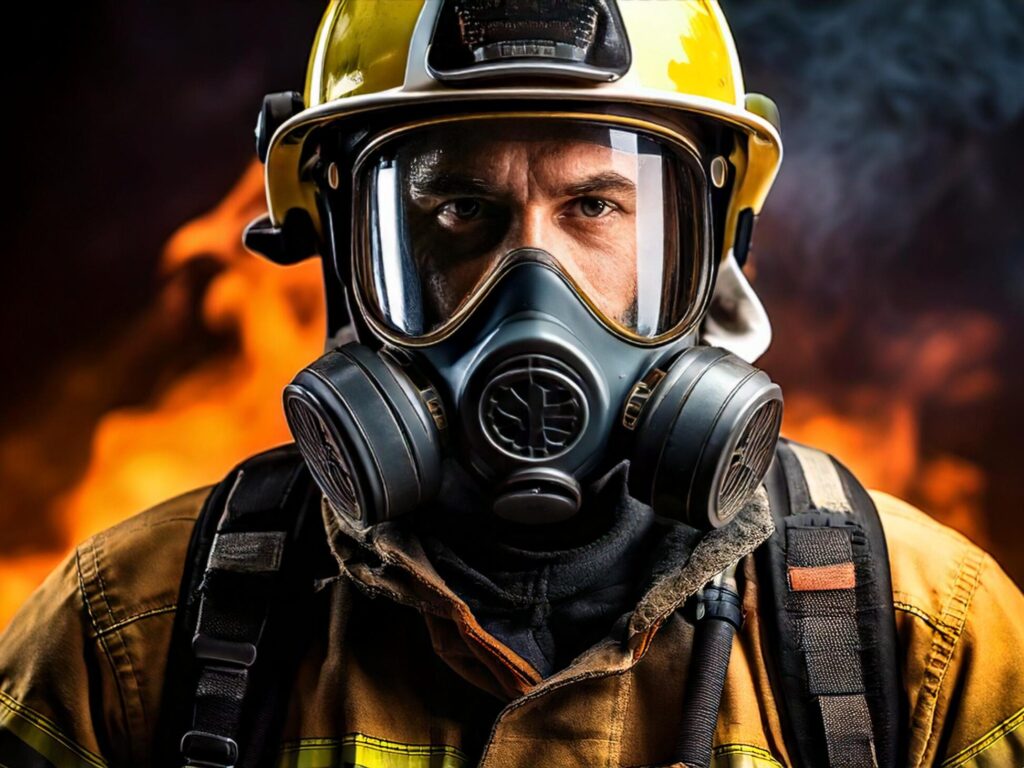
Weblink: http://www.ekastu.de/ Specification Attachment: Teaser: Approved for fire fighters. With standard thread connection DIN EN 148-1. Anti-fogging, non-reflecting and distortion-free polycarbonate visor shield with very large field of vision with standard thread connection DIN EN 148-1 Facepiece consists of non-irritating EPDM which is resistant to ageing and guarantees outstanding mechanical and chemical resistance. Built-in speech diaphragm. The outstanding transmission of the voice allows the use of megaphones, telephones and two-way radios. Universal size allows the mask to fit tightly but without pressure irrespective of the shape of the face. Two large exhalation valves with exhalation valve pre-chamber results in low exhalation resistance and prevents dangerous media from penetrating the inside of the mask. The inner mask is equipped with 2 check valves which reduce clearance volume and prevent the visor shield from misting up through even visor ventilation. Approved for firefighters.

Full Face Mask C 607/F (Class 3) Read More »

Scroll to Top