Image of Wildfire - Fire Buyer

State-of-the-art fire-fighting engines for Auckland Airport

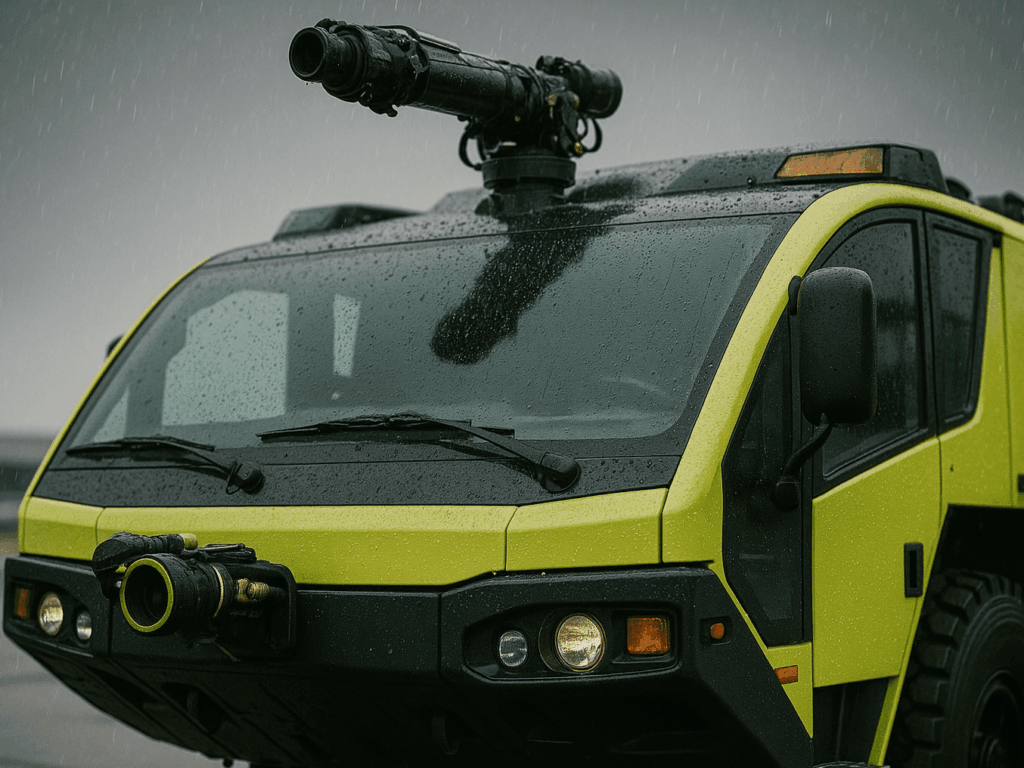
Rosenbauer Panther vehicles Four firefighting vehicles were unveiled today during a ceremony at Auckland Airport, declaring the new engines officially ready for service! The Rosenbauer Panthers are the most sophisticated firefighting vehicles on the market today and have been specifically designed to cater for the full fleet of aircraft serving Auckland including the increasing number of A380s that serve Auckland Airport. Judy Nicholl, Auckland Airport’s general manager aeronautical operations, says the four new Panthers were purchased by the airport for $5.3 million and will help to ensure the Airport Emergency Services team is providing the best emergency response possible. "The prime focus of our Emergency Services team is to save lives," says Ms Nicholl. "These new Panthers mean our team has the best equipment that is out there today, maximising our ability to save lives in an aviation rescue operation." "The new engines also form part of Auckland Airport’s ‘Faster, Higher, Stronger’ business strategy to invest in infrastructure to support our long-term growth requirements," says Ms Nicholl. "With these Panthers, we are proactively investing in the upgrade of Airport Emergency Services equipment to ensure we will continue to provide a world class response to an aviation incident." The vehicles, which came from Austria, were chosen through a worldwide tender process. The process was won by The Rosenbauer Group, a world leader in airport firefighting appliances. The Rosenbauer Panthers have state-of-the-art technology including engine and pump monitoring systems, CCTV, thermal imaging cameras and extinguishing systems. They are also the first firefighting vehicles of their size to comply with the environmental standard Euro 5. "The firefighting equipment built into these Panthers was also developed to meet the operational requirements of new generation aircraft including the A380, the largest passenger aircraft in service today," says Ms Nicholl. "This was important for us considering we already have three A380s serving Auckland Airport, a number which will only continue to increase." At the ceremony, which was held at Auckland Airport Emergency Services Fire station, the four Panthers received a blessing in which each vehicle was gifted with a local Maori ancestral name – Oruarangi, Waitomokia, Wairere and Waikohu. The Airport Emergency Services team is currently undergoing intensive training to ensure they are fully skilled in operating the Panthers, which have an operational life-span of 15 to 20 years.

State-of-the-art fire-fighting engines for Auckland Airport Read More »

Firefighting foam being sprayed from fire hose image - Fire Buyer

Kenbri Firefighting and Rosenbauer deliver eight AT3 pumpers

To the Dutch Air Force Command Kenbri Firefighting has recently delivered eight structural and rescue pumpers to the Dutch Air Force Command (CLSK), which will be deployed at airbases all over The Netherlands. The selected chassis is the Mercedes – Benz Atego 1529 F 4×2 with Rosenbauer AT3 superstructure. The order followed a European tender with Kenbri Firefighting being selected as the general contractor. The vehicles are to be deployed at different airbases in the Netherlands in both extinguishing and rescue work. The Rosenbauer Group is one of the leading manufacturers of firefighting and disaster protection vehicles for the airport, municipal and industrial sectors. The AT series is a well-developed standardized vehicle concept that is used worldwide. Kenbri Firefighting is the exclusive Rosenbauer dealer for the delivering of Rosenbauer vehicles and components in the Netherlands. The Rosenbauer AT3 vehicles are built on a Mercedes Benz Atego 1529 F chassis (GVW of 14.5 tonnes) with the F (Fire) denoting the special fire application and performance of the Atego Chassis. These features include a spacious cab with excellent visibility, a suspension system tailored to the specific area of deployment, an Allison fully automatic transmission with factory fitted PTO and a chassis prepared for a fire and rescue application. Mannus Bergboer of Kenbri Firefighting said: ‘The combination of an Atego chassis and a Rosenbauer superstructure is perfect, because the engineers at Daimler and Rosenbauer closely cooperated at a very early stage. This chassis and body are really attuned to the smallest detail on each other. This makes the combination of very high quality and while being extremely reliable. The cabin crew is an integral part of the superstructure. This results in a higher ceiling height and therefore more crew comfort. The outer seats in the crew cabin are equipped with safety belts and side airbags. The airbags are only available in conjunction with the safety belts and because the occupants are well positioned relative to the deployment of the air bag only. To improve communication between the driver cab and crew cab, he cab features the Rosenbauer intercom system. This means the crew in the cabin can listen to the radio communication and (if necessary) to simultaneously communicate with the driver and or officer. The vehicles are very well equipped with instruments that are unique according to Kenbri Firefighting. ‘These are high-tech products are optimally kitted out so that in ten years they will still be seen as modern. Vehicles are equipped with a central water axis and equipped with a 2,000-litre water tank and two 100-litre foam tanks. The Rosenbauer NH -35 combined high – and low-pressure fire pump has a capacity of 3,500 lpm and also includes the Rosenbauer DIGIMATIC adjustable foam proportioning system which is characterized by the highest degree of precision for the smallest proportioning quantities. Furthermore, the vehicles are equipped with Rosenbauer Flash WR15 CAFS system. CAFS (Compressed Air Foam System) consists of water, foam and compressed air. If these elements in the right proportions are brought together extremely stable CAFS foam is created. All the lights on the vehicles has been fitted out in LED`s, including the optical signals (class 1 & 2). The pneumatic light mast (Rosenbauer Flexi-light) is also fitted with eight LED lamps and provides illumination during night operations, equipped with a swivel and tilt capability. The Rosenbauer AT3 vehicles are not equipped with a standard red paint, but the special chrome yellow colour, which is standard for fire and rescue vehicles for the Dutch Military. It makes the vehicles much more visible during night operations as well. The Bull The Rosenbauer AT3 fire engines will serve alongside the previously delivered Rosenbauer Out-Of -Area vehicles based on the Mercedes – Benz Actros chassis. This vehicle is nicknamed ‘ The Bull ‘, and is used at Dutch airbases, but also in operational areas worldwide for securing the flight operations and associated camps. This 6×6 vehicle can operate over unpaved terrain independently and operate at temperatures from -32 ° C to +47 ° C, is equipped with a cabin controlled bumper monitor.’ The Rosenbauer RM25E rated to deliver up to 2200 L/Min at 15 Bar, also equipped with CAFS and associated rescue equipment.

Kenbri Firefighting and Rosenbauer deliver eight AT3 pumpers Read More »

ARFF Vehicle image - Fire Buyer

New York City building collapses after explosion

11 reported injuries New York City emergency crews are responding to reports of an explosion and building collapse that has reportedly injured 11 people. The incident occurred at 116th Street and Park Avenue on Wednesday morning. East Harlem residents reported hearing a blast in the five-storey apartment building before it caved in, according to US media. Aerial images of the site showed a huge pall of smoke or dust with fire crews dousing the rubble. Local media have reported at least 11 people suffered injuries, while a nearby hospital said it had received one patient with heavy trauma. The local utility has been called to shut off the gas following the explosion, which damaged windows in the area, reports WABC TV. "It was an explosion and a building collapsed," a spokesman for New York Police Department told AFP news agency. A witness told the New York Daily News she had smelled gas "for weeks" before the explosion. "We saw people flying out of the window… those are my neighbours," Ashley Rivera said. Another witness working near the site told the newspaper he heard two loud explosions that shook his shop. "It was loud, like boom, boom!" Mitch Abreu said. "It rocked the whole block. A window blew out of the other shop down the street. It looked like the [Twin] towers all over again. People covered in dust and covering their mouths."

New York City building collapses after explosion Read More »

Fire detection alarm on ceiling of modern building - Fire Buyer

Fire Buyer – JAN FEB 14 DIGITAL LINK

We’re sorry, your browser doesn’t support IFrames. You can still <a href=”http://free.yudu.com/item/details/1775978/Fire-Buyer-FebMar-14-Preview?refid=31124″>visit this item.</a>, however. Enlarge this document in a new window Publisher Software from YUDU Subscribe to Electronic VersionSubscribe to UK Print VersionSubscribe to Overseas Print Version    

Fire Buyer – JAN FEB 14 DIGITAL LINK Read More »

Firefighting equipment image - Fire Buyer

Terry Fogarty from Kaman and Jon McMillen of Lockheed Martin speak to Fire Buyer

Terry Fogarty from Kaman and Jon McMillen of Lockheed Martin speak to Fire Buyer about the potential of widely used autonomous vehicles throughout the fire sector Jon McMillen, Lockheed Martin Business Development, Unmanned Helicopter Programmes Terry Fogarty, Kaman Business Development, K-MAX Helicopter Programmes Q: Could you give us a short introduction to Lockheed Martin and Kaman? When did the focus of your organisations move away from military to civilian applications? JM: Kaman and Lockheed joined forces in 2007. We initially looked at the military need to get convoys off the road and how we could help to do that. We found a novel way of taking a very reliable Kaman K1200 aircraft and upgrading it with an unmanned system so that the military could take logistics convoys off the road. We constantly asked the questions ‘Is this really something that is possible? And if so, how far can we take it?’ As we looked closely at the technology and as we witnessed it operating in Afghanistan and achieving great things, we began to realise there are many uses for this technology We started to look at other industries and asking where else the technology could have an impact. We looked at commercial applications where the K1200 was used, such as fire-fighting, construction and various other missions. Many of these missions have their own limitations – when can a pilot fly, and when can’t a pilot fly, along with additional pilot constraints. One way to address such limitations is to remove the pilots and replace them with an unmanned system that can see 24/7. This is when you really open the aperture of where you could use this technology. TF: The unmanned K-MAX is a most effective tool and we have been contacted by a number of different people who want to use it. A big area that came up was unmanned fire-fighting. This tool could be used to fight fires at night when the piloted aircraft do not fly, for example. Potentially there are systems you could put on the aircraft to make it a very useful tool in the fight against fires. When you fight a fire you are in FAA Restricted Airspace, which keeps UAVs from flying in the same airspace as manned aircrafts. Fighting forest fires is a logical next step for commercialising the unmanned K-MAX. Q: What would be the advantages of fire-fighting with UAVs? TF: First you could fly at night so you’d get almost double the amount of coverage when dumping water or retardant onto a fire. This would be the main advantage. Instead of sending in people, you could use a commercial off-the-shelf type of EO/IR camera to help you put the water where you want and to fly all through the night. Then when the day breaks and the manned helicopters come on board the UAV would sit down during the daylight hours. JM: One of the problems you have with fire is trying to identify where the hot spots are. Even in daylight hours, sometimes identifying flames and hotspots can be very difficult. But where this type of system could be used is for missions that can be dangerous, such as fire-fighting. Really our main goal is to automate and incorporate autonomy into aircraft to carry out missions more effectively. We’re really changing the end use and augmenting a human’s day to day applicant or job function. That’s where we see this as more of a tool that can really help people providing safety operations in dangerous cases such as fire-fighting. Q: Do you have any UAVs in service with Fire Departments? JM: We don’t have any unmanned K-MAXs conducting fire-fighting operations; however, the manned K-1200 is actively used in the fire-fighting and construction industries. TF: We don’t have any unmanned aircraft being used to suppress fires. Our manned K-MAX helicopters are directly involved with fighting fires. Q: Historically, unmanned vehicles in a military sense have had some negative connotations. How do you think Lockheed Martin counteracts that image and shows them in a positive light? JM: If you look at what this particular UAV does, it’s a different paradigm from what you see a lot of other UAVs used for. Many others are used for ISR purposes, for surveillance, and for areas where there’s more angst against the mission. But what we’re actually trying to create and address here is an enhancement to an autopilot system that’s on board. This is an enhancement for a civil application and with applicability across multiple variants of air vehicles. You can start to look at missions with the right sensor suite on board, and you could actually identify right where the hotspots are and place your retardant there. Q: Could you tell us about your development process and how you would adapt technology from a military to a fire application? Which applications could you make to other similar industries such as search and rescue or disaster recovery? JM: A lot of our developments have been a joint investment between Lockheed and Kaman. It was something we looked at together, questioning where things could be taken. The difference you would see in a military variant as opposed to a commercial variant is not that significant. A lot of those same functions, capabilities and utility are there – it’s just about what type of mission you put into place and how you conduct it that varies. There are not a lot of changes that need to happen. Of course we need to find ways to integrate, to fly around or through the airspace. This is an emerging area that we have to work through and with. There are some challenges we’ll have to address in order to operate in certain industries – such as FAA Airspace Restrictions in the fire industry. But overall, there are really not a lot of differences. TF: I’d definitely agree with that assessment. The aircraft, the ground control station and the data links are all now tailored towards a

Terry Fogarty from Kaman and Jon McMillen of Lockheed Martin speak to Fire Buyer Read More »

Fire fighter in the outfit, with fire protection mask - Fire Buyer

Fire detection technology in oil & gas applications

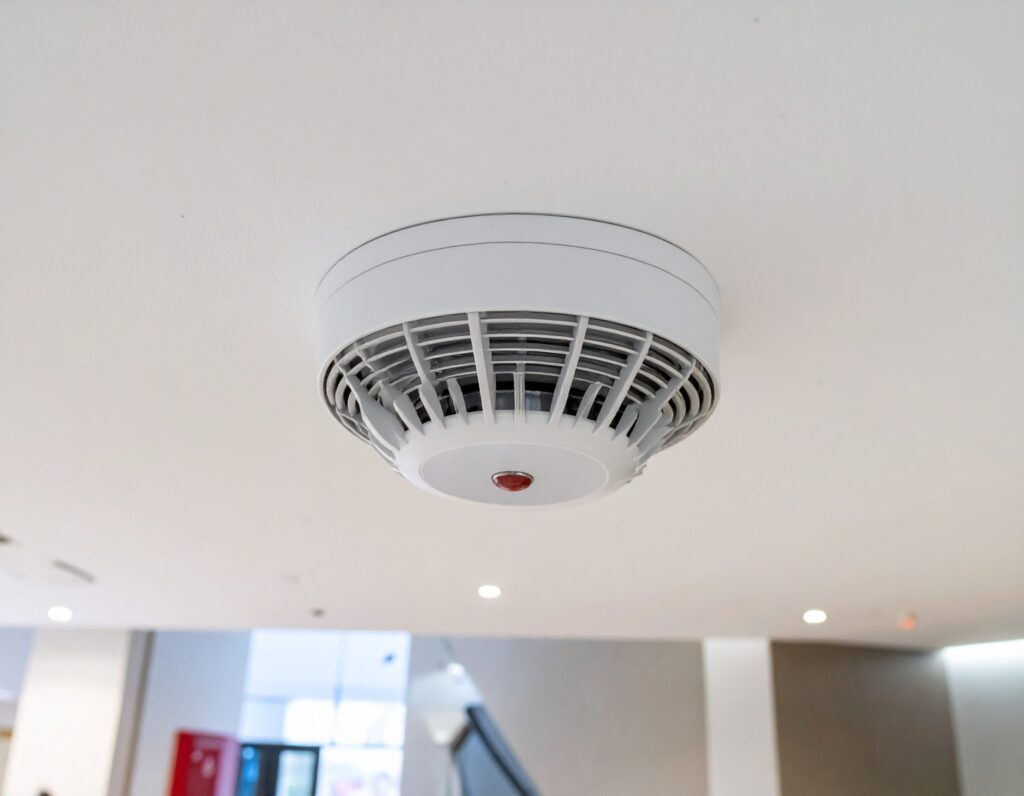
Whether during exploration or production, enhancing fire detection is critical to uninterrupted safe working practices and the environment. Safety design engineers and operators expect technology to increase not only the safety of a facility but to make it far easier to design, install and operate. This has lead to several new developments by fire detection equipment. A look at flame detection Flame detectors are a key element of any fire safety system, but unfortunately in the past many of the technologies available were also prone to give false alarms under certain circumstances. However, flame detectors are not low cost items, particularly when compared to smoke and heat detectors for example, and are vital where the risk of immediate flame in the event of ignition could spread rapidly, causing risk to life, major damage, and costly shutdowns. Due to the cost, many plant operators tend to use detectors with a long range and wide field of view to cover vast areas with a relatively small number of devices. This has resulted in a requirement for larger and more complex extinguishing systems and release mechanisms to cover the larger areas of risk. It is important to remember however that this approach can increase the cost of the fire suppression system, as larger pumps and a higher quantity of foam agent are needed. It is generally understood that there are two key ways of detecting flaming fires: Measuring ultraviolet (UV) or infra-red (IR). Both of these methods monitor the radiation given off by the combustion. Measuring UV was the first method to be invented, however it has a short range and tends to elicit false alarms, as UV detectors can react to sources like lightning, welding, angle grinding or similar activities. IR flame detector technology, on the other hand, does not react to these sources and is generally recognised as being the most reliable detection method. These detectors specifically identify the IR waveband of hot carbon dioxide. Innovation in IR array technology Combining IR technology with multi-sensor devices offers enhanced fire detection functionality to plant operators. The FLAMEVision™ FV300 detector from Tyco Fire Protection Products uses an IR array of 256 individual sensors that detect where in the field of view any build up of IR radiation is occurring. By using highly tuned image analysis, this technology distinguishes between flame and non-flame sources to identify the characteristics of a flame or a modulated black body. This discrimination is made easier by the use of the array as any IR sources within the field of view will form images on different parts of the array. If a black body is detected the device is able to compensate for it just in that area of the field of view while maintaining optimum sensitivity for all other areas. Suspicious events can be reported to the operator and raised as events which may require further investigation, with the detector able to send the co-ordinates of the suspicious object directly to the operator. This inherent feature of the IR array together with the ability to mask an area results in a detector with an unrivalled false alarm rejection capability. Situational awareness IR array detectors can provide location information of single or multiple fire events in two ways; by referencing the IR sensing array cells that register alarms and sending co-ordinates to the main control system, and secondly by superimposing a CCTV image with the fire location highlighted. Weather conditions can have an impact on a CCTV picture (fog, mist, direct sun light etc), so highlighting the location of the fire helps the operator to react as quickly as possible should manual intervention be required. Better site operation As IR array detectors report where in the field of view the fire is it is possible to identify the fire among a multitude of other assets and to automatically release a local extinguishing system. This avoids the need for a total plant shutdown. IR Array based flame detectors also monitor the fire size and can therefore monitor the effectiveness of any extinguishant. Using two or more array based detectors to monitor an area allows the control system to triangulate the co-ordinates and pin point the exact location of the fire. Consistent sensitivity across the field of view The range of the FLAMEVision™ is consistent across the field of view, unlike UV/IR detectors where the range reduces as the target moves away from the axis. This makes design of the site fire detection layout much easier and could result in fewer detectors being required. Forensic audit of events Typically an IR array based detector is able to track and output information on the target sources over time and consequently store information about an incident prior to any alarm. This presents the benefit of a forensic audit of what took place in infrared terms prior to the alarm. Similarly, the tracking of hot IR sources allows maintenance staff to understand any hot body changes which take place from one maintenance period to another while giving facilities operators advance warning of a potential flame situation. System integration It is important to integrate safety systems to enable effective emergency response. FLAMEVision detectors can be integrated into the DCS / PLC systems via a range of industrial interface standards and also to fire and gas systems that could be monitoring the whole facility, including non- production areas. Alternatively, FLAMEVision sensors can directly connect to the Tyco MZX addressable fire detection system whereby data is collated by the control panel and sent to the site safety system. Fire and gas detection, along with fire suppression systems and emergency shutdowns, can be truly integrated to provide a cost effective solution ensuring minimum disruption to operations while maximising the safety of personnel and assets. Offshore accommodation and other non-process areas Fire detection is not just essential for process areas but is also required across a facility. Areas such as server rooms and offshore accommodation areas are examples where smoke and heat detectors are necessary. Typically, following a

Fire detection technology in oil & gas applications Read More »

Modern British Fire alarm on wall - Fire Buyer

Oil and gas – the technological approach to fighting fires

 Of all the world’s industries, the petrochemical industry is probably one of the most dangerous in terms of fire risk; as a result it attracts a commensurate level of research into fire prevention and fighting. But even with the strictest safeguards in place accidents can happen and unfortunately when they do they are often quite devastating. This devastation is not just restricted to the actual refinery or storage depot, in many instances, significant fires can have a hugely detrimental effect on much of the outlying surrounds and can even nudge economies in the wrong direction. In a previous feature, I mentioned a fire at a leading worldwide plastics raw materials supplier; the knock on effect of this event was literally felt the world over as companies scrambled to source alternative supply routes. Looking back over recent history, one of the most memorable (for all the wrong reasons) oil-based fires was after Iraq’s ‘Scorched Earth’ withdrawal from Kuwait after the first Gulf War. The skyline above the Kuwaiti oil fields was a surreal nightmare, like something from a post-apocalyptic movie. After ten months alight, the environmental impact was tremendous and the financial impact was just as devastating. Kuwait lost some six million barrels (950,000 m3) of oil each day and had to call upon privately contracted crews to extinguish the fires, at a total cost of $1.5 billion. The basic fire equation/pyramid states that you need fuel, air and an ignition source. At refineries fuel and air are in abundance, so it is understandable that the ignition sources or opportunities are the easy part of the equation to tackle. It is for this reason that safety solutions at refineries and petrochemical plants often employ double and even triple redundancy to help reduce the risk even further. However, like all systems that rely on human interaction, there is always the scope for human error. It is unfair though, to point the finger of blame at operators. In some instances fires have been started by a completely unforeseen collection of coincidences, which could not possibly have been considered in contingency planning. For this reason, robust and highly effective active and passive fire-fighting techniques have to be deployed. Looking from above, the major starting point of any fire-fighting system is the overall control solution. In most instances, safety systems and fire-fighting solutions can exist in parallel or as combined disciplines, with both interacting with each other to achieve a common objective. One example is the Triple Modular Redundant (TMR) controller from Rockwell Automation, which has already seen widespread use in refineries and other petrochemical installations around the world. Normally installed as part of an overall control solution, Trusted is designed to provide maximum safety and system availability, using control to minimise system trips and provides high availability, fault tolerance and fail-safe features as part of its intrinsic, safety-related functionality. By minimising nuisance trips or system failures, users can potentially save your operation millions of dollars in lost revenues, equipment replacement and environmental damage while protecting employees. It is designed to meet a wide range of safety requirements and maintain the highest integrity level, even in the presence of multiple system failures. The Trusted TMR design uses a majority voting process to identify the source of a fault. Random hardware failures will cause one of three control ‘slices’ to react differently to the others. This discrepancy will be captured and reported by the voting system. The Trusted TMR system will always react immediately to contain system faults, helping to ensure it meets safety integrity requirements. Bespoke fire detection and fighting solutions also exist from multiple suppliers. Most comprise completely integrated panels and control suites linked to multiple sensor variants placed at key points around the site. These systems are designed specifically to detect ignition points and then make the correct decision as to how to fight them based on the combustion source, local assets and employee locations. Multiple alarming scenarios are possible and human interaction can be kept to a minimum due to advanced algorithms and logic calculations. Even with advanced (and not so advanced) preventative technology in place, fires still happen, so if your advanced fire detection system is on the ball, the next decision is what to use to fight the fire. Like most active fire-fighting solutions, the end user is spoilt for choice – a choice that is normally determined by the fuel source – and in some instances employee locations. Water mist systems are used in many instances and can be highly effective in the right circumstances, such as smaller contained or localised outbreaks, but in some cases water mist will simply not be up to the job. In these situations many refineries have deluge systems which literally flood the area with large amounts of high pressure water – only the most tenacious fires can withstand this sort of action. Foam systems are also used for particular fire types – such as heli decks and finally, gaseous systems can be used in confined spaces where employees are not present. As well as the active approach, there are also many passive examples of fire-fighting solutions, such as blast and deflection shields and fire-resistant coverings for primary structural elements. These coverings are particularly important as steel, although very strong in its as-constructed state, can rapidly loose structural integrity when subject to constant high heat. As I allude in most of the articles I write, there is a huge range of cutting-edge technology out there, most of which you hope never to use. Unfortunately, this technology cannot cater for the random acts of fate, be they human-inspired or just pure coincidence. But if a an issue does arise, there is the technology to spot it before it actually sparks into flame, technology for detecting and containing the flames and technology to put the flames out. If you are not in the oil and gas industry, you really should take a long hard look at what they are using, as you can almost guarantee

Oil and gas – the technological approach to fighting fires Read More »

Firefighting foam being sprayed from fire hose image - Fire Buyer

The evolution of the fire apparatus industry

 The fire apparatus industry is an interesting one. The changes in the companies and the industry as a whole are quite dramatic, not only in technical advances in design and operation, but also in the financial, business and management areas as well. The American fire apparatus industry is big business, with several thousand units of various design and function being produced yearly. These vary from small to large with widely varied function and capabilities. And noting that many such units easily approach a million US Dollars, the financial management of both manufacturing and sales/administration can generate problems. Likewise, paying for such purchases may be a real project for the Fire Department. Such financial problems are readily obvious in the latest chapter of the venerable fire apparatus manufacturer American LaFrance. As one of the pioneers in the business, a rich history going back for 180 years, the company has been a well-known, innovative pillar of the fire apparatus industry. But in recent years there have been several closings and reopening of their facilities, including a previous bankruptcy some six years ago. The latest closing was rather quick when on January 17th, several of the manufacturing facilities were abruptly closed and workers dismissed when the financial situation was beyond saving. Apparently this latest closing will be the last one, given the overall financial situation. Several private and Government entities, including several Fire Departments who had deposits on apparatus being manufactured or in for repairs, are left in limbo. The entire financial and management situation continues to unfold. The volatility of the fire apparatus business is well known, with companies going in and out of business, merging with other companies and changing names. In fact there is a whole history book that lists the story of every fire apparatus builder in America. It’s quite a family tree and a fascinating heritage of the Fire Service. While competitors to American Lafrance are sorry to see them close, this event gives a black eye to the whole fire apparatus Industry. Collectors of emblems covet their acquisition and the cataloguing of changes in the business. And the antique fire apparatus collectors, notably the SPAAMFAA (Society of the Preservation and Appreciation of Antique Motor Fire Apparatus in America) scramble to preserve the history and memories of such products. And as the vehicles get bigger, more complicated, heavier and expensive, the funding necessary for such acquisitions can get rather inadequate and scarce. Between the National Fire Protection Association requirements in their published standards (which may be adopted by an Authority Having Jurisdiction), the promulgations of the Federal Department of Transportation and other Federal Government agencies, as well as the developments in the truck industry, the products are not as simple as they used to be. The development of the various EPA (Environmental Protection Administration – US Government) alone have caused a number of significant changes in engines and accessories. Certainly a lot of ‘progress’ is appropriate, necessary, and quite useful but at the same time the financial aspects and operational considerations of Fire Department management are significantly more complicated. Another subject hitting the fire service news of late is the rising frequency of fire-fighter deaths and injuries. While a significant percentage of these deaths are “simple” heart attacks there have been several multiple fireground deaths as well. And the tragedy of the 19 Forestry Fire-fighter deaths in Arizona made a spike in the numbers. While there are concerted efforts by several groups to address the health and safety problems of fire-fighters the toll continues to rise. The United States Federal Emergency Management Administration reports there some 1.1 million fire-fighters in the US with some 31% career (paid) and 69% volunteer responding with from 55.400 fire stations. There were some 30.1 million calls in 2011 with 2/3 of them for medical help, 7.6% false alarms of various types, with only 4.6% actual fire emergencies and the remainder for miscellaneous attendance. FEMA also has reported some 101 fire-fighters fatalities for the year 2013 with 29% being career, 41% volunteer, and 21% wild land fire-fighters with the remainder being contract personnel. The total reported in 2012 was 81. And 2014 is not off to be a good start, the mid-February total is already 17, which does not bode well for a reduction in the year’s total. Other agencies and organizations report different and lesser totals and there appears to be some difference in how deaths are listed and categorised the totals and breakdowns of causes are varied with the agencies involved, such as NFPA and NIOSH (National Institute of Occupational Safety and Health) investigating several of the deadly incidents. Certainly any death or serious injury is one too many. Even with enhanced safety gear (PPE Personal Protection Ensemble) and other safety related equipment/management, fire-fighter deaths and injuries occur regularly. In England there is a report of an alarming trend of increasing death and injuries amongst fire-fighters but a complete statistical analysis needs to be forthcoming in order to reach valid conclusions. In any event, Fire Departments need to redouble their efforts to ensure personnel are properly equipped, trained, and supervised in this age of hazards and operational changes.

The evolution of the fire apparatus industry Read More »

Image of Wildfire - Fire Buyer

February – March 2014

Label: The Insider Title: The technological approach to fighting fires Teaser: Mark Fletcher looks at the oil and gas industry Label: Interview Label: A.K.Rosenhaan Label: Detection Title: Fire detection technology in oil and gas Teaser: Changes and developments in the fire apparatus industry Teaser: Irene Fernández Camin examines fire detection technology

February – March 2014 Read More »

Image of Wildfire - Fire Buyer

Aussie Pumps sees increased interest in diesel fire pumps

For reasons such as safety and fuel economy Australian Pump Industries reports an increased interest in diesel drive fire fighting pumps for reasons such as safety and fuel economy. Aussie Pumps has constantly been setting new standards for quality and performance in bush fire fighting pumps and equipment. Australian Pump Industries also launched their ‘Fire Ready’ programme this season with a huge amount of printed information aimed specifically at end user groups. While not many suburban homeowners are going to buy a diesel fire pump, Aussie Pumps’ Brad Farrugia says the product is very popular among fire fighting authorities and farming professionals. High pressure diesel fire pumps have become more affordable with Aussie Pumps leading the way with increased production of Yanmar diesel engine drive fire pumps. Their Aussie Fire Chief, with an L48 4.8hp Yanmar diesel engine has proved a real winner, being a low priced entry point unit especially configured to attract customers to the safer aspects of diesel pumps. Farrugia explains that diesel’s lower flashpoint makes it intrinsically safer than petrol engines in a bush fire fighting environment, adding that fire fighting authorities and national park operators around the country are sold on diesel and won’t go back to petrol drive fire pumps. Australian Pump Industries produces a full range of Yanmar diesel engine powered pumps designed specifically for professional fire fighting units. According to Farrugia, operators of national parks have standardised on this combination of a pump coupled to a 400-litre tank mounted on a Land Cruiser ute as the ideal mop up or fast attack style vehicle. The Aussie Fire Chief is teamed up with a high performance foaming device that minimises the use of water being applied but maximises the impact on the fire. Yanmar’s representative, Power Equipment agrees with the Aussie Pump diesel preference philosophy. Power Equipment’s John Mason explains that the Yanmar L series engines incorporate direct injection technology that sips fuel rather than gulping it. Improvements in fuel efficiency mean the engines run for longer between refuelling, eliminating the need to refuel in the middle of operations. Diesel does not release large amounts of flammable vapour and is less likely to ignite if any fuel is spilt. Aussie Pumps has also launched a heavy duty 10hp twin impeller high performance pump that is already proving popular with professional users and farmers. Farrugia comments that the Mr T twin impeller Aussie fire pump with its big 10hp diesel engine and super high pressure can be used for a wide range of applications including high pressure water transfer, spray irrigation and fire fighting. Read more at http://www.infolink.com.au/c/australian-pump-industries/aussie-pumps-sees-increased-interest-in-diesel-fire-pumps-n2505463#HjoClYKg1HfYqP45.99

Aussie Pumps sees increased interest in diesel fire pumps Read More »

Scroll to Top