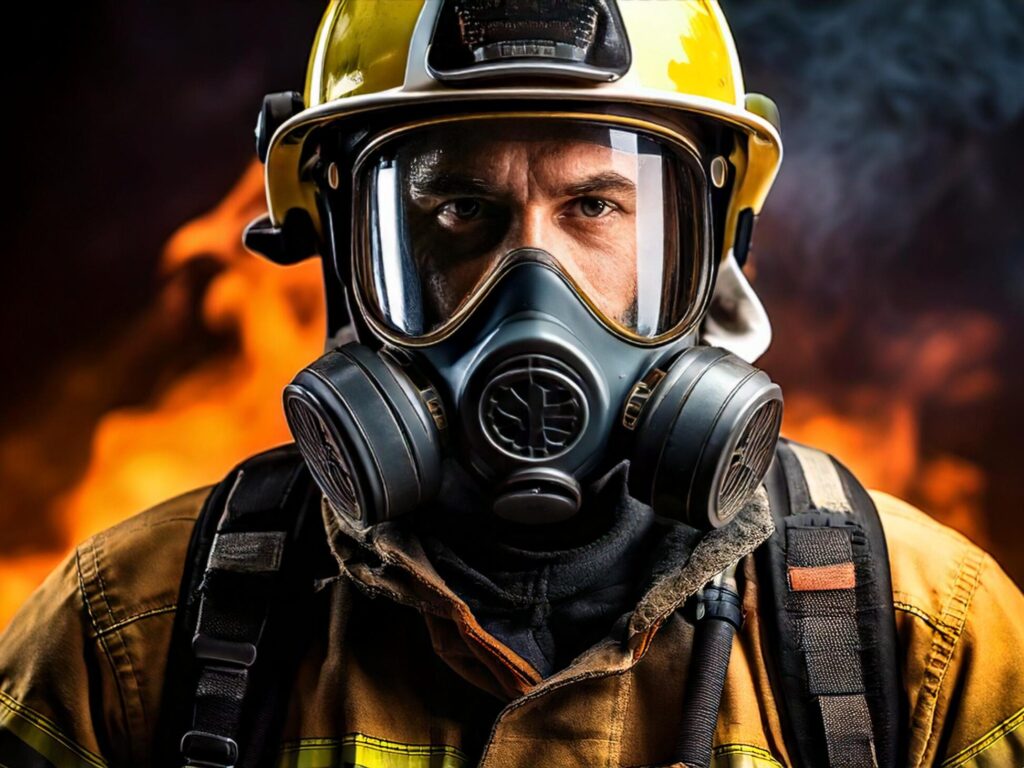
Fire fighter in the outfit, with fire protection mask - Fire Buyer

FIREX to host Regulatory Reform FPA Webinar

The Fire Protection Association (FPA) will host the first FIREX webinar for 2016, focusing on the Regulatory Reform (Fire Safety) Order 2005 and what this means to individual businesses. The interactive webinar will take place on Wednesday 27th January at 2.00pm. Presented by the FPA’s training business and operations manager, John Briggs, the webinar will explore what is expected from a responsible person in regards to the Regulatory Reform (Fire Safety) Order 2005 and what a responsible person must do to avoid a long prison sentence or incur a heavy fine. Participants to the webinar will be able to submit questions throughout the session, offering practical and timely advice on what individuals need to do to remain compliant. Gerry Dunphy, Event Director- IFSEC & FIREX International said: “We are delighted to be hosting our first webinar of 2016 in partnership with the FPA, having spoken to the industry we know that keeping on top of legislation is often difficult and it is vital that they have access to resources that can assist with this. The FPA are perfect partners to work with for this informative and vital webinar covering critical topics for any fire safety professional.” Webinar places are limited, register to participate at: http://www.firex.co.uk/FPA_Webinar_RRO/ For more information on FIREX International 2016 please visit www.firex.xo.uk

FIREX to host Regulatory Reform FPA Webinar Read More »

Firefighting equipment image - Fire Buyer

Johnson Controls and Tyco to merge

Johnson Controls and Tyco have entered into a definitive merger agreement under which Johnson Controls, a global multi-industrial company, will combine with Tyco, a global fire and security provider, to create the leader in building products and technology, integrated solutions and energy storage. Under the terms of the agreement, which has been unanimously approved by both companies’ Boards of Directors, Johnson Controls shareholders will own approximately 56 percent of the equity of the combined company and receive aggregate cash consideration of approximately $3.9 billion. Current Tyco shareholders will own approximately 44 percent of the equity of the combined company. “The proposed combination of Johnson Controls and Tyco represents the next phase of our transformation to become a leading global multi-industrial company,” stated Alex Molinaroli, chairman and chief executive officer, Johnson Controls. “With its world-class fire and security businesses, Tyco aligns with and enhances the Johnson Controls buildings platform and further positions all of our businesses for global growth.  Through this transaction, we will also expand our ability to further invest globally, develop new innovative solutions for customers and return capital to shareholders.” “The combination of Tyco and Johnson Controls is a highly strategic, value-enhancing step that brings together the unique strengths of two great companies to deliver best-in-class building technologies and services to customers around the world,” said George R. Oliver, chief executive officer, Tyco. “We believe this transaction will allow us to better capture opportunities created by increased connectivity in homes, buildings and cities. Joining forces with Johnson Controls pairs our leading established businesses with robust innovation pipelines and extensive global footprints to deliver greater value to customers, shareholders and employees of both companies.” Under the terms of the proposed transaction, the businesses of Johnson Controls and Tyco will be combined under Tyco International plc, which will be renamed “Johnson Controls plc.” The companies expect that shares of the combined company will be listed on the New York Stock Exchange and trade under the “JCI” ticker.  Upon the closing of the transaction, the combined company is expected to maintain Tyco’s Irish legal domicile and global headquarters in Cork, Ireland. The primary operational headquarters in North America for the combined company will be in Milwaukee, where Johnson Controls has been based. Strategic Rationale The combined company brings together best-in-class product, technology and service capabilities across controls, fire, security, HVAC, power solutions and energy storage, to serve various end-markets including large institutions, commercial buildings, retail, industrial, small business and residential.  The combination of the Tyco and Johnson Controls buildings platforms creates immediate opportunities for near-term growth through cross-selling, complementary branch and channel networks, and expanded global reach for established businesses. The new company will also benefit by combining innovation capabilities and pipelines involving new products, advanced solutions for smart buildings and cities, value-added services driven by advanced data and analytics and connectivity between buildings and energy storage through infrastructure integration. As a result, the new company will be able to better partner with its customers to help improve their overall performance and operations, enhancing the experience for their own customers in areas such as comfort, safety and accessibility. In addition, the combined company will have one of the largest energy storage platforms with capabilities including traditional lead acid as well as advanced lithium ion battery technology serving the global energy storage market. Johnson Controls is in the midst of a strategic transformation to become a top-quartile multi-industrial company with leadership in attractive spaces connected to core growth platforms in buildings and energy storage. This focus has resulted in significant portfolio changes over the past few years including the divestiture of its Automotive Electronics and Interiors and Global Workplace Solutions businesses, as well as the acquisition of Air Distribution Technologies and the formation of Johnson Controls – Hitachi joint venture.  The company announced in July 2015that it is planning to spin off Adient at the beginning of fiscal year 2017. Tyco has transformed from a diversified holding company to a streamlined operating company with a focused and leading portfolio in fire and security that will complement Johnson Controls’ buildings platform.  Tyco combines best-in-class products with a world-class installation and service capability delivered across a global network of branches.  The company’s core strengths include security and fire systems integration, commercial security monitoring, as well as fire, security and life-safety products. Value Creation For Both Companies’ Shareholders Pro forma for the transaction and separation of Adient, Johnson Controls is expected to have approximately $32 billion of revenue in fiscal year 2016 and $4.5 billion of EBITDA before synergies. Adient is expected to have approximately $16.6 billion of revenue in fiscal year 2016 and $1.6 billion of EBITDA. In addition, Adient is expected to distribute between $2.5 to $3.5 billion to Johnson Controls in conjunction with the spin-off. The new company expects to deliver at least $500 million in operational synergies over the first three years after closing. These annual cost synergies are expected to be achieved by increasing efficiencies, eliminating redundancies, integrating the global branch networks, and leveraging the combined scale of an over $20 billionbuildings business platform. In addition, the transaction is expected to create at least $150 million in annual tax synergies. Johnson Controls shareholders will own approximately 56 percent of the equity of the combined company and receive aggregate cash consideration of approximately $3.9 billion. Tyco shareholders will own approximately 44 percent of the equity of the combined company. The exchange ratio represents a 13 percent premium to Tyco shareholders based on 30-day volume-weighted average prices and an 11 percent premium based on share prices as of the close of market on Jan. 22, 2016, assuming that each share of the combined company has a value equal to one Johnson Controls share. Given their ownership of the combined company, both Tyco and Johnson Controls shareholders will participate in the substantial value-creation opportunities presented by $650 million in synergies, plus incremental upside from revenue growth acceleration. Post-transaction, the combined company expects to maintain a strong investment grade credit rating and continue

Johnson Controls and Tyco to merge Read More »

Modern fire fighting truck in city - Fire Buyer

The Overlooked HAZMAT

By: Mark A. Gresham, President – CEO, Professional Cylinder Inspectors, Inc. As fire service personnel there are many obligations for HAZMAT training. Obviously, you must have the knowledge and tools to function safely in a challenging environment. You do this through what are considered recognized agencies using time tested manuals, hands-on applications and skill assessments. Have you done all you reasonably can to ensure you truly understand the equipment you use? Let’s focus on one aspect of firefighter’s training that is particularly lacking. That is the SCBA cylinder itself, the most overlooked HAZMAT (any cylinder at 29psig or greater). While relatively few, there have been injuries and fatalities due to cylinder accidents including ruptures. What was missing in most of those cases was basic knowledge for how a cylinder should be handled, stored or otherwise maintained. This is particularly important since the fire fighter is not only responsible for his/her own safety but also the safety of others. It stands to reason that one would want to be properly informed and well versed in cylinder handling in order to operate in a safe manner and avoid potentially dangerous situations. This not only applies to the SCBAs that firefighters wear in service but also the SCUBA cylinders of specialized Dive Teams and on occasion when they are dispatched to a scene where other types of cylinders (O2 or SCUBA) have been exposed to fire or other damaging situations. While having trained visual cylinder inspectors at a facility is recommended, not everyone at the station requires that level of training. It is required, however, that every firefighter be trained to their level of exposure. It is incumbent on the department employers and Training Managers to ensure this training has occurred and been documented. This is a federal requirement. But this important training is often overlooked in the training of the firefighter. They are well versed in various types of HAZMAT, but rarely consider the HAZMAT they wear every day. Personnel have to carry tanks, store them, fill them, etc. Have they been provided formal, function specific training to accomplish this? If the station house has a PSI-PCI trained inspector, that inspector is authorized to use the PSI-PCI Cylinder Hazmat-Fill Station Operations compliance training kit to provide federally recognized hazmat training to the facility personnel. This is an easy way to meet the function specific requirements and ensure a level a safety for all involved. We have seen many situations where firefighters exhibit disregard for the cylinders they are required to use simply because they are uninformed. Cylinders are used in man down drills which can destroy them. They are improperly stored in apparatus which can cause condemnable damage. Oxygen cylinders are checked improperly and have caused fires and major damage to buildings and apparatus. They are improperly filled, improperly labeled or handled. PSI-PCI has worked with and in the fire service for many years and it has become increasing clear that fire service personnel are not provided enough knowledge of the cylinders they handle to prevent the accidents. But what are the proper handling standards? What are acceptable damage limits? It is proven that proper cylinder inspection by trained technical inspectors cause the removal of potentially dangerous cylinders from service. But how does one know without proper training? Firefighters work around HAZMAT every day. If they have filled cylinders in their apparatus, in their O2 kits or in their station house, they have the potential for issues without proper training. They can also save thousands of dollars by maintaining their cylinders rather than sending them out. Sending them out raises safety concerns to another level. What training has the inspector had? What standards have been used to inspect the cylinders? Even in the Hydro-requalifying business there is a great need for proper training and the trust to handle a firefighter’s life support equipment should be earned rather than taken for granted. Firefighters should insist (and any individuals acting in the capacity of employees for the station) on formal, function specific training regarding hazmat/ cylinder safety. This is life support equipment. It warrants attention. Applying accurate information regarding high pressure cylinders will go a long way toward safeguarding firefighters and the public in general. About the author: Mark A. Gresham, former United States Marine, is the owner and President of Professional Scuba Inspectors, Inc. –Professional Cylinder Inspectors, Inc. (PSI-PCI). He is considered the leading authority on cylinder safety and inspection in the world today. Mark has trained thousands to visually inspect high pressure cylinders continuing the mantra of safety thru formal, recognized education. He has effectively expanded the PSI-PCI training role beyond SCUBA and consults regularly to all branches of US Military, NASA, NOAA, the fire service and other areas where high pressure cylinders are used. PSI-PCI is the only internationally recognized training agency for high pressure cylinder inspector training. (See the PSI-PCI website for more information: www.psicylinders.com).

The Overlooked HAZMAT Read More »

ARFF Vehicle image - Fire Buyer

Recent barn fires in Canada prompt fire safety warning

Over the past two weeks, Canada has suffered several devastating barn fires that resulted in massive loss of animal life and millions of dollars’ worth of property damage. Two separate fires claimed the lives of 56 horses, another killed around 500 goats and 30 cattle, while yet another killed approximately 2,000 pigs. These recent fires had no civilian deaths. In response to these tragedies, National Fire Protection Association (NFPA) is introducing a new barn fire safety checklist as a resource to prevent more events like these. In addition, NFPA offers a collection of rural fire safety tips and NFPA 150, Standard on Fire and Life Safety in Animal Housing Facilities.   “Unfortunately, barn fires result in major losses each year,” says Lorraine Carli, vice president of Outreach and Advocacy for NFPA. “When fire breaks out on the farm, people, animals, and property are in danger.  It is critical for everyone who uses the barn to keep safety in the forefront to prevent fires.”   In at least some of these instances, the barns were not equipped with sprinklers. Sprinklers are not required in every sort of animal housing facility, owing to the unique needs of different species of animals.   Carli noted, “While it’s impossible to say whether or not sprinklers would have prevented such massive losses, it’s reasonable to assume sprinklers would have slowed the fires, giving fire services more time to quench the flames and allowing more animals to escape to safety.”   Some of the tips listed on NFPA’s barn safety checklist include: ·         Make sure electrical equipment is kept clean and free of damage ·         Secure heaters to prevent them from falling over ·         Store oily rags in a closed, metal container away from the heat ·         Install and maintain fire extinguishers, smoke alarms, fire sprinklers and carbon monoxide detectors ·         Ensure that everyone who uses barns participates in barn fire drills   Using the NFPA barn safety checklist, inspect your outbuildings for fire hazards and to reduce the risk of tragic loss. If you have safety concerns unique to your farm, talk with your local fire department.

Recent barn fires in Canada prompt fire safety warning Read More »

Firefighting foam being sprayed from fire hose - Fire Buyer

Waste sites warned: “There’s no smoke without fire water”

Waste handling and recycling sites, currently under obligation to re-assess their fire accident plans, could be failing to plan for the impact of millions of litres of water likely to be discharged to fight a major fire, experts are warning. Last year the Environment Agency issued revised technical guidance for sites storing combustible waste instructing them to review their fire accident planning with a ‘must’ action to meet the standards. The clampdown followed a string of high-profile fires at waste handling premises.  Water pollution experts are warning operators to be sure to review whether their sites are able to safely contain the huge volumes of firewater likely to be needed to control a waste fire. Not only could some sites be unknowingly in danger of causing serious environmental damage through fire water pollution, but could also be at risk of incurring crippling costs in fines and cleanup charges. “The most likely environmental damage caused by fire at a waste handling site is not a result of the fire itself, but the water that is used to fight it,” explains David Cole, Water Pollution Manager at Hydro International. “In the early stages of a fire, thousands of litres of water are discharged into the environment every minute. The surface water runoff created will pick up the pollutants and contaminants of whatever burning or hazardous substances are present, and if a site is not fully contained, they will escape into the local environment. Waste handling and recycling centres are among the most vulnerable, and major fires can burn for days or weeks.” The Environment Agency issued a new industry Technical Guidance Note in March 2015 for sites storing combustible waste. In a short, final paragraph of the guidance, a requirement is included for sites to demonstrate the containment facilities and pollution equipment in place for managing fire water. For this, operators are referred to another recently-revised industry guidance document, CIRIA C736 – Containment Systems for the Prevention of Pollution, for which David Cole acted as an advisor. During 2014 the Environment Agency reported 10 serious water pollution incidents involving waste management activities, five of which were caused by fires and three by containment and control failures. As government funding is cut back, the environmental authorities have fewer resources to act in an advisory role. So, the first a company may know they do not have adequate provision is when the worst happens, and they face a prosecution, Cole warns: “Surface water has a habit of finding routes to run off a site in directions no-one had ever expected, before ending up in a river or sewer. Fitting properly designed containment valves is critical, but often I see sites where penstock valves are incorrectly installed. Not all penstocks have the ability to drop seal low pressure flows fully; if a site is looking to contain pollution then the valve must contain the entire flow. “I have been involved in the development of spill containment technology since 1998. Fitting a high-performance valves such as the recently-launched Hydro-Isolator® valve should guarantee a watertight seal. “On more complex sites, operators will also still need to be sure that even with valves installed, in the case of a fire incident, the surface water drainage won’t back up, overtop bunds and storage measures and flow out of the site into the surrounding environment. “New hydraulic modelling techniques can offer waste operators a cost-effective way of mapping pathways on and off a site and identifying any shortfalls before they happen. A containment solution using valves, bunds or other temporary storage can then be designed and tested in the model to ensure it will stand up, even in the worst case scenario.” David Cole is the inventor of some of the industry’s most commonly-used pollution containment valves and has acted as advisor on key industry guidance. Waste and recycling operators interested in Hydro International’s Hydro-Isolator® valves or the Water Pollution hydraulic modelling and consultancy service can book a free on-site assessment.   Call David Cole on 01275 878371 or email [email protected].

Waste sites warned: “There’s no smoke without fire water” Read More »

Fire detection alarm on ceiling of modern building - Fire Buyer

Notifier by Honeywell diagnoses the perfect fire detection solution

With the number of unwanted alarms reaching intolerable levels, Calderdale Royal Hospital installed technology from Notifier by Honeywell to solve the problem and create a state-of-the-art fire detection system. Calderdale Royal Hospital is a modern centre of excellence that first opened its doors to patients in April 2001, after becoming one of the country’s first private finance initiatives (PFI). Operated by Calderdale and Huddersfield NHS Foundation Trust, it was built at a cost of over £100m by the Catalyst Healthcare consortium and Bovis Lend Lease provided the design and construction services. It offers a full range of day case and outpatient services, an accident and emergency department, as well as a large range of specialist services. Although hospitals are dedicated to the preservation of health and life, they also have the potential to be high fire risk environments, so fast, accurate and reliable detection has a vital role to play in protecting people, property and assets. Calderdale Royal Hospital’s mental health and learning disability facility is a very large specialist unit. Dan Lewins, Estates Manager at Cofely GDF Suez, which manages the site, says, ‘Unfortunately, patients within this part of the hospital were deliberately activating smoke detectors located in their rooms using steam from showers, aerosols and cigarettes. The problem had escalated to a level where the local fire and rescue service was being called out several times a week.’ Unwanted alarms of this nature are a massive nationwide problem and government statistics show that there are approximately 272,000 false and unwanted alarms per annum. The financial annual cost to the UK has been estimated at £1bn and the potential for loss of life, due to services being diverted to an unwanted alarm attendance from a real fire emergency, is a very real possibility. Within hospitals, all unwanted alarms are disruptive and not without risk if people panic in the ensuing evacuation. However, if large numbers of unwanted alarms occur it also creates an environment of disbelief and complacency, which may cause people to delay taking action when a real fire occurs. To address the problem, Calderdale Royal Hospital contacted Shipley based Rosse Systems to find out what could be done. Dave Thewlis, the company’s Sales Director, says, ‘With over 30 years of experience and knowledge in the fire detection industry, we have vast expertise in providing industry leading life safety solutions. Having been a Notifier partner for over twenty years, we know that its innovative technology is reliable, robust and has the ability to minimise unwanted alarms.’ Central to Rosse Systems’ proposal was the replacement of optical smoke detectors with Notifier’s SMART4 devices. The acronym stands for self-optimising multi-criteria alarm recognition technology and by using a combination of carbon monoxide, heat, optical smoke and infrared flame sensing elements, SMART4 provides the earliest warning of the broadest range of fire conditions, whilst minimising the expense and inconvenience of unwanted alarms. ‘SMART4 dynamically adjusts the detection profile of the device in response to the input from the sensors,’ explains Derek Portsmouth, National Sales Leader UK & Ireland at Notifier. ‘It normally operates at a high immunity level, changing to become very sensitive to fires when fire characteristics are sensed. In this way transient nuisances are monitored and ignored and the detector thinks before activating, making it the most intelligent device of its kind on the market today.’ Many of the patients in the mental health and learning disability facility are high vulnerable, so the work programme had to be meticulously planned to ensure that no more than 25 per cent of total fire detection cover was lost during each day. Dave Thewlis states, ‘We decided to replace a loop at a time and this meant that patients could be temporarily relocated while work was carried out. We fitted 70 devices in total and the ease of installation offered by SMART4 meant that the process ran incredibly smoothly.’ The existing control panels were also replaced with Notifier’s ID3000 products, which can accommodate between two and eight addressable loops. Each loop can support up to 198 devices, with a total of up to 255 zones per panel, and its modular design allows for a wide range of applications, facilitating installation and servicing whilst making it very easy to meet the requirements of a particular application. The Calderdale Royal Hospital also benefits from Notifier’s ONYXWorks system, a single-point of control, PC based, graphical workstation which displays information directly from the fire detection system, presenting floorplans, as well as a history manager that tracks, stores and filters events for viewing. This provides designated personnel with a consistent interface for all monitored equipment. Since the SMART4 devices have been installed, unwanted alarms have been eliminated, which is not only good news for staff, patients and visitors but also the local fire and rescue service. Rosse Systems is currently working on a strategic service, maintenance and replacement programme, which will eventually see Notifier’s solutions used across all other areas of the 21-panel network. Calderdale Royal Hospital has been thoroughly impressed with the results of the work so far, as has Dan Lewins of Cofely GDF Suez, who concludes, ‘The events that took place at the Royal Marsden Hospital in London in 2008 offered a vivid reminder of the implications of a serious hospital fire. It’s therefore something that we must avoid at all costs, while at the same time ensuring that unwanted alarms are kept to a minimum. Thanks to Rosse Systems’ expertise and Notifier’s pioneering technology, since installation no unwanted alarms have been reported from patients’ bedrooms in the mental health and learning disability facility – an outstanding achievement that we are now looking to replicate across the entire estate.’ For further information please call 01444 230300 or visit www.notifierfiresystems.co.uk

Notifier by Honeywell diagnoses the perfect fire detection solution Read More »

Modern British Fire alarm on wall - Fire Buyer

Stay ahead with preventative maintenance by using Portamonitor™ Bearing Indicator

Stay ahead by improving your preventative maintenance thanks to including Portamonitor® Bearing Indicator in your management regime. This effective kit provides insight into planning of future repairs. It identifies sites which are contaminated or lacking lubrication so they can be easily fixed before any further damage occurs. Above and beyond that, the Portamonitor® identifies varying levels of damage to prevent excessive and extremely dangerous damage.   The miniature Portamonitor® has been designed to test bearings and rotating machinery on board ships and Naval vessels. Trials are being conducted with a leading Navy shortly. Portamonitor® aids in the identification of mechanically deteriorated bearings and bearings with inadequate/contaminated lubricant. It does this by detecting high frequency (ultrasonic) stress waves associated with friction and other faults with machinery in poor condition (impacts etc.). It can be used to monitor bearings in motors, pumps, fans, gearboxes and other rotating machinery applications. It has two outputs – a decibel (dB) reading and a Distress® level which are both measured and displayed simultaneously by the Portamonitor®   It is extremely sensitive to detecting faults and is easy to use: measurements can be taken both for land-based applications as well as offshore on vessels and platforms. It is quick and reliable, allowing for problem bearings to be checked quickly if damage is suspected. The repeatable results allow the operator to compare logs of past measurements which can help identify even small changes in the functioning of the bearing. The non-destructive and non-intrusive technology will not affect the function of the bearing.   www.coltraco.com/news

Stay ahead with preventative maintenance by using Portamonitor™ Bearing Indicator Read More »

Firefighting foam being sprayed from fire hose image - Fire Buyer

NAFFCO exhibits its range of fire safety products at Intersec

Every year since 1999, NAFFCO, a leading firefighting solutions provider, actively participated in Intersec – the largest event for Security & Safety. From 17 January to 19 January, NAFFCO will be presenting the latest products and trends in safety and security focusing on its smart technologies and innovations. Intersec 2016 will be held at the Dubai International Convention and Exhibition Centre, Dubai. Recognizing Intersec as an international meeting platform, NAFFCO will be standing out as a “one-stop-solution” source for all types of fire protection systems. In the 1,306-sqm stand at Hall 3 of the Dubai World Trade Center, NAFFCO will showcase its wide range of state-of-the-art firefighting products including heavy-duty fire hoses and reels, fire suppression and protection systems, custom-made fire cabinets, extinguishers, fire pumps fire-rated doors, fire alarms, CCTV systems, ambulances, rescue vehicles and fire trucks as well as mobile hospitals and platform vehicles. In the 2016 edition, NAFFCO will highlight, among other innovations and services, Pump Cloud, NAFFCO Automatic Fuel Filtration System, Extendable EML Connect, NAFFCO Training, SIL (Safety Integrity Level) 2, Smoke Management System, Green foam, Aircraft Rescue Firefighting Vehicle (ARFFV), Industrial Fire Fighting Vehicle, Heavy Duty Firefighting Vehicle, Ambulances, Emergency Support Vehicle, etc. NAFFCO holds the distinction of being a founding member of Intersec. In the 2016 edition, NAFFCO’s association with Intersec 2016 will see it being a part of the world’s largest and most comprehensive trade and networking exhibition for the Security and Safety industries. Commenting on participating in Intersec 2016, Eng. Khalid Al Khatib, CEO of NAFFCO, said, “We are delighted to be a part of Intersec once again this year as a founding sponsor. Given the fact that, Naffco enjoys a strong market position globally as a leading fire safety solution provider, we believe international exhibitions like this will be a great platform for us to get closer to our global customers, and to update them with the latest technology and development. Also, it creates a huge opportunity to meet prospective investors and buyer and to showcase our range of products at the event. We hope to continue this association with Intersec in the years to come.” Intersec 2016 is an exhibition of all the industry’s latest trends, cutting-edge innovations and new products. With the globally unrivalled range of products in the Commercial Security, Information Security, Fire & Rescue, Safety & Health and Homeland Security & Policing, from major brand manufacturers, international newcomers and many others, Intersec is the most important business platform worldwide and the no. 1 in the MENA region. The last edition in January 2015 featured 1,234 exhibitors and welcomed more than 27,303 visitors from 118 countries which made it the largest Intersec of all times.

NAFFCO exhibits its range of fire safety products at Intersec Read More »

Fire fighter in the outfit, with fire protection mask - Fire Buyer

All-new Oshkosh XP fire apparatus to be featured at Intersec 2016

Oshkosh Corporation Fire & Emergency Group is displaying the all-new Oshkosh® XP fire apparatus at Intersec 2016 to be held January 17-19 at the Dubai International Convention and Exhibition Center. The Oshkosh® XP fire apparatus represents a co-venture between Oshkosh and Scania, and will be on display at Stand 5-D11. “Intersec is among the world’s leading fire protection trade fairs, and we’re proud to showcase the new Oshkosh XP fire apparatus at this important exposition,” said Salim Hawi, Oshkosh Corporation vice president of international sales. “The Oshkosh XP has received excellent feedback and reviews from industry professionals. It is a fully integrated and well-equipped product and is backed by a comprehensive service and support network.” The new Oshkosh XP fire apparatus is engineered and constructed to exacting standards by an Oshkosh Corporation Company, Pierce Manufacturing, Inc. (North America’s leading designer of custom fire and emergency vehicles) and will be displayed on a Scania P360 chassis. The vehicle is fully outfitted with a powerful 4,000-LPM pump, an integrated foam system, a high-pressure hose reel, and a full complement of rescue tools and equipment. The Oshkosh XP fire apparatus is built on a corrosion resistant 4638 mm aluminum body with full-height compartments on both the driver and passenger sides. Storage space is ample and well designed, and compartments are organized to accommodate customer-specific requirements. Other features include rugged spatter paint finished compartment interiors, roll-up doors with LED strip lighting, and enclosed ladder storage. Oshkosh Corporation serves customers across the Middle East with a wide range of severe duty vehicles and world-class support. The Oshkosh Striker® is an industry-leading aircraft rescue and fire fighting (ARFF) vehicle that offers many proprietary technologies, including proprietary Oshkosh TAK-4® fully independent suspension. Striker vehicles are on duty at leading airports across the Middle East, including Kuwait, Qatar, and the United Arab Emirates. In addition, Pierce industrial firefighting apparatus and rapid response vehicles are in service with countries throughout the region.

All-new Oshkosh XP fire apparatus to be featured at Intersec 2016 Read More »

Firefighting equipment image - Fire Buyer

Bull Products launch new alarms for construction sites

This month sees the launch of two new site fire alarms from Bull Products, the specialists in safety and security for construction sites. The Bull Site Siren systems are designed as stand-alone temporary fire alarms on construction sites. These affordable alarms are fully self-contained and can be used separately as a stand-alone device, linked by cable or linked with a radio connection.The alarms have the benefit of an extremely robust ABS casing for maximum durability. They have a very high noise output of 115dB, more than adequate to be heard over the general noise on construction sites. No mains electricity is needed as the units operate from 9V PP3 batteries and they can be used for internal or external use with their IP65 rating. The alarms feature a flashing strobe as well as the siren. Where linking is required between the fire alarms, this couldn’t be more straight forward and is achieved simply by connecting cables positive to positive and negative to negative, using the integral quick-release lead connectors. The radio link version of the Bull Site Siren system is a particularly popular alarm in the construction industry. With this alarm there are no cables to connect, with installation simply requiring a unique site coding configuration to enable the wireless connection. This avoids interference with neighbouring alarm systems or radio systems in general. This coding mechanism also means that the system can be locked together and when an alarm is activated, only the alarms that have been locked to the activated alarm will sound. The Bull Site Siren call points are compatible with Fire-Bull smoke and heat detection devices and the system can have separate zones running a maximum of 12 alarms per zone. Bull Products provides full on-site installation service, maintenance and training on the Site Siren systems. Further information on the new Site Siren systems is available from Bull Products on 0844 669 1111, by emailing [email protected] or by visiting the company’s website at www.bullproducts.co.uk

Bull Products launch new alarms for construction sites Read More »

Scroll to Top