Firefighting foam being sprayed from fire hose - Fire Buyer

Pickup Systems

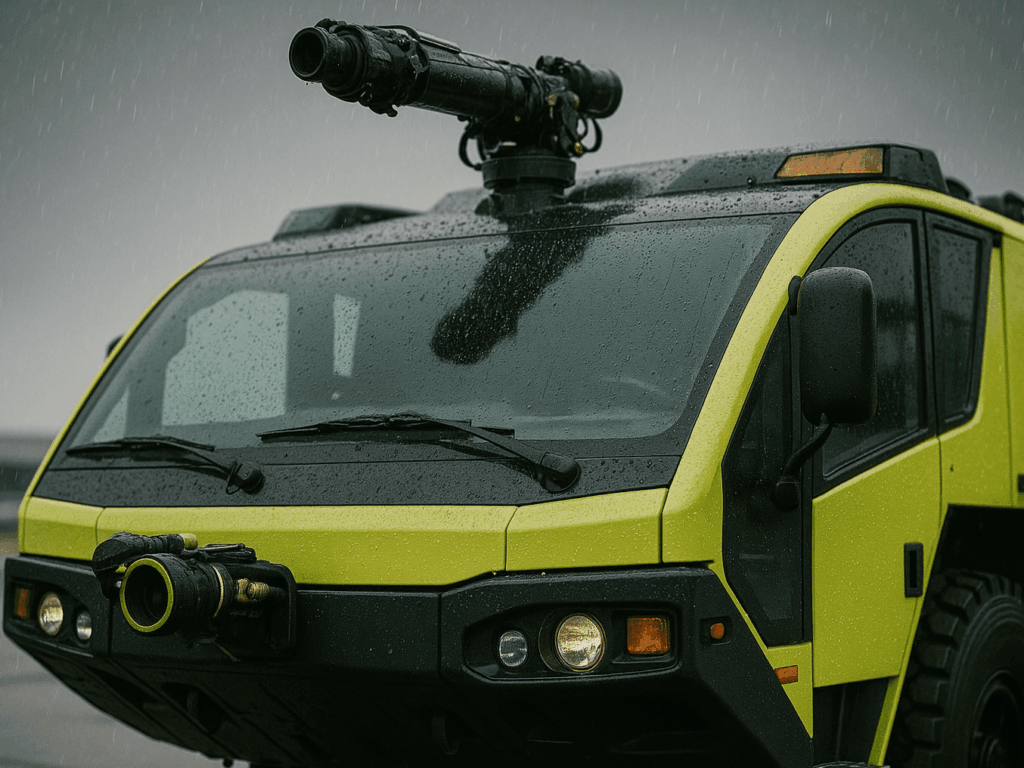
Having been put through it’s paces by the Humberside Fire and Rescue Service Having been put through it’s paces by the Humberside Fire and Rescue Service, we take a closer look at the Rapid Intervention Vehicle (RIV) from Pickup Systems to see whether, versatility, cost and capability can offer a viable alternative in tackling small nuisance fires.  One in a line of Multi-Purpose Vehicles developed by Pickup Systems the RIV faced by urban and rural fires during it’s trial; Daryl Oprey, Head of Operations for Humberside Fire and Rescue, shares his thoughts on how these SFU’s performed over key fire risks as the end of last year.   “Traditionally the Fire Service has run with a ‘one fire appliance fits all risk policy’,” comments Daryl when we catch up with him, “but as our intelligence and data gathering gets more intricate we’re coming to realise that by predicting where the risk is, we can respond with the right team and the right equipment.  We simply don’t need a quarter of a million pound fire engine with a crew of five turning up to a small bin fire.”   Perfect for small nuisance fires the RIV’s unique features include a Fire Fogging system, which uses less water and leads to the tank lying in the bed of the vehicle.  The vehicle that took part in the Humberside Trials has a chassis driven by a 2.5 litre D-4D 170 engine with a double cab, capable of 34 mpg and able to carry a payload of up to 1500kg. The bespoke body, designed and built by Pickup Systems features two slide and tilt draws and a 700mm long utility draw.  The red extra cab RIV (Rapid Intervention Vehicle) Hilux is different in that the water tank is slung under the vehicle, giving it more space in the bed for the two slide and tilt draws, a huge 1.7 metre utility draw, which is carrying Webber rescue cutting gear.  Additional benefits are there’s very little run off contamination, it’s more economical in terms of maintenance and servicing and it’s price tag is 15% of the price of a full tender.     With it’s fast response time and on and off road capabilities many services are using these smaller applications for rural environments; a case in point being the recent peat fires on the moors, which took two weeks to put out.  “We were finding in the north of the area, during the peat fires, that the surface fires were being caused by them spreading under the sub strata.  We were able to go right onto the moors, which we couldn’t have done to with a fire truck due to its weight and the environmental implications.  We were using the SFU which was capable to tackling the rugged terrain easily and by using the underground lance we were able to drive the water into the ground and extinguish the underground peat fires.”   Operating like the Ambulance service, these smaller fire units are mobile, constantly patrolling high-risk stand-points.  Unlike the larger fire trucks and crews, which operate from a fixed fire station, these 2 person units, capable of over 30 to a gallon, (unlike their larger counterparts, which field five crew and are only capable of 5-10 miles to the gallon), are therefore always circulating in the risk areas. With both the first response and SFU operating from 16.00hrs to 02.00hrs every day across Hull, Daryl believes a modern fire fighting service needs this type of flexibility and he believes that public / private partnerships, like the one he has with Pickup Systems, are just the thing to help the Fire Service achieve its goals.   “The best thing about these vehicles is when the smaller nuisance fires have peaked during a particular time of the year and a new threat poses itself, say flooding, we can now detach the fire fighting pump out of the unit and with the space provided, fill it with other equipment; like dry suits for example.  With it’s four wheel drive off road capability, we’d be able to mobilise it as a different support vehicle and that is it’s attraction.”   John Mcgauley from Pickup Systems concludes:  “It’s been a fantastic opportunity to have our vehicles trialled like this and the feedback from Humberside goes to show, that these vehicles have a roll to play, in that they offer brigades a means of reducing fleet costs, whilst improving services.”  
Pickup Systems Read More »

ARFF Vehicle image - Fire Buyer

international Firex 2011

Teaser: The UK’s largest dedicated fire safety event and one of the largest in the world International Firex – the UK’s largest dedicated fire safety event and one of the largest in the world – will be back at the NEC Birmingham from 16-19 May 2011, showcasing the latest products and services from over 150 exhibitors. Register for free entry to International Firex. Alongside the exhibition is a full seminar programme offering a wide range of free presentations based on the latest product innovations, best practice, standards and approvals and compliance with current fire safety legislation. International Firex provides one of the few opportunities to actually see and compare such a wide range of fire safety products and solutions. It is also an ideal opportunity to network with experts from all aspects of fire safety. International Firex is conveniently located alongside IFSEC and Safety & Health Expo, and The Facilities Show. Exhibit at International Firex International Firex provides a perfect route to market for those organisations looking to showcase their products and services to an audience of fire alarm installers, systems designers, consultants, fire safety engineers and building control officers, and to end users directly responsible for fire safety in their premises and places of work. For more information and to check stand availability, please contact the sales team today. Download latest floorplan. Website: http://www.info4fire.com/internationalfirex

international Firex 2011 Read More »

Firefighting foam being sprayed from fire hose - Fire Buyer

Rosenbauer PANTHER 8×8

Model number: PANTHER 8×8 Make: Rosenbauer International AG Weblink: http://www.rosenbauer.com Key features: – World-wide standards and airport demands – Professional design blended with top quality – Sturdy light weight construction – Combined driving power and high manoeuvrability – Efficient fire fighting technology – the basis for best extinguishing operation – State of the art panorama-cabin construction provides best view around – Ergonomic control assisting the crew when operating in stress situations – Standardization and well selected options suit world-wide customer requirements Specification Attachment: Rosenbauer_Datasheet_Panther_8x8_HRET_GACA.pdf Teaser: The Rosenbauer PANTHER ensures fastest response and superior fire fighting power in all kinds of emergency situations The Rosenbauer PANTHER ensures fastest response and superior fire fighting power in all kinds of emergency situations. The piercing tool of the STINGER HRET penetrates the aircraft fuselage under 210 bar pressure and discharges 1,000 l/min. The Rosenbauer Group is one of the world’s largest manufacturers of fire fighting vehicles. With its wide range of municipal fire fighting vehicles and aerials built to both European and US standards (NFPA), its extensive series of ARFF vehicles and industrial fire fighting vehicles, advanced fire fighting components and fire and safety equipment, Rosenbauer is the industry’s full-liner.  

Rosenbauer PANTHER 8×8 Read More »

Fire detection alarm on ceiling of modern building - Fire Buyer

Summit Fire Apparatus

For over 50 years Summit has been rising to meet the apparatus challenges of the fire industry It has been said that Summit specialises in specialty trucks. They are willing to take on the challenges of building trucks that are beyond most truck manufacturer’s conventional designs.   “The unique pumper or one-of-akind vehicle is something that Summit feels it can do better than the competition.” says Joe Messmer, president and co-owner of Summit Fire Apparatus in Northern Kentucky. For the past 50 years brothers Joe and Tom Messmer have been building fire trucks with the help of a loyal group of employees. Summit does not have a standard truck; rather each truck is designed and manufactured to meet the unique needs of each customer, which allows them to uphold the highest standards. Joe Messmer, says, “In 50 years we have learned one thing for certain, customers want what they want. ‘WHILE SEVERAL OTHER MANUFACTURERS SAID AN INDUSTRIAL FOAM PUMPER WAS TOO COMPLICATED, SUMMIT MET THE SPECIFICATIONS APPARATUS WITH NO EXCEPTIONS AND KEPT THE OPERATIONS SIMPLE.’ And we give them just that, by building their ideas into safe, well equipped units.” Charles Messmer started the company in 1957 with a Ford pick-up truck, a portable welder, determination and Godgiven talent. In the beginning his focus was on metal fabricating. Charles Messmer was one of the founding fathers of the local fire department. He served as chief from 1963 to 1969. (Joe went on to serve as Chief for 26 years. Joe and his son Mark still hold positions on that same fire department.) As Charles became more involved with firefighting, so did the focus of the business. He built his first unit, a tanker, in 1958. Refurbishing and repair of wrecked and older units was also a big part of the business. That is one reason that to this day, each part Summit produces is automated. Joe Messmer says, “If a department tears up a tailboard, we can manufacture a new one.” The part can be shipped to the department and can be “bolted or installed right in place.” Joe and Tom Messmer assumed control of the business in 1969 after the death of their father, Charles. The company has changed and grown since then. It remains family owned and operated. They have recently added a third generation family member, Mark, Joe’s son, in the sales division. As always Summit is committed to providing affordable, quality apparatus. Their current line of apparatus includes Heavy Rescue Trucks, Mini-Rescues, Haz-Mat Units, Brush Trucks, Pumpers, Tankers/ Tenders, Air & Light Vehicles, and Trailers. The service department performs preventive maintenance, repair and collision work as well as refurbishment of older units. Summit may have found its niche in challenging and unique trucks. While several other manufacturers said an industrial foam pumper was too complicated, Summit met the specifications with no exceptions and kept the operations simple. To date they have manufactured three industrial foam pumpers, one for an oil refinery in Toledo, Ohio and two similar rigs for Bulwer Island, Australia. It was quite a challenge to build such complex, mammoth rigs. The Toledo pumper is 100 inches (254 cm) wide, has a 3,000 gpm (11,355 lpm) Hale RME pump, FoamPro AccuMax 3300 foam system (capable of delivering individually metered foam solution to each of nine discharges), a 1,000 gallon (3,785 l) fiberglass foam tank, mid-ship mounted Hydro Sword, and an articulating telescoping aerial nozzle. This foam and pump component configuration had never been accomplished before. The chassis is a Spartan Gladiator with a Caterpillar C13 diesel engine and Allison Gen IV transmission. It has stainless-steel plumbing and a side-mount pump panel with retractable deck and railing, 15 kw Power Tech generator, six Extend-A-Lites, a 4,500-watt Will-Burt light tower, rearmounted 5,000 gpm (18925 lpm) Akron monitor and a rearview camera system with an LCD monitor and two heavy-duty cameras. The front bumper extension stores two 1 ¾ inch (4.445 cm) attack lines. Toledo’s Chief, Chris Herman says, “We were impressed with the factory and were able to view other vehicles being built. All of the employees had a can-do attitude, no matter what part of the factory we were in. The quality and workmanship that Summit puts into its vehicles is amazing.” Chief Herman named the unit “The  ragonslayer”. On September 11, 2001, the very foundation of emergency response changed. Equipment and training were enhanced to prepare for terrorist attacks. When presented with this new challenge, Summit produced a CBRNE (Chemical, Biological, Radiological, Nuclear and Explosives) Response Vehicle for the Kentucky, Ohio and Indiana tri-state area. The 37 feet 7 inch (1145 cm) custom trailer is pulled by a Freightliner. It has 14 rescue-style compartments, side awnings, a ramp for wheeled equipment, rooftop storage, a Will-Burt light tower, 25 kw generator, and lighted walkway from the front of the vehicle to the rear observation platform. Inside is an enclosed science and research room with pass-through, fume extraction hood, work counter and wall cabinets. A Summit exclusive is the addition of a sequencer to their Air & Light Vehicle. Some say a sequencer is not required on an air compressor truck. The sequencer conserves air and pressure in extended use circumstances, saves time and removes the concern about firefighters going into a fire wearing SCBA cylinders that are not filled correctly. Summit thinks, ‘safety first’ makes all the difference. Kenton County’s Air I is built on an International 4400 2-door. It has a 16 feet (487.680 cm) Equipment body with six compartments and refill station, IH Engine 330 hp, exhaust brake retarder, 33.2 cfm (0.94 cmm) & Emergency Magazine”, Robert Tutterow wrote, “Their application is limited only by the imagination.” In rising to the challenge to make the utility vehicle even more useful, Summit designed a trailer to be pulled behind an RTV. They call it the R.E.D.   (Remote Evacuation and Deployment) Wagon. It is 7 feet (213.360 cm) long and 3 feet (91.44 cm) high. It can seat six crewmembers or transport three patients

Summit Fire Apparatus Read More »

Firefighting foam being sprayed from fire hose - Fire Buyer

Maling the past work for us now

The events of recent hurricanes, like Gustav and his closely following sister, Hanna, are well known. How well we understand the past can prepare us for the future. My intention for writing this is to take a serious look backward for future planning and strategies from present day events and incidents. To me history is always very interesting. What I have challenges with is how difficult it is for many of us to learn from it. I intend to use my own experiences from weathering both hurricanes, Katrina and Rita, just a few brief years ago. As in anything of value and direction, leadership must be paramount. It is especially true when a crisis comes to hand. The truly visible leader can make or break the outcome of any event. I have found that being prepared as a leader in the correct disciplines is everything. Then by being a touchable and defined force for your troops, your leadership becomes valued while adding strength and reassurance to all who see you as part of the solution. I personally respond to many calls, and may not have to directly contribute my skills at that particular time. But it gives my people the sense that the top commander does care about the daily workings of the organisation and its membership, especially when the heat of battle is underway. Today’s international fire service is directly involved on a wide scale of crisis and emergency response. We no longer concern ourselves with only fires and assorted rescue events. The fire service has become a multi-disciplined and multi-trained emergency response force. Thus, the lessons learned here from these hurricane disasters can be applied throughout a broad array of incident preparation and reaction. Communications should be at the forefront. Hurricanes will bring down information exchange networks by an assortment of factors. Wind alone being a primary cause with its force for blowing over towers and masts. Without question, cell phones are fragile and should not be a primary means of information. There is value in Ham Radio operations, especially for areas that have become severely damaged, and without the scope of any short term recovery with on site repairs. Spare batteries for everything else should be obtained well in advance, and don’t forget your portable radios and hand lights. A word to the wise is to fully charge them a day or two in advance of the pending event. Someone always puts things off and then it becomes too late. If wireless and hardwire communications fail, then one must resort to a courier based set of operations. Does this sound like a scene from World War II? A written and practiced plan should be in place. Couriers have been an established way of doing business for centuries. The Roman Army perfected this well. The deliverance of timely and progressive information is the lifeblood of any operation. Since we are extremely dependant upon electricity for everything, it is of solid value to have sufficient auxiliary power to sustain your operations. If you must utilise generators, then consider the proper model and fuel type. Portable generators are for the most part based upon a consumable hydrocarbon fuel, while the latest trend for permanent devices is to use natural gas driven engines for prolonged operations. The supply of natural gas in most areas is virtually unlimited. In relationship to any type of mechanical equipment, it is imperative to secure an around the clock mechanic or technical support service agreement to include a spare parts provision. You might have a memorandum of agreement or a service contract in place in lieu of not having a mechanic or technician on the duty roster. Thus, I strongly recommend that a second reading of this document be accomplished, as there might not be a clause for a mechanic or technician to come out in adverse weather conditions, nor have an adequate supply of parts to ensure an immediate restoration of mission essential and critical equipment. Refueling becomes a challenge for any device requiring sustenance over long periods. If you respond to a major fire and the engine companies start flowing water at or near their full capacity, then it’s no different than driving down the roadways at high speeds. Even artificial light towers operate under a full load. Fuel is quickly consumed. Again, if fuel is a service that you have contracted for, then review the wording of the agreement. You might not get the service under true emergency conditions or the elements of adverse weather. Since repairs and refueling are closely allied to the direct support of emergency equipment, there might be a need for pre-staging or quartering these acquired assets. Bringing this type of assistance in early might negate any adverse weather travel for ensuring that on-site mechanical and technical support is secure and present for the emergency responders. Speaking of fuel, this brings forth a closely related issue. Are there provisions for emergency responders to obtain fuel for their personal vehicles? It is just as important for them to draw fuel to get to their respective duty stations, otherwise you might not have workforce showing up at roll call. They would be subject to a frustrated and hackneyed arrangement of trying to locate some scarce source of this urgently needed commodity for all segments of society under less than ideal conditions. After all, we’re not fueling up for a holiday getaway. A little advance planning here pays off big dividends in the morale department also. Speaking of support and morale, since emergency responders are key and essential personnel, then you are responsible for maintaining their 24/7 presence. You are now obligated to support their personal and hygienic needs. Hunger, rest, downtime, and life’s daily necessities between calls must be addressed. Is hot water available? How will you feed and mess nourishing meals? Will an ice machine be required? Are sleeping quarters in the mix also? These questions become elevated if you require your entire workforce to be present. This act

Maling the past work for us now Read More »

Modern British Fire alarm on wall - Fire Buyer

European Fire and Safety Market

Opportunities by vertical application sector Frost & Sullivan is a global growth consulting company that partners with clients to support the development of innovative growth strategies. For more than 40 years, the company has leveraged its comprehensive market expertise to offer industry research and market strategies, provide growth consulting and corporate training, and support clients to help grow their businesses. We are pleased to bring you the very latest figures in our sector for the European Fire and Safety market. We are sure that this information will inform your business decisions. Executive summary – research scope This research service covers the European fire detection and suppression markets. Focusing on the key application areas, this research service offers an overview of the market trends, growth forecasts, geographic trends and company market shares, as well as market forecasts by each of the major application segments into which fire and safety solutions are sold. The geographical scope for this study is Western Europe, including Germany, United Kingdom and Republic of Ireland (UK & RoI), France, Italy, Iberia, (Spain and Portugal), Benelux (Belgium, Netherlands and the Luxemburg), Scandinavia (Denmark, Finland, Norway and Sweden) and the Rest of Europe (Austria, Switzerland and Greece). Fire Detection Fire detection systems are installed as part of buildings to detect combustion or any unwanted presence of fire. There are various types of fire detection systems each suited to different applications or building types. A fire detection system can vary significantly in both complexity and price, from a single panel with a detector and sounder in a small commercial property to a complex addressable system in a multi-occupancy building. Fire Suppression Fire suppression systems are fixed installations that are activated to suppress a fire. They can be activated manually, but are most commonly activated automatically. Only installations to fixed structures fall within the scope of the forecasts including commercial buildings, oil rigs, chemical plants, and other industrial manufacturing processes. Methodology This Market Analysis is a strategic review of the Fire Protection Equipment market in Europe and follows the principle of Frost & Sullivan’s Market Engineering Research methodology. This is a measurement-based system of market measurement, analysis, forecasting, strategy development and monitoring. The full research cycle is outlined in the chart below. Our approach is designed to fully integrate market research, goal setting, strategic marketing, market planning, implementation, and monitoring as integral components of the marketing process with our clients. This study is specifically based on comprehensive interviews with the top level management of equipment manufacturers including international and local sales offices. In additional extensive secondary research on legislative and political trends has been conducted to support the analysis. Market engineering research methodology Summmmary of key findings Vertical Focus The European fire protection market is a conservative but large market with limited growth opportunities. To stimulate new demand and exploit opportunities that exist within various vertical applications, market participants are increasing their vertical focus, offering products and expertise specific to end-user applications. Economic crisis More directly linked to new construction and suffering from a lack of clear legislation, the fire suppression market was more severely hit by the recession of 2009 than the fire detection market, which held up well due to backlog form strong orders in past years and clear legislative drivers. Both markets will return to steady growth from 2011, ensuring the return of the total fire protection market to pre-crisis levels by 2013. Growth opportunities End-user markets were hit by the economic crisis to a different extent. While education and healthcare remained unaffected, other verticals, including industrial and offices, were significantly impacted. Long term growth in the European fire protection market will remain conservative across all end-user segments. However, growth opportunities exist for specific applications and/ or specific geographies. Education and healthcare Education and healthcare offer the most stable growth opportunities. Partly bolstered by government stimulus packages, demand from these sectors will continue to grow throughout the forecast period driven by further new construction and refurbishment projects. In addition, an anticipated trend towards stricter legislation for some applications is also expected to support further growth in these segments. Retail, etc. Retail is the second largest sector in the European fire protection market. Following a significant dip in 2009/10, the underlying trend towards construction of further shopping centres and new supermarkets replacing smaller retail outlets will generate further demand for high-end fire protection solutions. For most other sectors too, positive growth rates signal a return to normality and indicate some opportunity in the long term. Industrial Industrial is the largest segment within the European fire protection market. Significantly affected by the economic crisis, a mixed economic outlook will hold back investments in new industrial facilities. Revenues from the industrial segments are expected to remain depressed. However, good opportunities for various applications within this diverse segment will exist, e.g. utilities and pharmaceuticals. With 22% Germany accounts for the largest share of the European fire protection market. Besides hosting the largest construction market in Europe it also has a strong legislative approach towards risk prevention. Considering the size of their populations and economies, Italy and Iberia account for a relatively small share of the total European fire protection market. Besides low construction activity, especially in Spain, this is also due to price differences for systems between Northern and Southern European countries. Fire protection systems are typically less expensive in southern Europe as compared to western and northern Europe, often smaller in size featuring a lower number of detectors, call points, notification devices, sprinkler heads, etc. Vertical market trends Although severely hit by the economic crisis, most demand continued to be generated from the industrial, retail and offices sectors. With a total share of 26 % industrial buildings are the largest end-user segment in the European fire protection market while Retail and Offices follow after some gap with 19% and 15% respectively. With revenues above the $200.0 million mark, all markets are of considerable size. Competitive landscape While the total fire protection market consists of more than 400 participants, the top

European Fire and Safety Market Read More »

Image of Wildfire - Fire Buyer

The Fire Service College

A world force in fire service and emergency response training The Fire Service College, based at Moreton in Marsh, Gloucestershire, in the UK, is an awardwinning world-leader in fire and emergency response training. We specialise in dedicated training for professional fire services, emergency responders and a wide spectrum of clients worldwide, including the petrochemical industry and marine firefighters. We offer a wide range of flexible training solutions to meet your needs and are one of the world’s largest operational fire and rescue training colleges in the world, with a global brand and reputation for excellence. Our international training activity supports national and international government and private sector resilience and we deliver training at all levels internationally, supporting individual career progression – from trainee recruit firefighting through to advanced command and control training. Delivering training both ‘in country’, at suitable overseas venues and on site, at our unique incident ground facilities in the UK, the College supports the needs of fire and rescue services, emergency responders as well as a wide spectrum of clients in the UK, Europe, the Middle East and the Far East. Training is tailored to individual requirements or selected from our extensive training portfolio and includes all aspects of leadership, civil resilience, train the trainer, Hazardous Materials (Hazmat), Urban Search & Rescue (USAR), incident command and hot fire training, as well as specialist operations and recruit development. Throughout its history the College has been at the forefront of innovation – whether it is in specialist operations, HazMats, USAR, or even the latest thinking on fire engineering and safety. We continually update our rigs and our training, which is designed to develop operational command techniques and bring about the effective management of incidents at all levels. Today, the College even works as a consultant, advising clients on how to improve the performance of their fire service or fire operation. Whether you work in one of the many fire services spread across the globe, hold fire responsibilities in business and industry (petrochemical, hazardous goods, manufacturing ), or have an emergency management or fire safety role, the College can design bespoke programmes to develop you and your organisation. It can even bring its expertise to you, outside the UK, in the form of offsite programmes, covering all areas of its operation. The College sums up its credentials simply – Unrivalled Experience, Unequalled Expertise. Stephen Copley, Director of Business Development at the College, gives his view on what sets us apart: “The College has the unique ability to advise on most, if not all, aspects of the fire and emergency response environment and the effective operation of such organisations. In addition to providing cutting-edge training, the College can also benchmark organisations against internationally-recognised standards, design and recommend strategic improvement plans and even manage the implementation of the resultant change programmes. We are an organisation geared to driving operational improvement for all our clients.” Unparalleled resources Just imagine a day-to-day incident that needs sound theory and plenty of practice to get your response right each and every time. Or imagine the unthinkable, that might never actually happen but yet still could – a major incident where it is essential to scope out incident plans, train people in their implementation, and practise to get it right. Envisage what could be achieved if you had all of the facilities shown below at your disposal. The College’s unique incident ground provides the backdrop for the most realistic, contextualised scenarios. These resources, accompanied by the College’s knowledge of best operating practice and its virtual reality simulator, can be combined to design a programme specific to each client and their own individual requirements. Derek Luff, Business Development Manager at the College, says: “We can replicate almost anything. Our scenarios are very realistic, yet there’s a high degree of safety and control. We have numerous buildings that we can set fire to and a couple we can smoke up. There are aircraft that we can set up for various kinds of fire and rescue scenarios, as well as an oil rig and a ship. We are proud of our incident command simulation suite that provides delegates with full immersion at tactical and strategic levels, testing emergency plans, resilience and operational procedures. We can also simulate a multitude of different expressway scenarios on our railway track and level crossing, roundabout and perimeter and access roads.”     ‘The colleges unique incident ground provides the backdrop for the most realistic, contextualised scenarios’ Unequalled expertise To match the extent of the College’s practical resources, we also provide a wealth of expertise and knowledge, with an instructor team that has an insight into the practical application of both general and essential concepts down to individual specialised areas. Take, for example, fire engineering and fire safety where specialisms are covered in great depth, including fire investigation, industrial and domestic fire protection systems, high rise building risks, building regulations and even smoke control. These as well as the more general foundations of fire safety, fire risk assessment and fire legislation, are blended together for each client. So whether it is a requirement for training for experienced or inexperienced practitioners, with general or specific needs, a programme is tailored to meet all these requirements. The practical emphasis of the College’s approach to learning and development comes with its aim to ensure that the training provided can be immediately applied once back in the workplace. This is because it is delivered by leading professionals drawn from fire and rescue services throughout the UK and guarantees that training is as up-to-date as it is hands-on, applying equally to all subject areas on offer: Responding to new threats With the increasing risk of global threats, fire services, civil defence forces and fire organisations across the world are having to re-examine the traditional ways of doing things to see how they match up to the new demands placed on them by a changing world. Often this requires reviewing how effective they are at command and control, operational mobilisation

The Fire Service College Read More »

Scroll to Top