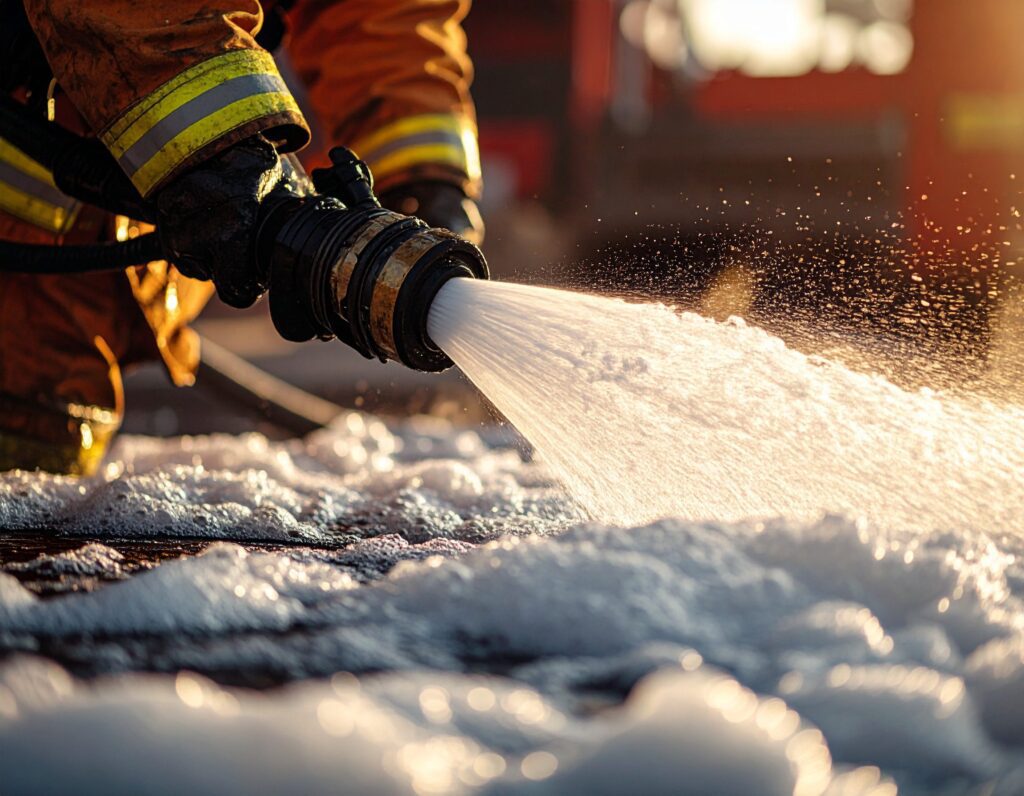
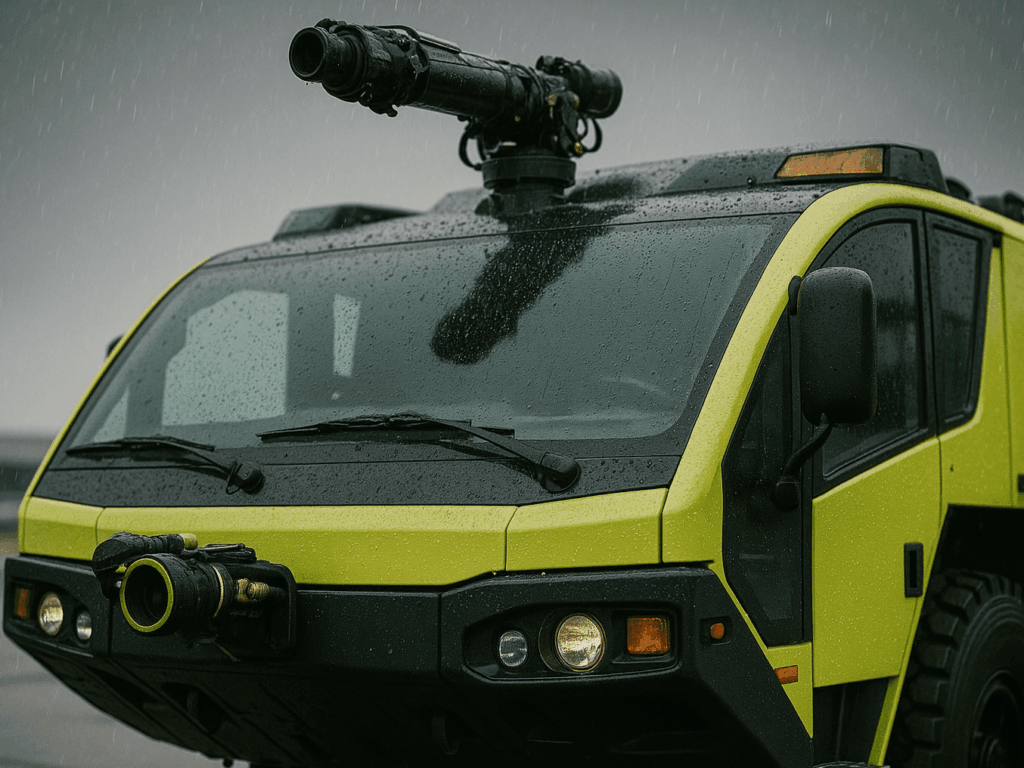
ARFF Vehicle image - Fire Buyer

Statoil selects Solberg under new frame agreement

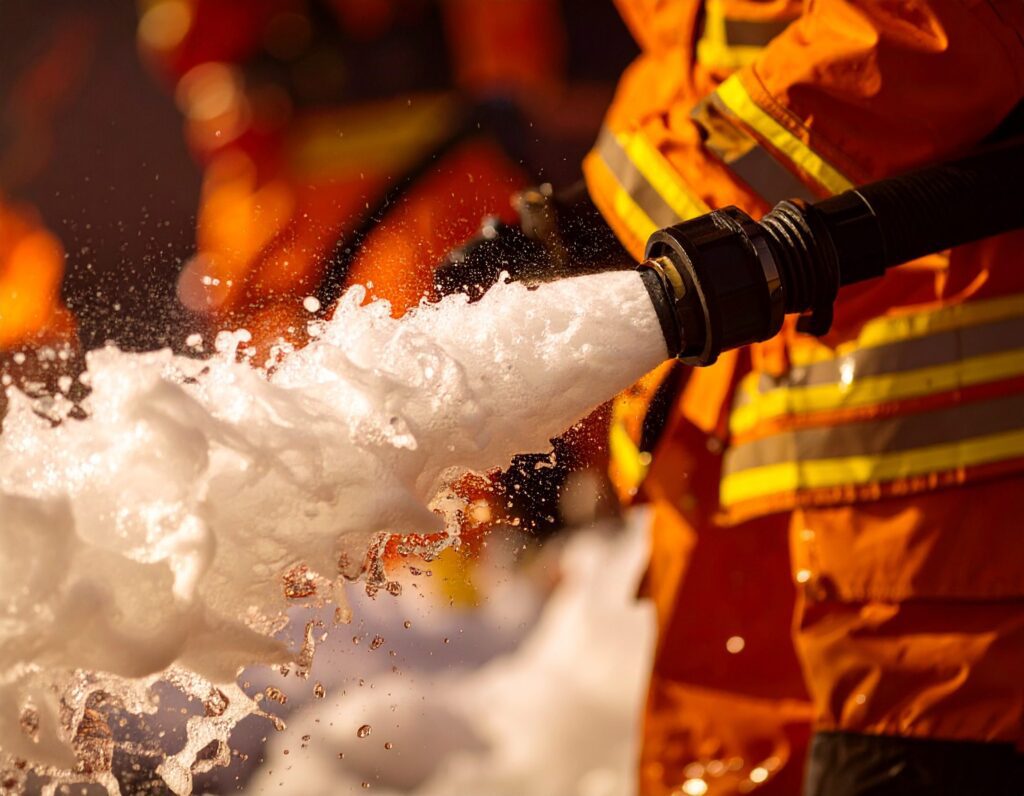
RE-HEALING™ Foam Concentrates meet Statoil’s demanding environmental requirements In order to achieve the high environmental stewardship standards at Statoil, The Solberg Company (Solberg), the world’s foremost innovator of firefighting foam concentrates and systems hardware, has been awarded a contract by Statoil as their foam concentrate supplier under a new multi-year Frame Agreement. In a prior agreement, Statoil selected Solberg as their partner in the Statoil LOOP Portfolio Program to develop environment-friendly 1% firefighting foam using no fluorinated compounds or other organohalogens. In the case of the Solberg / Statoil partnership, the project developed an environment-friendly 1% high-performance firefighting foam without fluorinated compounds or other organohalogens. The result is Solberg’s RE-HEALING RF1, 1% foam concentrate suitable for use on all Statoil offshore and onshore installations. “Statoil places a very high priority on environmental stewardship, and Solberg’s new fluorine-free firefighting foam aligns perfectly with Statoil’s environmental policies” said Fredric Pettersson, Sales Director – EMEA Region for Solberg. RE-HEALING Foam concentrates from SOLBERG are an innovative environmentally sustainable fluorosurfactant and fluoropolymer-free firefighting foam used to effectively extinguish Class B hydrocarbon and polar solvent fuels with no environmental concerns for bioaccumulation or toxic breakdown. RE-HEALING Foam concentrates can be used in fresh, sea or brackish water and possess excellent fire extinguishment and burn back resistance due to its flow and rapid sealing characteristics. The product takes its name from the foams physical “resealing” characteristics. “This new Frame Agreement allows Solberg to continue development of its unique advanced high-performance environmentally sustainable firefighting foam technology for use not only in the petroleum, oil and gas industry but other industrial high-hazard high-risk industries globally,” explained Solberg EMEA Region General Manager Thomas Svanevik. “We are excited to supply firefighting foam concentrates to Statoil that achieve superior fire protection, while also achieving outstanding environmental compliance.” The first platform selected for retrofit with R-HEALING RF1 foam concentrate was Kvitebjørn. The Kvitebjørn gas and condensate producing installation lies in block 34/11, east of Gullfaks in the North Sea in the North East Atlantic. It has been developed with a fully-integrated fixed steel platform with drilling and processes facilities and living quarters. The second platform selected Njord A located further north in the Norwegian Sea. On the new oil platform “Gudrun”, Aqueous Film Forming Foam (AFFF) was never an option and RE-HEALING RF1 has been used from day one. Based in Green Bay, Wisconsin with operations in Bergen, Norway and Sydney, Australia, Solberg has been involved with the manufacture of firefighting foams since the mid-1970. Solberg is recognized throughout Europe and the Asia Pacific Region for its environmentally sustainable fluorosurfactant and fluoropolymerfree products that are an innovation in Class B firefighting foam. Additionally, Solberg manufactures a complete range of traditional foam concentrates, Class A and High-Expansion foam concentrates including foam systems hardware. Solberg’s unique technology is preferred by customers in the aviation, chemical, energy, fire services, oil and gas, petrochemical, pharmaceutical, solvent & coatings markets.

Statoil selects Solberg under new frame agreement Read More »
Image of Wildfire - Fire Buyer

San Francisco emergency water system not adequate

For fighting many fires at once San Francisco’s emergency water system is not adequate for putting out multiple fires at once during a major disaster like a strong earthquake, according to current and former fire officials. In the decades since fires caused by a 1906 earthquake devastated the city, voters have approved hundreds of millions of dollars in bond money for an elaborate emergency water system. But the city has failed to spend it properly in recent decades, fire officials told the San Francisco Chronicle (http://bit.ly/P6YR8A ). "We have an unlimited water supply, but no way to get it to the fires in half of the city," said Thomas Doudiet, a retired San Francisco assistant deputy fire chief. For example, the newspaper says San Francisco hasn’t spent enough to purchase the portable firefighting equipment that is instrumental to battling blazes in the city’s outer residential districts. The system helped extinguish the large fire at a construction site in the city’s Mission Bay district earlier this month and was used to battle the Marina District blazes after the 1989 Loma Prieta earthquake. The effort to remake the city’s emergency water system occurred after fires in 1906 destroyed 27,000 buildings. The blazes burned largely unimpeded due to poor water pressure. City engineer Michael O’Shaughnessy designed a state-of-the-art, gravity-fed system with three large reservoirs built atop some of the city’s famous hills and augmented by giant pumps that could draw San Francisco Bay water. Since then, the city has expanded into areas that weren’t covered by O’Shaughnessy’s engineering marvel, leading officials to build 200 underground storage tanks that hold 75,000 gallons apiece. In the 1980s, retired assistant fire chief Frank Blackburn designed a portable pumping system that allowed firefighters to tap into these cisterns and shoot water at high pressure. But the portable system hasn’t been expanded since the 1980s, and currently only three rigs are available to fight fires in the city, according to the Chronicle. "If we had four major fires like we had (at Mission Bay), we would have an issue," Assistant Deputy Chief Ken Lombardi said. "There is no doubt the (portable) system works — we need more of it to make it work for the whole city." The city needs about $18 million for new rigs and equipment to bring the system up to the level it needs to be, according to Doudiet. So far, the city has only received $400,000 in federal grants for the project. "We’ve got to have the full system in place before the earthquake hits, and we don’t know when that is going to happen," he said.

San Francisco emergency water system not adequate Read More »

Firefighting foam being sprayed from fire hose - Fire Buyer

Fire-fighting robot that can walk through flames

A humanoid robot that can carry heavy equipment Researchers have developed a humanoid robot that can carry heavy equipment, interact with officers and head straight into a face-melting fire without hesitation. The US Naval Research Laboratory’s Shipboard Autonomous Firefighting Robot, SAFFiR for short, has been in the works for several years as a safety tool for Navy ships. Recently the advanced bot was brought out for a collaborative demonstration with researchers from Virginia Tech and the University of Pennsylvania, according to the lab. The bot is designed to learn a ship’s layout, move around autonomously below deck and stay upright even when a vessel is pitching and rolling. Built-in sensors allow it to see through smoke. Students from the university teams demonstrated complex algorithms that got the robot walking over both manmade and natural terrain, the lab said in a press release. The teams worked on tech to steer the robot to an open flame while avoiding obstacles. They also demoed an artificial muscle that would help it lift equipment, walk with a fire hose and activate a nozzle.

Fire-fighting robot that can walk through flames Read More »

Fire fighters in training - Fire Buyer

BP refinery leaks oil into Lake Michigan near Chicago

A malfunction caused crude oil to enter a refinery A BP refinery has spilled an undetermined amount of crude oil into Lake Michigan in the US. BP said a malfunction caused crude oil to enter the Whiting refinery’s cooling water system, which discharges into the lake. US regulators said the spill appeared to be contained by Tuesday evening. The Whiting facility is BP’s largest US refinery and is in the north-western part of the state of Indiana, near Chicago, Illinois. The Whiting spill had affected a 2,700ft (820m) stretch of the lake’s shore, US officials said, adding that there was currently no threat to wildlife or human health. BP said the leak occurred late Monday afternoon, but that the discharge had now stopped. A clean-up crew had deployed a boom which seemed to have contained the oil, it said. However, the company said efforts were continuing to remove the crude oil, which had mainly affected a cove near the refinery’s waste water treatment plant. BP was recently granted rights to bid for government oil contracts in the US, after being banned from doing so in the wake of the 2010 Deepwater Horizon oil spill in the Gulf of Mexico – the largest in US history. A few weeks ago, BP announced plans to increase its processing of crude oil at the Whiting refinery, as more oil is sent down from tar sands in Canada. Two US senators who represent Illinois – Mark Kirk, a Republican, and Dick Durbin, a Democrat – released a statement that said they were concerned about BP’s efforts to prevent future spills. "We plan to hold BP accountable for this spill and will ask for a thorough report about the cause of this spill, the impact of the Whiting Refinery’s production increase on Lake Michigan, and what steps are being taken to prevent any future spill," they said in statement. BP said in a statement that it "will continue to work in full co-operation with the agencies to ensure the protection of personnel, the environment and surrounding communities".

BP refinery leaks oil into Lake Michigan near Chicago Read More »

Firefighting foam being sprayed from fire hose - Fire Buyer

MSA's FireHawk® M7XT Air Mask certified as NFPA compliant

Provides fire-fighters with respiratory protection Global safety equipment manufacturer MSA Safety Incorporated today announced that it has received notification from the Safety Equipment Institute (SEI) that the company’s FireHawk® M7XT Air Mask, which provides firefighters with respiratory protection in hazardous or life-threatening environments, has been certified as compliant to the 2013 Edition of the National Fire Protection Association’s (NFPA) 1981 performance standard for Open-Circuit Self-Contained Breathing Apparatus (SCBA). The company expects to begin shipment of this product in the second quarter. Concurrent with this news, MSA also said it has received notification from the NFPA that the organization has issued a second tentative interim amendment (TIA) that extends the effective shipping date for SCBA models that meet the older 2007 edition of the NFPA standard. Up until now, MSA has been unable to ship its FireHawk® M7 Air Mask following the expiration of an initial TIA on February 28. However, the company has now resumed shipments of its FireHawk M7 SCBA and will continue to do so until June 30, 2014, in keeping with the most recent TIA. "The news regarding NFPA certification for our FireHawk M7XT Air Mask, as well as the TIA extension, means fire departments now have two great options from MSA when choosing SCBA," said Nish Vartanian, President of MSA North America. "Further, with approval of our groundbreaking G1 SCBA expected in the second half of 2014, we will soon be adding another option to the mix, providing fire departments with a broad new range of SCBA choices. The long-term impact of all this is that we are positioning ourselves to capitalize on what we anticipate to be a strong SCBA replacement cycle in 2015 and beyond," he said. MSA introduced the first NFPA-compliant SCBA in 1986, the first year the NFPA established performance requirements for breathing apparatus. Over the past three decades, MSA has continued to advance SCBA technology in keeping with changing NFPA standards. The company pioneered the first emergency escape "buddy-breathing" system approved for use and, more recently, developed an innovative "rescue-belt" SCBA accessory that allows firefighters to repel down the side of a burning structure in an emergency situation, borrowing from MSA fall protection technology developed for the construction market.

MSA's FireHawk® M7XT Air Mask certified as NFPA compliant Read More »

Image of Wildfire - Fire Buyer

Morgan Advanced Materials announces FireMaster FireBarrier

High-performance fire protection Morgan Advanced Materials announces the availability of FireMaster FireBarrier 135 sprayed refractory cement, offering superior fire protection and simple, cost-effective installation. FireMaster FireBarrier 135 is ideal for concrete tunnel lining fire protection and the fire protection of ventilation shafts, escape tunnels and refuges as well as critical systems such as water mains and communication cables. FireMaster FireBarrier 135 has been specially developed for the high temperatures that may occur in tunnel fires. Unlike most other products used for tunnel fire protection, it can withstand repeated and prolonged exposure to high-temperatures. It can be installed onto concrete or metal substrates using standard spray equipment and featuring very low spraying wastage during installation, its single layer application makes it fast and easy to install. It is adhesive to most construction materials and can be installed quickly, helping to reduce labor costs while maintaining the final product’s quality and proven reliability. FireMaster FireBarrier 135 has extremely high adhesion strength–typically eight times its weight, allowing fixings to be attached directly to it. It can be trowelled flat to provide a high-quality surface finish that can be used as the final tunnel lining surface (with optional painting), avoiding the need for expensive secondary cladding. The material can also be cast into sheet form and installed as a dry board or shape for applications where spraying is not convenient. Comprehensive and extensive testing of FireMaster FireBarrier 135 per the RWS fire curve and required by NFPA 502 has proven that the material resists environmental conditions found in tunnels, making it ideal for tunnel fire protection. FireMaster FireBarrier 135 is resistant to water jet sprays used to clean tunnel lining, and will not spall when subjected to water hose sprays at high temperature, increasing firefighting safety.

Morgan Advanced Materials announces FireMaster FireBarrier Read More »

Scroll to Top