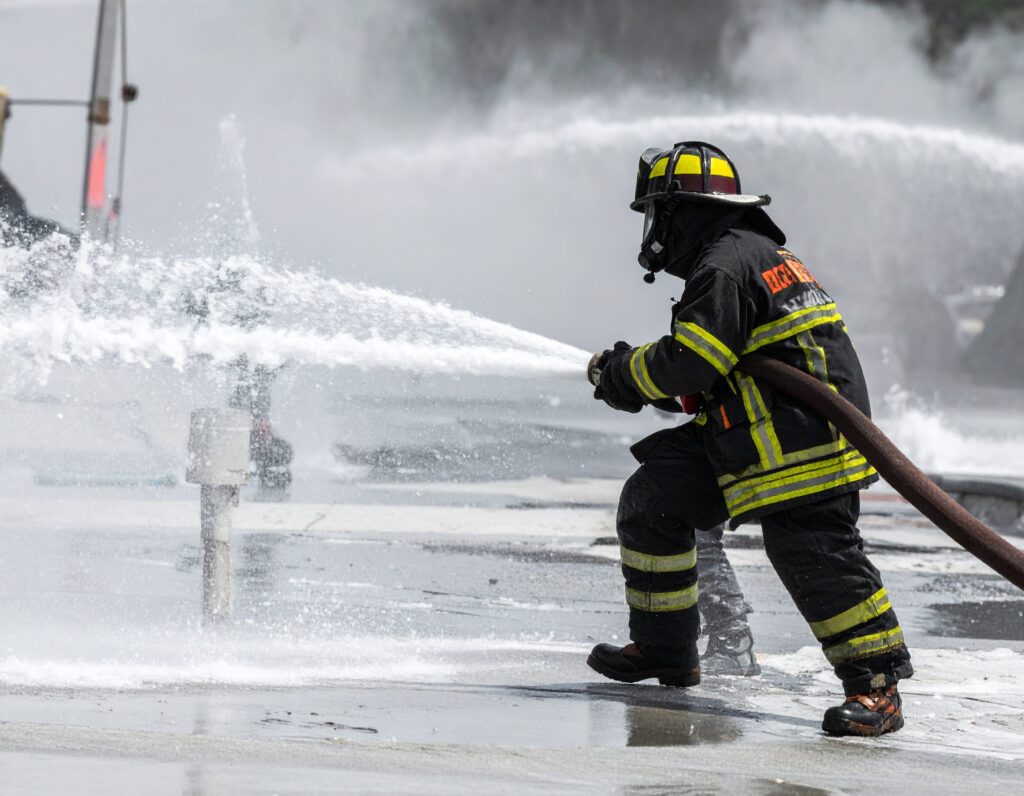
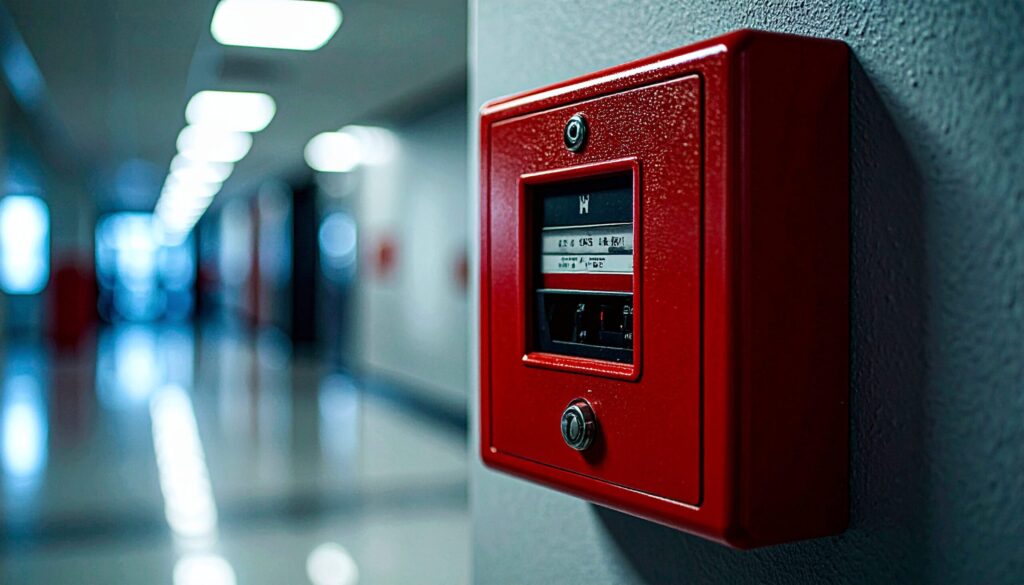
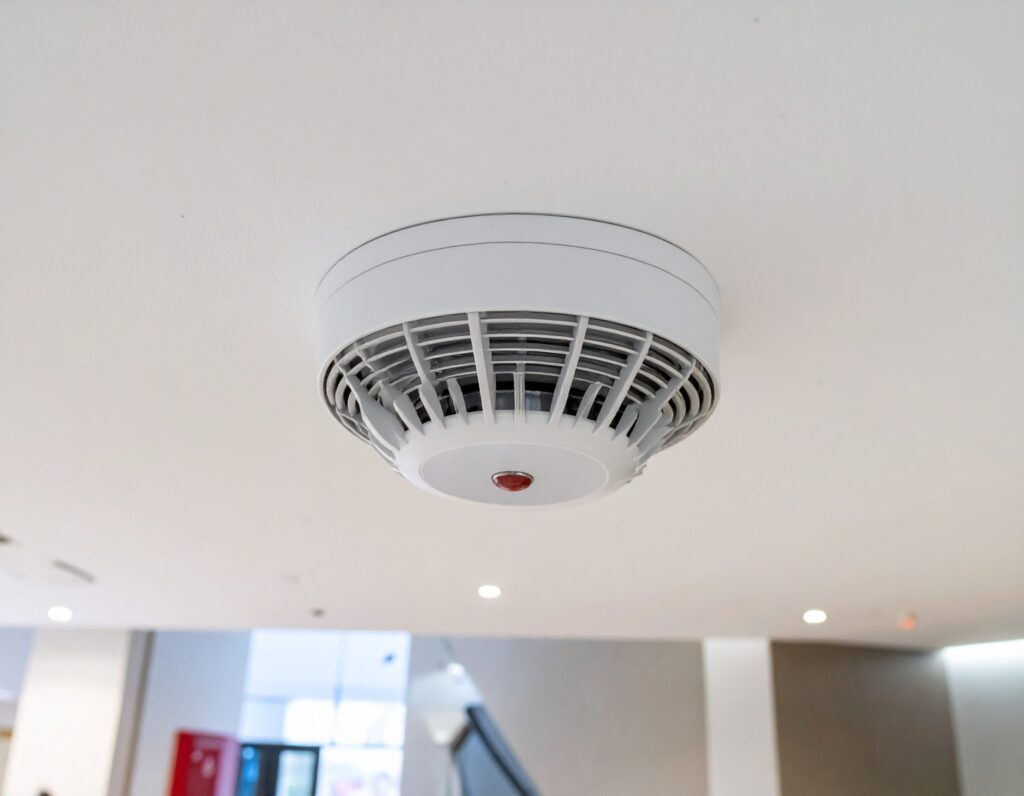
Firefighting foam being sprayed from fire hose image - Fire Buyer

London fire cuts 'risk six-minute response failure in 40 wards'

London Fire Brigade warning SOURCE: BBC Fire crews will be unable to reach an extra 40 London wards within the six-minute target if plans to close 12 fire stations go ahead, it has been claimed. London Fire Brigade (LFB) said the 40 wards would join 267 wards currently performing outside target. Its figures indicate first response times would increase by over a minute in 34 wards. But the brigade said over half of all wards in London would fall within the six-minute target. The closure of more than 10% of fire stations and the loss of more than 500 jobs were proposed by London Fire Commissioner Ron Dobson in a bid to save nearly £29m over two years. The plan is open to public consultation until 17 June. LFB’s target is to get a first fire engine to an emergency within an average of six minutes and a second within eight minutes. The document indicates the worst affected ward would be Clapham Town where the first response time would increase from nearly four minutes to nearly double that figure. Green Party Assembly Member Darren Johnson, a member of the London Fire and Emergency Planning Authority (LFEPA) which governs the fire service, was among those who requested the figures. He said it "proved" some local neighbourhoods will be "badly hit" by station closures. He added: "These unnecessary closures are a result of the Mayor’s trifling 7p a week council tax cut. "A delay in response times can literally mean the difference between life and death." The Mayor of London’s office was approached to respond to this but did not. Labour’s fire service spokesman on the London Assembly, Navin Shah, said the increases were "truly scandalous". LFB’s data model uses fives years of incident locations and calibrates them against demand frequency and response performance in one year, 2011/12. A spokeswoman for LFB said the proposals sought to keep London-wide response targets. She said: "As is the case now, over half of all London wards would, on average, continue to get a first response within the six minute target if the proposals are agreed. "London would continue to receive a very good service, compared to other emergency services and other parts of the country."

London fire cuts 'risk six-minute response failure in 40 wards' Read More »

Fire fighters in training - Fire Buyer

Reliable performance at the forefront for FPT Industrial

Global power train innovator FPT Industrial’s class-leading Cursor 13 engines are equipping fire fighting vehicles with outstanding performance and reliability. Benefiting from the Italian company’s history of innovation, which dates back to 1903 and now includes six Research & Development centres, the 12.9-litre, six-cylinder Cursor 13 Euro V and Cursor 13 Euro III engines offer power and torque up to 560hp and 2,500Nm, combined with low fuel consumption and running costs. With a lean design and a focus on efficiency in heavy duty vehicles, the diesel in-line units, with four valves per cylinder, offer fast load response and class-leading oil change intervals of up to 150,000km. Produced at a state-of-the-art manufacturing plant in Bourbon Lancy, France, the engines offer the largest capacity within the Cursor Series, developed to offer high power density in a robust and reliable package. With five sizes ranging from 7.8-litres to 12.9-litres, Cursor Series engines are also available in off-road and marine configuration, and for power generation. FPT Industrial engines, including the Cursor 13, power a variety of fire fighting vehicles, such as the SuperDragon 2 from fire and emergency vehicle market leader Iveco Magirus. Founded in 1864, Magirus is synonymous with the field, having invented the turntable ladder, and is now owned by Iveco as part of the Fiat Industrial group. A pair of Cursor 13 engines form a Twin Engine Power Pack producing in excess of 1,000hp, giving the SuperDragon 2 impressive performance, capable of a top speed of 135km/h and accelerating from 0-80km/h in under 25 seconds. The rear-mounted engines combine with a newly-developed Crash-Fire-Rescue truck body to enable Pump & Roll functionality from upwards of 900rpm, with a maximum pump output of 10,000-litres/minute from the 17,000-litre water tank and 2,100-litre foam tank. Cursor 13 engines feature total electronic management and innovative technology such as the Electronic Unit Injector system, Variable Geometry Turbo with a waste gate valve, and Selective Catalytic Reduction after treatment system for Euro V versions, to minimise Nitrogen Oxide (NOx) emissions. “Reliability is everything when fire and emergency vehicles are called into action, and that is a focus across the entire FPT Industrial range of engines,” said Massimo Siracusa, FPT Industrial’s Vice President of Product Engineering. “The Cursor 13 offers outstanding dependability in heavy duty vehicles, along with high power output and density as well as plenty of torque. Fuel consumption is low and the service intervals are the best in its class. “The engine is incredibly robust, however its light weight ensures fire fighting vehicles have more capacity to carry important equipment and extinguishing liquid to handle the job at hand.” The heart of the engine features state-of-the-art technology and a sophisticated design, delivering high performance and crisp throttle response, despite impressive fuel efficiency and low emissions. With a bore and stroke of 135mm x 150mm, for a ratio of 1.11, the 1,320kg Cursor 13 boasts a compression ratio of 16.5:1. FPT Industrial’s Electronic Unit Injector (EUI) system uses an electro-injector on each cylinder, pressuring fuel mechanically up to 1,800 bar, ensuring extreme precision in the quantity of the fuel delivered through a dedicated cam system. The injection system’s timing is managed by the Electronic Control Unit (ECU), while the EUI avoids the need for periodical recalibration. With an aftercooler, the electronic Variable Geometry Turbo (VGT) optimises air delivery into the turbo based on engine speed, turbocharger speed, boost pressure, accelerator pedal position and engine brake control position. The system maximises torque throughout the rev range, enhancing outright performance and drivability, while reducing lag. The ECU also controls the decompression engine brake system, which delivers superior engine braking performance, lower running costs and improved driving comfort and safety. Born at FPT Industrial’s R&D facility in Switzerland in 1991 and proven in over 350,000 units, Selective Catalytic Reduction (SCR) was selected as the company’s after treatment system to address the Euro IV and Euro V emission regulations introduced in 2005. Beyond treating NOx compounds formed during the combustion process through the use of the additive AdBlue in the exhaust system, SCR technology also improves fuel consumption and running costs, and increases specific power output. The compact packaging of the SCR system minimises installation space and overall weight, increasing the vehicle’s payload. Similarly, overall engine dimensions of 1,359mm (length), 1,008mm (width) and 1,171mm (height) have been enabled through a focus on practical packaging, including an integrated Closed Crankcase Ventilation (CCV) system while the water-oil heat exchanger and water pumps are contained within the cylinder block. The design also diminishes the risk of leakage to enhance reliability and efficiency, in conjunction with the use of solutions such as high precision scraper rings, an advanced lubrication system to minimise engine blow-by and engine oil degradation, and a finely-tuned oil filter system incorporating a filtration membrane with micro-pores. Through refined parts such as the overhead camshaft, timing system with super-finished helical gears and an additional mating plate on the cylinder block, the structural strength of the powerplant is high, reducing engine noise and vibration. The Cursor 13 offers a range of customisation options to suit the end user’s requirements. These include air compressor, air filter, hydraulic pump and radiator solutions and interfaces, and aluminium or pressed steel oil pumps. Like the entire FPT Industrial range, the Cursor 13 is backed by a worldwide technical support network all designed to minimise downtime, starting with maintenance updates, monitoring and diagnosis through the ECU. The technology used in the engines has been proven in extreme environments, with the Cursor 13 conquering the notoriously-demanding Dakar Rally with fellow member of the Fiat Industrial family, Iveco. On water, a pair of Cursor 90 650 engines powered a new speedboat world record between New York and Bermuda in October 2012, breaking the old mark by over four hours, with an average speed of 39.49 knots. FPT Industrial is a company of Fiat Industrial, dedicated to the design, production and sale of powertrains for on and off-road vehicles, marine and power generation applications. The company sits within the Fiat


Reliable performance at the forefront for FPT Industrial Read More »

Modern British Fire alarm on wall - Fire Buyer

TetraKO appoints Randy Wahl as sales manager

Wahl worked for 12 years with the Waterous Company  TetraKO, LLC, the fire suppression subsidiary of EarthClean Corporation, announced today that Randy Wahl has joined the company as Sales Manager. Wahl will report to Scott Bocklund, President of TetraKO, LLC. Prior to joining TetraKO, LLC, Wahl worked for 12 years with the Waterous Company, Fire Pumps Division, most recently serving as a regional sales manager for a 12-state territory that stretched from Minnesota to Texas. “Randy has an excellent track record of service and support among a wide range of fire service customers,” said Bocklund. “His experience with fire pumps and foam systems operations will be invaluable as we aggressively move forward with new products and delivery systems for TetraKO® technology.” Wahl will be responsible for introducing and supporting TetraKO water enhancer and proprietary delivery systems to fire apparatus OEMs, distributors, and fire departments. Wahl is a retired firefighter from the Chanhassen Fire Department in Minnesota where, during his tenure, he served in many positions from firefighter to assistant fire chief. Randy also comes to TetraKO, LLC with many certifications towards his Fire Science degree; he has also provided instruction in the use and operations of Class A and B foams at a local technical college. About TetraKO, LLC TetraKO, LLC is a company that helps firefighters attack, suppress, and contain fires. TetraKO, LLC is a wholly owned subsidiary of EarthClean Corporation, a Minnesota-based clean technology company whose mission is to develop and introduce environmentally friendly and biodegradable technologies. A team of engineers, scientists, and firefighters developed TetraKO water enhancer. Visit www.tetraKO.com for more information and to see the product in action.

TetraKO appoints Randy Wahl as sales manager Read More »

ARFF Vehicle image - Fire Buyer

Faster installation of fire detectors

Tyco’s innovative ceiling tile adaptor for faster and easier installation Tyco Fire Protection Products introduces an innovative ceiling tile adaptor for faster and easier installation in suspended and false ceiling applications. Part of its Generation6 fire detection range, the new Time Saver Mount achieves a 30% time saving for suspended ceiling installations, helping to reduce the overall construction programme, project costs and labour hours. Compared to conventional installation and commissioning, which often leads to delays as the fire alarm engineer waits for the final fix of the ceiling to be completed, this new adaptor reduces the number of repeat trips to site. Using the Time Saver Mount, engineers can install and commission detection systems before the final fix is completed. Once the fire alarm engineer has visited the site to install and test the fire detector modules, the suspended ceiling contractor is able to make precision cuts in the ceiling tiles and fit the Time Saver Mount. The detector can then be pulled through and simply locked into place for installation within the suspended ceiling. This new, time-saving component forms part of the ancillary products range within the Generation6 portfolio of fire detection solutions. Based on the proven MZX technology platform, the new range offers unique and innovative features designed to make the installation and commissioning process easier. With the 850 EMT engineering management tool for example, fire detection devices can be commissioned prior to completion of other building services, saving valuable time. “We believe this innovation offers significant benefits to fire alarm engineers and suspended ceiling contractors,” explains Eric Tassé, director of product management, fire detection, Tyco Fire Protection Products. “When discussing the Time Saver Mount with industry bodies, including the Association of Interior Specialists, we found that the potential to save critical time on a project presented compelling benefits for all parties working on site. The feedback we’ve received on the new Generation6 range has been very positive and ancillary products within the portfolio contribute to our aim of making the installation process more efficient, reducing damage and wastage for the contractor and system engineer involved.”

Faster installation of fire detectors Read More »

Fire fighter in the outfit, with fire protection mask - Fire Buyer

New Colourful Fire Detection Range

Enhance your colour options with Tyco’s fire detection range Tyco Fire Protection Products now offers its Generation6 fire detectors in a range of colours, all of which are fully approved and comply with European standard BS EN 54. The colour range provides increased aesthetic options for end-users and also offers architects flexibility in detector module colour specification. The additional colour options permit end-users and architects to specify detectors that coordinate well with surrounding décor and environment – an important consideration in retail outlets, leisure facilities and commercial developments. The detector base is available in an alternative colour to the main alarm, giving scope for customisation in interior design. In larger public and commercial applications, such as hospitals, schools and office buildings, different coloured detectors can be used to indicate specific programmed actions or parameters, enabling fire system engineers to colour-code the fire detection system. This facilitates efficient servicing and maintenance, with potential time-saving and cost benefits. Eric Tassé, director of product management, fire detection, comments “Previously, fire detectors were only available in one colour; usually a discreet white shade. Colour could be added by painting over the detector but this compromised approval. Our new range of options means customers can add colour without detectors losing approval. In larger projects requiring a high number of detector modules, we are also able to match the detector colour to any Pantone reference – matching brand’s and business’ visual identity.”  

New Colourful Fire Detection Range Read More »

Firefighting foam being sprayed from fire hose image - Fire Buyer

Fire Fighting Enterprises welcomes Talentum to its business

Infrared Beam Detectors and Optical Flame Detectors Join Forces Infrared beam smoke detector manufacturer Fire Fighting Enterprises (FFE) has taken over optical flame detector producer Talentum, bringing two of the UK’s leading specialist fire protection businesses together to combine their outstanding strengths in technical innovation, manufacturing quality and operational success. Fire Fighting Enterprises’ parent company, Halma plc, purchased Talentum on 11th April 2013. Business at the Oldham-based company is continuing without interruption; the existing management will remain in place and work with the board of FFE to ensure a smooth merger, with the respected Talentum brand of optical flame detectors joining FFE’s established product offering of Fireray infrared beam smoke detectors. Ian Steel, Managing Director of Fire Fighting Enterprises, said: "I’m delighted with this development, and really see this as an investment in an excellent technology and business. We are really looking forward to bringing the best out of both companies – many customers will be buying from both of us already, and we hope to use our global sales channels to bring these excellent products to wider markets." Optical flame detectors are often used in sensitive or dangerous environments to detect fires even before there is any smoke produced, or where smokeless fires may occur. Infrared beam smoke detectors are designed to protect large indoor spaces, with each detector able to detect smoke over huge areas compared to other methods. Both detection methods share many common applications, particularly suiting the protection of environments handling flammable materials, alcohol, chemicals or fuel – such as warehouses, distilleries and aircraft hangars.

Fire Fighting Enterprises welcomes Talentum to its business Read More »

Fire fighters in training - Fire Buyer

UTC Ziton range extended

New 868 MHz wireless fire detection products from UTC UTC has released a new line of wireless fire detection products for its Ziton ZP2 and ZP3 panels, further adding to the flexibility of solutions in the Ziton range. The new devices operate in the European-approved 868MHz frequency band and complement the existing ZP7 addressable devices. They allow complete hybrid systems to be used in any Ziton installation. The new wireless detectors have no external aerials and are fully addressable and programmable to suit the protected area. They provide a robust wireless solution, with 2-way, multi-path 868MHz technology and automatic selection from 32 radio channels for reliable signalling. Diversity transceivers allow a maximum operational range of more than 150m and with dual battery supply the devices operate with 5-years’ battery life under normal conditions. “All the new devices deliver the robust, capable performance that you’d expect from the Ziton range,” says UTC’s Technical Manager for the UK, Leslie Nortje. “Full device status monitoring covers power sources, device removal and tamper, whilst both smoke and heat detection are supported from a single detector, minimizing the SKU count for support.” The notification devices feature high output with 32 selectable tones and acoustic self-test support. Wireless supervised inputs and potential free relay outputs are supported. Full training and support for all Ziton fire products is provided by UTC in the UK. For full details about the new products visit www.utcfssecurityproducts.co.uk

UTC Ziton range extended Read More »

Modern fire fighting truck in city - Fire Buyer

Fire safety in Olympic and major stadiums

How new regulations are often ‘codified by catastrophe’ It’s been called ‘codifying by catastrophe’ – how fire and other safety regulations have often come about because of tragedy. In stadium design, the most awful example remains the UK’s worst football disaster, which claimed the lives of 96 Liverpool fans in an FA Cup semi-final match against Nottingham Forest, played at the home of Sheffield Wednesday in 1989. The Hillsborough disaster, back in the news again amid evidence of official cover-up, is testament to how poor crowd management and police control can so easily become tragedy. The subsequent Taylor Report led to radical change, and the much safer stadiums we see today. However, the real tragedy is that radical change hadn’t been enacted sooner – for example, following the Ibrox Stadium disaster in 1971, when 66 Glasgow Rangers fans were killed and over 200 injured in a crush on a stairway. Or again at Ibrox, when a wooden terrace collapsed during a Scotland v England international in 1902, killing 26 people. Nowadays, major stadiums have crowd safety as their first design prerequisite; from entrances and exits that can cope with large numbers of patrons, to major incident plans (MIPs) to deal with any eventuality. Not least, modern stadiums are built with lots of concrete, steel and fire-rated glass to minimise the risks posed by fire. But that too has come about because of tragedy, the worst fire disaster in the history of English football: The Bradford City fire in 1985, which killed 56 and injured some 265. Most likely caused by a dropped cigarette or match falling into a void area beneath one of the ground’s stands, it soon engulfed the whole structure, including the roof. Worse, people had to break down locked exits to escape. The subsequent Popplewell Report introduced new safety legislation for sports grounds across the country. However, while modern stadiums are very safe, fires do still occur. In September 2012, a potentially serious fire occurred at Arsenal’s Emirates Stadium in north London. It was discovered at 2am and took 20 firefighters to bring it under control. The principal legislation relating to fire in major stadiums is the Regulatory Reform (Fire Safety) Order 2005. Under it, the club must plan, organise, control, monitor and review the necessary preventive and protective measures and record these arrangements in writing. In Scotland, the regulations are the Fire (Scotland) Act 2005, as amended, and the Fire Safety (Scotland) Regulations 2006. UEFA also offers guidance, making clear that “major lessons have been learned from the fire-related stadium disasters of the past.” They insist upon active measures such as extinguishers and sprinkler systems and passive measures such as fire sectorisation and fire doors. It’s those passive measures that high-performance steel manufaturer Wrightstyle specialise in. They supplied both the London Olympic main stadium and the adjacent ArcelorMittal Orbit, the 115-metre-high observation tower. The company also supplied an Athens Olympic project and stadiums for the Asian Games and the FIFA World Cup in South Africa, as well as the English FA facility at St George’s Park in Staffordshire, recently opened by the Duke and Duchess of Cambridge. In many instances, it has been Wrightstyle’s ability to demonstrate independent testing against both fire and smoke that has proved a decisive factor, underlining the highly-specialist nature and international context of the steel glazing market. The main lesson for designers is not simply to build in passive and active fire systems, but to look at the whole stadium or building’s capacity to withstand a fire. For the glazed components, that should mean analysing the level of containment the glass will provide and its compatibility with its framing systems. Those levels of containment are absolutely vital in a stadium, with very large numbers of people in a restricted area and who, in the event of a fire, may not always follow proper evacuation procedures. Evacuation models, based on engineering and computational tools, don’t necessarily reflect the variable nature of human reaction. Computer modeling and human behaviour diverge the moment that the fire alarm sounds. The fire safety designers may assume that patrons will immediately head for a designated fire exit. However, human psychology is likely to delay any response because many people will assume it’s a false alarm, or wait for further instruction from someone in a position of authority. Further complicating matters is that people will generally finish what they’re doing. If they’re on a concourse buying food, they’ll often complete that purchase before deciding whether to evacuate. The most compelling example of this, although not stadium-related, was during the Kings Cross railway station fire in London in 1987, which killed 31 people. In that tragedy, many passengers stepped over fire hoses to reach elevators taking them underground for their trains. That’s what they were at Kings Cross to do, and a seemingly innocuous fire wasn’t going to stop them. In the retail sector, research suggests that people would rather first go to the checkout to purchase goods rather than immediately evacuate the building. More specific to stadiums, patrons will often seek to reunite with family members or friends. For example, if one family member is away from their seat when an alarm sounds – perhaps that same patron buying food on a concourse – they will often go back to their seat to find others in their party before making any decision to evacuate. It adds up to a delayed flight time that the stadium’s design and evacuation procedures must address. In buildings research, as much as two-thirds of the time it takes people to exit a building after an alarm is start-up time – time wasted in looking for more information, or not taking the alarm seriously. Stadiums do, of course, have the advantage of having PA systems and a scoreboard on which information can be posted. However, human psychology is also at work, and the passive fire measures employed in the stadium’s design must also factor in a delayed evacuation response. That’s why modern steel

Fire safety in Olympic and major stadiums Read More »

Fire detection alarm on ceiling of modern building - Fire Buyer

The Cursor 13: Reliable performance at the forefront for FPT Industrial

Fiat Power Train Industrial’s 12.9-litre engine offers 560hp of power Global power train innovator FPT Industrial’s class-leading Cursor 13 engines are equipping fire fighting vehicles with outstanding performance and reliability. Benefiting from the Italian company’s history of innovation, which dates back to 1903 and now includes six Research & Development centres, the 12.9-litre, six-cylinder Cursor 13 Euro V and Cursor 13 Euro III engines offer power and torque up to 560hp and 2,500Nm, combined with low fuel consumption and running costs. With a lean design and a focus on efficiency in heavy duty vehicles, the diesel in-line units, with four valves per cylinder, offer fast load response and class-leading oil change intervals of up to 150,000km. Produced at a state-of-the-art manufacturing plant in Bourbon Lancy, France, the engines offer the largest capacity within the Cursor Series, developed to offer high power density in a robust and reliable package. With five sizes ranging from 7.8-litres to 12.9-litres, Cursor Series engines are also available in off-road and marine configuration, and for power generation. FPT Industrial engines, including the Cursor 13, power a variety of fire fighting vehicles, such as the SuperDragon 2 from fire and emergency vehicle market leader Iveco Magirus. Founded in 1864, Magirus is synonymous with the field, having invented the turntable ladder, and is now owned by Iveco as part of the Fiat Industrial group. A pair of Cursor 13 engines form a Twin Engine Power Pack producing in excess of 1,000hp, giving the SuperDragon 2 impressive performance, capable of a top speed of 135km/h and accelerating from 0-80km/h in under 25 seconds. The rear-mounted engines combine with a newly-developed Crash-Fire-Rescue truck body to enable Pump & Roll functionality from upwards of 900rpm, with a maximum pump output of 10,000-litres/minute from the 17,000-litre water tank and 2,100-litre foam tank. Cursor 13 engines feature total electronic management and innovative technology such as the Electronic Unit Injector system, Variable Geometry Turbo with a waste gate valve, and Selective Catalytic Reduction after treatment system for Euro V versions, to minimise Nitrogen Oxide (NOx) emissions. “Reliability is everything when fire and emergency vehicles are called into action, and that is a focus across the entire FPT Industrial range of engines,” said Massimo Siracusa, FPT Industrial’s Vice President of Product Engineering. “The Cursor 13 offers outstanding dependability in heavy duty vehicles, along with high power output and density as well as plenty of torque. Fuel consumption is low and the service intervals are the best in its class. “The engine is incredibly robust, however its light weight ensures fire fighting vehicles have more capacity to carry important equipment and extinguishing liquid to handle the job at hand.” The heart of the engine features state-of-the-art technology and a sophisticated design, delivering high performance and crisp throttle response, despite impressive fuel efficiency and low emissions. With a bore and stroke of 135mm x 150mm, for a ratio of 1.11, the 1,320kg Cursor 13 boasts a compression ratio of 16.5:1. FPT Industrial’s Electronic Unit Injector (EUI) system uses an electro-injector on each cylinder, pressuring fuel mechanically up to 1,800 bar, ensuring extreme precision in the quantity of the fuel delivered through a dedicated cam system. The injection system’s timing is managed by the Electronic Control Unit (ECU), while the EUI avoids the need for periodical recalibration. With an aftercooler, the electronic Variable Geometry Turbo (VGT) optimises air delivery into the turbo based on engine speed, turbocharger speed, boost pressure, accelerator pedal position and engine brake control position. The system maximises torque throughout the rev range, enhancing outright performance and drivability, while reducing lag. The ECU also controls the decompression engine brake system, which delivers superior engine braking performance, lower running costs and improved driving comfort and safety. Born at FPT Industrial’s R&D facility in Switzerland in 1991 and proven in over 350,000 units, Selective Catalytic Reduction (SCR) was selected as the company’s after treatment system to address the Euro IV and Euro V emission regulations introduced in 2005. Beyond treating NOx compounds formed during the combustion process through the use of the additive AdBlue in the exhaust system, SCR technology also improves fuel consumption and running costs, and increases specific power output. The compact packaging of the SCR system minimises installation space and overall weight, increasing the vehicle’s payload. Similarly, overall engine dimensions of 1,359mm (length), 1,008mm (width) and 1,171mm (height) have been enabled through a focus on practical packaging, including an integrated Closed Crankcase Ventilation (CCV) system while the water-oil heat exchanger and water pumps are contained within the cylinder block. The design also diminishes the risk of leakage to enhance reliability and efficiency, in conjunction with the use of solutions such as high precision scraper rings, an advanced lubrication system to minimise engine blow-by and engine oil degradation, and a finely-tuned oil filter system incorporating a filtration membrane with micro-pores. Through refined parts such as the overhead camshaft, timing system with super-finished helical gears and an additional mating plate on the cylinder block, the structural strength of the powerplant is high, reducing engine noise and vibration. The Cursor 13 offers a range of customisation options to suit the end user’s requirements. These include air compressor, air filter, hydraulic pump and radiator solutions and interfaces, and aluminium or pressed steel oil pumps. Like the entire FPT Industrial range, the Cursor 13 is backed by a worldwide technical support network all designed to minimise downtime, starting with maintenance updates, monitoring and diagnosis through the ECU. The technology used in the engines has been proven in extreme environments, with the Cursor 13 conquering the notoriously-demanding Dakar Rally with fellow member of the Fiat Industrial family, Iveco. On water, a pair of Cursor 90 650 engines powered a new speedboat world record between New York and Bermuda in October 2012, breaking the old mark by over four hours, with an average speed of 39.49 knots. FPT Industrial is a company of Fiat Industrial, dedicated to the design, production and sale of powertrains for on and off-road vehicles, marine

The Cursor 13: Reliable performance at the forefront for FPT Industrial Read More »

Scroll to Top