
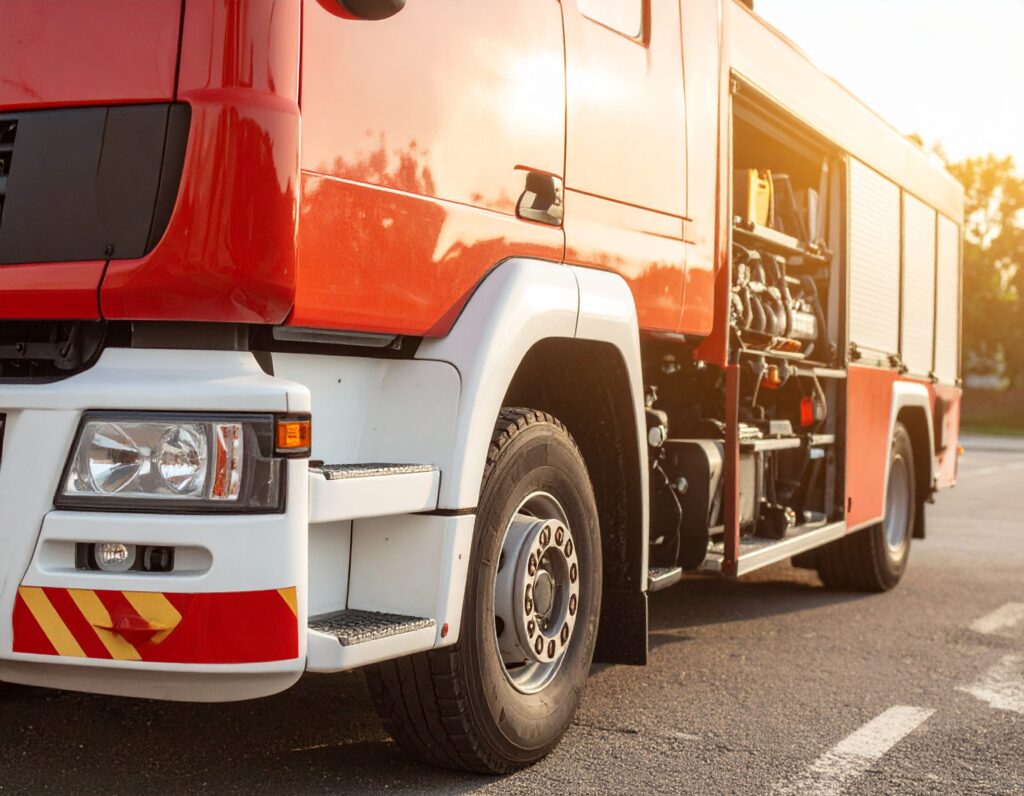

Delta Fire report record fire nozzle sales
Sales reflect an overall increase in general sales for the company Delta Fire, the UK’s largest Fire Nozzle manufacturer, is delighted to report that sales for their market leading fire nozzles hit a record high in the 2012/13 financial year to July 31st. These sales reflected an overall increase in general sales for the company over the period and a continued pattern of strong, sustainable growth since Delta’s inception in the late 80s. In difficult economic times 2013 has already seen huge investment in the infrastructure of Delta’s business with new bespoke manufacturing facilities housing an expanding CNC operation running dual shift manufacturing to satisfy growing demand. With an in-house advanced 3D-modelling and simulation capability Delta Fire use rapid prototyping of fire nozzles through 3D additive modeling generating new advanced designs. Delta Fire is widely recognised as a leading force in this specialist field and is proud to supply many prestigious global companies with their nozzles. Already the main supplier to the UK Fire & Rescue Services; Delta Fire’s Nozzles are widely used in the marine, petrochemical, industrial, aviation, construction and defence sectors. To facilitate Delta’s continued growth a 25% increase in personnel has ensured that infrastructure can support the increase in business with productivity and service maintained at all times. Research and development has always been at the forefront of Delta’s manufacturing ethos and throughout 2013 a number of innovative programs will give rise to new products later this year and into 2014. Over the last few years Delta Fire has worked closely with Fire & Rescue Services to fulfill their specific requirements for bespoke fire nozzles for use in high rise buildings capable of maintaining performance when flow rates can vary, particularly on upper floors. This year’s Emergency Services Show at Birmingham’s NEC (25th & 26th September) will see Delta exhibit their innovative range of High Rise nozzles including the exceptional ‘Floor Below Nozzle’. With the support of a dedicated technical and design team, Delta Fire is committed to pushing the boundaries of design and development in fire-fighting equipment manufacture in the UK and look forward to new challenges and opportunities next year. www.deltafire.co.ukwww.deltafire.co.uk
Delta Fire report record fire nozzle sales Read More »
Fire Service College to showcase its future at Emergency Services Show
25-26 September at the NEC, Birmingham The Fire Service College will reveal its innovative incident command training experience at the Emergency Services Show. Footage from the College’s incident ground will be showcased inside a hi-tech igloo, allowing visitors to experience the pressures on an incident commander at the centre of a major road traffic accident. Visitors will also experience a teaser for an immersive 3D training scenario, which will challenge participants to deal with a fire in a terraced house. The scenario will be made available at the show via G2G3’s (part of Capita plc) and Igloo’s technology. The teaser will give a flavour of 16 virtual scenarios being developed by the Fire Service College and G2G3 to test and exercise incident commanders, of any level, across all blue light services. The scenarios, which will also help training delegates to develop their skills and leadership qualities, will be available at the College from early 2014 and – in the future – will be delivered nationwide. The state-of-the-art technology will remove the cost and logistical barriers normally associated with staging complex, physical training exercises involving all emergency services sectors. Andy Parker, deputy chief executive, Capita, said: “When Capita announced its acquisition of the Fire Service College in December 2012, we made a commitment to transform it into a world class training facility that showcases new technology, and expands the range of training available to the fire service and other emergency services markets. “We have made great progress, through investment and in using the breadth of Capita’s existing capability and expertise in this sector, to position the College as a leading facility. The fact that the training experience will soon be available beyond the physical grounds of the College presents great opportunities to existing and future customers.” The College is also launching a brand new training course enabling potential fire fighter recruits to live and ‘work’ a shift pattern at its on-site fire station. The intensive eight week course will produce individuals trained to national occupational standards who are ready to join a fire and rescue service. This brand new cost effective model takes away some of the training and recruitment pressure from fire services. The course will also meet National Fire Protection Association standards, making it suitable for international students. The College will now also offer a leadership programme for young professionals, tailored to the needs of the fire and rescue service and accredited by the University of Worcester. It will offer a formal career pathway and professional qualification for future fire chiefs, which is the first of its kind. Where you can find the Fire Service College and the simulation training at the Emergency Services Show: · We are expecting high levels of interest in the Fire Service College’s simulation training experience. It will be located at stand L60. To book a space in advance, please email [email protected] or visit our stand, located at D69, at the show. · The Fire Service College stand is located at D69. It will provide information on new courses, updates on the new-look College and also a Wonderwall, where artists will interview visitors to the stand about hot topics and capture their thoughts in a gigantic mural. The content from the mural will form the basis of a thought paper to be launched in October. See how the mural develops over the course of the show.
Fire Service College to showcase its future at Emergency Services Show Read More »
Super Puma helicopters
What do offshore workers think? All Super Puma helicopter flights to UK oil installations remain temporarily suspended following a crash off Shetland in the North Sea on Friday that left four people dead. So what are the views of some of those workers who travel in the helicopters to get to and from their jobs? "I’m due offshore today but I’ll be back in two weeks and I’m very scared about it," says Amy, who works in the same part of the oil industry as Sarah Darnley, 45, from Elgin – one of those who died in Friday’s crash. She says she will "personally refuse" to get into a Super Puma if they are reinstated and "will consider a job change if something is not done by the industry to address the issue of safety". The Super Puma AS332 L2 had been carrying 16 passengers and two crew from the Borgsten Dolphin oil rig to Sumburgh airport in Shetland when the incident happened on Friday evening. Along with Ms Darnley, Duncan Munro, 46, from Bishop Auckland, Gary McCrossan, 59, from Inverness, and George Allison, 57, from Winchester died. An investigation now under way has not yet established the cause of the crash. "It´s a terrible loss," says Amy. "I only wish that they had grounded the Super Pumas when they had previous warnings." Friday’s crash was the fifth time in four years that Super Pumas have been involved in North Sea incidents, and another model – the Super Puma EC225 – was grounded following two emergencies in 2012. Those aircraft were only given the go-ahead to resume flying earlier this month. Commenting on Friday’s fatal crash, Super Puma manufacturer, Eurocopter, says: "At this point in time, limited technical information is available regarding the cause of this accident. "Eurocopter’s experts are in Aberdeen working closely with the investigation authorities to determine the cause." ‘Safety concerns’ Other employees describe the cramped conditions of some Super Pumas. "The EC225 is a flying death trap," says one oil worker who has been travelling offshore for 20 years and wants to remain anonymous. "The internal seat layout means [those] in the back… are so close that your knees are interlocked with the passenger sitting opposite you. "In an emergency it would be nigh-on impossible to get out of such a small space." About 26,000 people, from technicians to catering staff, work for more than 100 nights a year offshore in the UK, according to Oil and Gas UK. The number rises to more than 50,000 when others working offshore for a few nights a year are included. Aviation experts argue the Super Puma has a relatively good safety record, having been service in the North Sea for some 30 years and with over 800 aircraft operating around the world. Another unnamed oil worker, who accepts the helicopters are doing hundreds and hundreds of flights a day without any problems, goes on to say: "If a fixed-wing airplane had as many accidents as the Super Puma nobody would fly in it." He says he will have his reservations about taking the helicopter again. "Everyone who gets on tries to get a window seat in case of an emergency." An oil worker from Fochabers in Moray, based on a platform near Shetland, agrees many workers have lost faith in the aircraft. "The general feedback from the guys out here is that if they were asked to go on Super Puma helicopters they would certainly have doubts – to the point of refusing point blank. "But you are then put between a rock and a hard place because if you don’t go to work you can’t support your family, pay your mortgage etc." RMT union’s Jake Molloy says: "There’s certainly a groundswell of concern across the industry, but workers say they can’t comment openly because of worries about their employment." ‘Vastly improved’ safety The partner of someone who works on a rig west of Shetland says: "Morale regarding flights is at an all time low, with many people extremely nervous to fly." But she says most of them are reluctant to speak out. "The fact that workers are put in this position… where they feel speaking the truth about safety issues concerning transport to and from work may result in lost jobs, is an absolute disgrace." However, Duncan Trapp from CHC – which operated the helicopter that crashed on Friday – says: "We understand the concerns and anger among the workforce and we are devastated by Friday’s tragedy. It is too early to identify the cause of the accident. "Any offshore worker should be assured that no helicopter operator and no pilot will fly unless they believe it is safe to do so. We do not and will not cut corners on safety." The company also stresses that "significant work by those involved in safety" in the oil and gas industry has "vastly improved the safety of those travelling to offshore installations" in the last four years. And a spokeswoman from Oil and Gas UK, representing the industry, says "questions and any concerns" should be flagged up to the Helicopter Safety Steering Group (HSS), which is now deciding whether to continue suspending Super Pumas. "Helicopter safety remains a focus" for the industry, she adds. (SOURCE: BBC)
Super Puma helicopters Read More »
Visit Oldham at Offshore Europe 2013
3-6 September 2013 in Aberdeen Oldham will be showcasing its fixed gas monitoring products at the Offshore Europe Conference and Exhibition, 3-6 September 2013 in Aberdeen, UK. You’ll be able to find us at stand 3D81. Meet our representatives to say hello and learn about our wide array of products, such as the iTrans 2, MX 43, and the OLCT 80 Wireless! We are looking forward to speaking with you at the event! About Offshore Europe: Offshore Europe conference and exhibition attracts a global audience of engineers, technical specialists, industry leaders and experts to share ideas and debate the issues of the moment in the upstream industry. It is a multi-faceted event that reflects the E&P community’s desire for continuous learning, showcasing the innovation, solutions and tools required to compete in an accelerating technology race in an increasingly complex business.
Visit Oldham at Offshore Europe 2013 Read More »
Attunda Fire & Rescue Service chooses RescueSim
For advanced incident training The Attunda Fire & Rescue Service has chosen RescueSim for its incident management and emergency response training. The Attunda F&R Service is the latest customer in Sweden to be using the RescueSim Virtual Incident Training Platform for enhanced training of its personnel. The Attunda Fire & Rescue Service is a municipal association servicing six large member municipalities, Knivsta, Järfälla, Sigtuna, Sollentuna, Upplands-Bro and Upplands Väsby. Each district of the Fire Service consists of station officers, fire inspectors, fire engineers and fire teams. Its federal management, administration and process group is positioned at the Sollentuna fire station. The Attunda Fire & Rescue Service currently employs around 270 employees working for the safety in the region. RescueSim is developed by VSTEP and is a new generation of virtual training tools for emergency responders and Fire and Rescues services. RescueSim allows emergency crews to virtually train and experience any thinkable incident as they would in real-life. They assess the situation and determine the best response strategy, implement it and then observe the consequences of their decisions. The RescueSim virtual incident training platform is currently used in over 20 countries worldwide and its customer base continues to increase as more emergency services and safety professionals recognise the positive effect virtual training has on their incident response effectiveness and as enhancement of their practical training. The Attunda F&R Service will use the Scandic version of RescueSim which includes Swedish Police, Ambulance and Highways Agency vehicles, appliances and personnel for realistic training of incidents. More info about the RescueSim virtual incident simulator can be found on www.rescuesim.com For more information about RescueSim in Sweden, contact SkySkol AB, official RescueSim agent for Sweden at www.skyskol.com
Attunda Fire & Rescue Service chooses RescueSim Read More »
Fire Protection and Safety in Tunnels
Teaser: Copenhagen Website: http://www.arena-international.com/fpst/
Fire Protection and Safety in Tunnels Read More »
British history in every DuPont Nomex garment
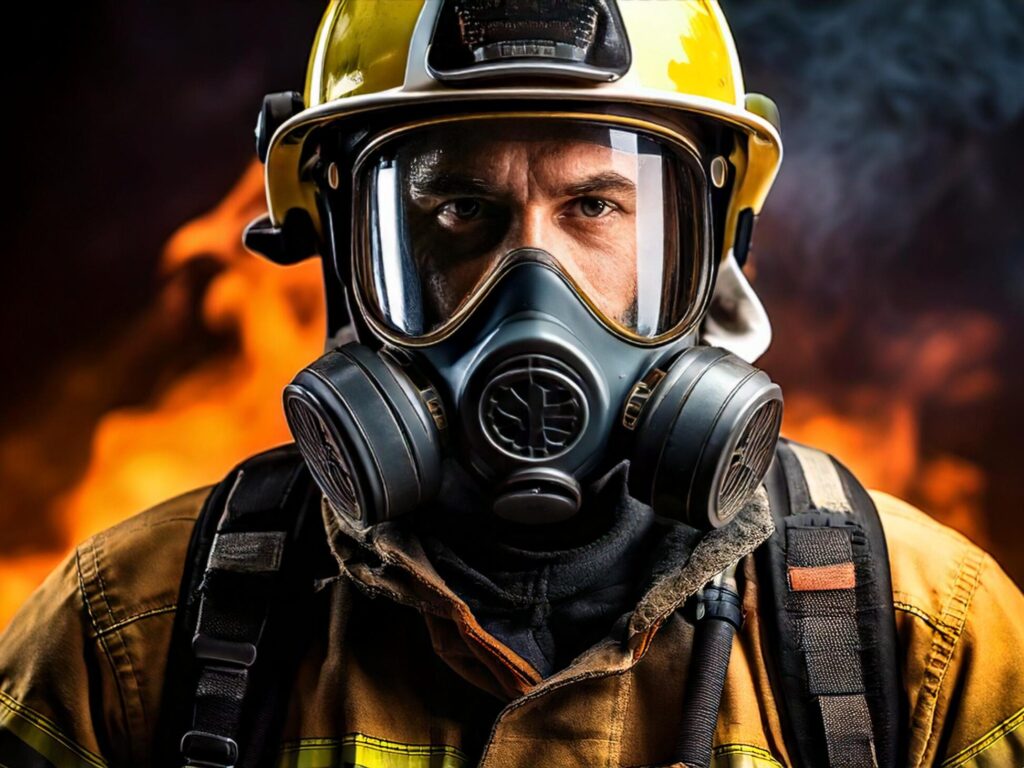
Has roots in Scotland Who knew that each time you put on your Nomex® fire fighter turnout gear you might be wearing a little bit of British history? Whilst Nomex®, the fibre that provides the heat and flame protection in turnout gear, is manufactured and distributed the world over, its roots are in bonnie Scotland. Nomex® fibres were first explored in the 1950’s by Scottish developer Dr Wilfred Sweeny, who won a Lavoisier Medal, the highest award for scientific and technical achievement from DuPont, in 2002 for his work with the fibre. Born in Glasgow, Scotland in 1926, he developed a keen interest in science and attended Glasgow University where he earned his Bachelor’s degree and Ph.D in Chemistry. This innovative fibre protects wearers from heat and flames by using three crucial mechanisms. The fibre absorbs heat, keeping it away from the wearer. The fibre also swells and thickens when exposed to heat, increasing the protective barrier between the heat source and the skin. After the fibre has completely cooled down and is taken out of the heat, the garment may crack or break open, showing that the fibre has done its job and has absorbed the heat and has carbonised, providing extra seconds of protection without impairing mobility. A garment made with Nomex® is not designed to stay intact or look pretty after an incident. It is designed to protect people! Today, Nomex® is worn by more than three million firefighters around the world who are protected by turnout gear, stationwear and accessories made from Nomex®. Due to its specific combination of flame protection, durability and breathability, Nomex® is also used in apparel worn by military pilots and combat vehicle crew; car racing drivers, pit crew members and track officials; as well as industrial workers at risk from flash fire and electric arc hazards. Nomex® is a truly amazing invention that the British are proud to call their own. Never one to rest on its laurels, garments made with Nomex® fibre continue to develop and improve day by day.
British history in every DuPont Nomex garment Read More »
International Fire Buyer June-July 2013 preview
We’re sorry, your browser doesn’t support IFrames. You can still <a href=”http://free.yudu.com/item/details/1044824/International-Fire-Buyer-June-July-preview?refid=31124″>visit this item.</a>, however. Enlarge this document in a new window Publisher Software from YUDU Subscribe to Electronic VersionSubscribe to UK Print VersionSubscribe to Overseas Print Version
International Fire Buyer June-July 2013 preview Read More »