
Somalia sends fire-fighters to Kenya
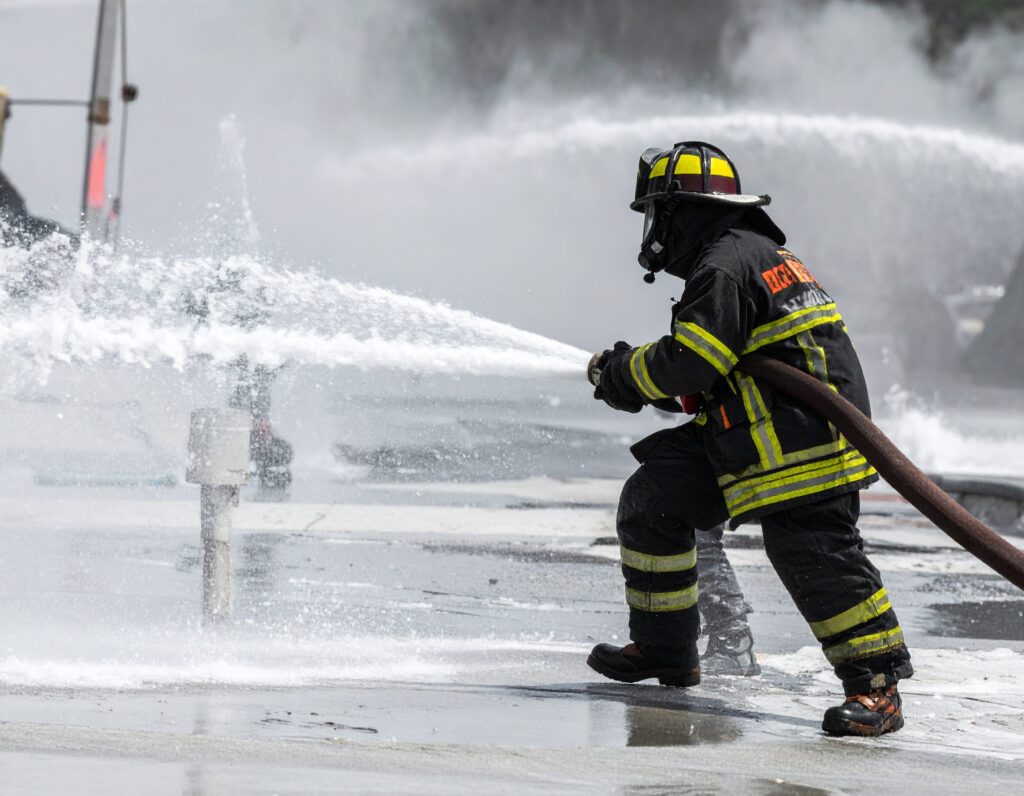
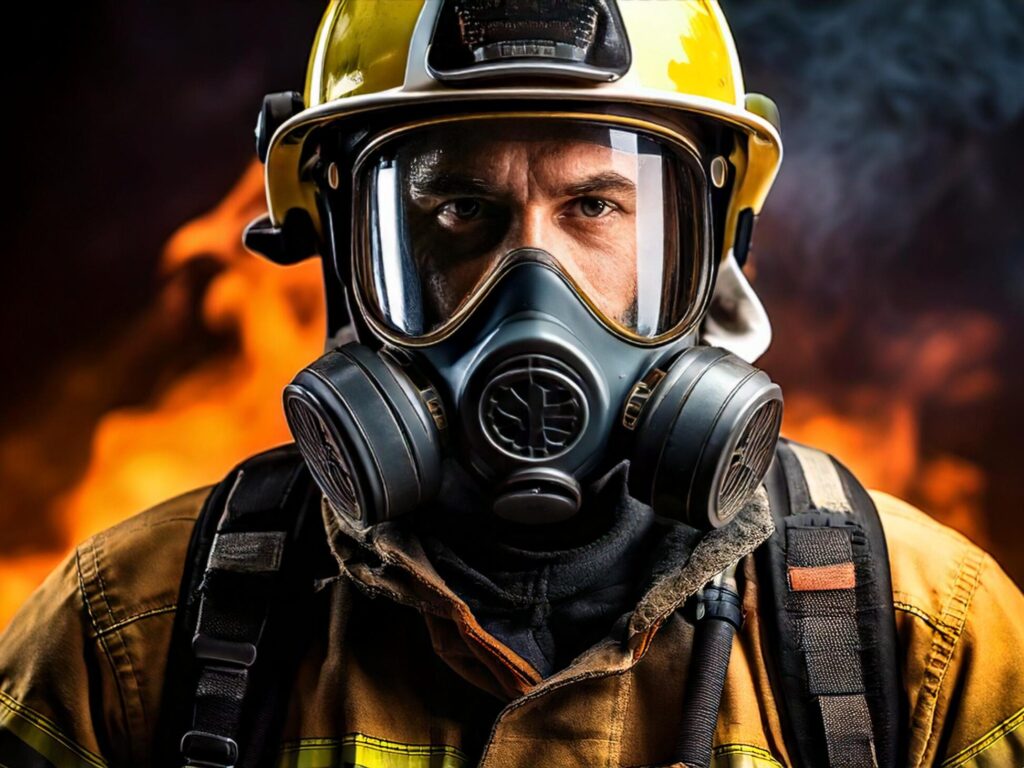
Fire-fighters brought back sorely-needed skills to Somalia A group of fire-fighters was sent to Kenya to learn advanced techniques and bring back sorely-needed skills to Somalia. Somalia is trying to revive its Fire and Rescue Unit with help from the African Union Mission in Somalia Trust Fund. Impoverished explosive devices and suicide bombings have made fires a frequent occurrence in the country. Kenyan Airports Authority Fire and Rescue, Francis Ndeleva, said: “Airport fire-fighting is a bit advanced, it is more technical because you have to deal with an aircraft with passengers on board and there is a lot of fuel and it is moving. So when it touches down, you expect a lot of problems. And the fire is abrupt, it builds up very fast and people can inhale toxic gasses from within or even hot air." One of the trainees said: “The benefit is that we have come from a point where we did not have these skills we have acquired and we have had challenges, but now we have the know-how to counter fire disasters. We have enjoyed it, sometimes we do exercises of physical structure and sometimes we take theory; what fire is, what fire causes and the hazards of fire. We’ve learnt a lot of advantages in Kenya.” However, critics might question whether Kenya is the right choice as the country’s fire brigade was recently slammed for its slow response to a small fire at the Jomo Kenyatta Airport which resulted in extensive damages. (Source: eNCA)
Somalia sends fire-fighters to Kenya Read More »
The importance of effective command and control in vehicle extrication scenarios
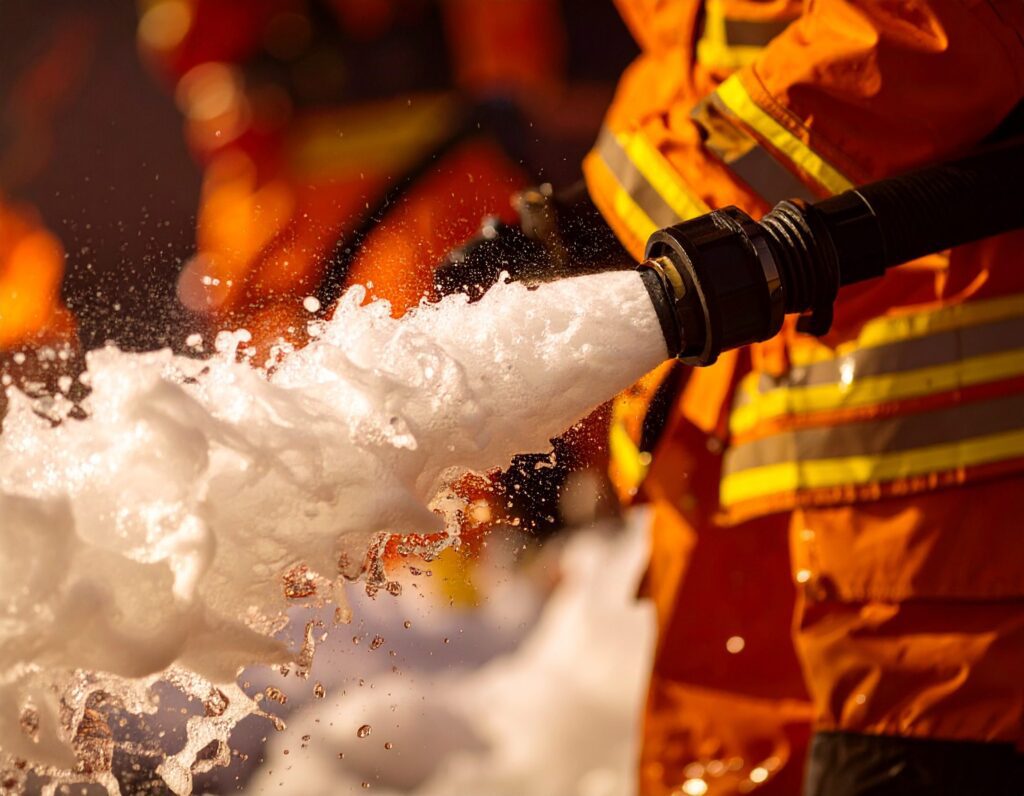
Ian Dunbar, Rescue Consultant at Holmatro Rescue Equipment, explains how officers in charge of extrications are the ‘maestros’ of their team Even the world’s best orchestras are nothing without their conductor. The ‘maestro’ provides tempo, structure and guides sections of the orchestra in and out of the performance as required. He is the focal point, through whom all of the energy passes for the duration of the performance. The end is often met with great adulation for the maestro, but he always turns and acknowledges the performance of the musicians. I have always thought that it is possible to draw a direct parallel between the role of a maestro and that of an officer in charge (OIC) at the scene of an extrication. A well-disciplined and experienced incident commander will make the process look effortless, ensuring a safe and timely extrication from their team. Of course knowledge and experience is not gained over night; so what are the elements needed for effective command and control on scene? Safety on scene So much of the role that the OIC performs is down to the understanding that safety on scene is always the priority and this should be instilled in the team during all training sessions whether they are theoretical or practical. On scene, no work can begin until the OIC has identified all hazards and communicated this information to the crew. The most effective way to do this is to complete a 360 degree survey of the scene. Once the inner survey (area immediately around the vehicle) and outer survey (the wider area depending upon the environment) are completed, then the OIC can instruct the crew what their initial priorities should be and the extrication process can begin. For the duration of the rescue the OIC must ensure that all persons on scene operate safely, wearing full personal protection equipment and adopting the correct position when using hydraulic rescue tools. The need to maintain safety throughout the rescue should dictate the positioning of the OIC. A perfect distance is about 2-3 metres from the vehicle allowing a clear view of the full working area. It is sometimes tempting to get closer but this must be resisted: Being positioned too close to the vehicle means that you cannot see the full risk area. The only exception to this rule is when there is an issue requiring immediate attention, where safety is compromised or when there is a need for the OIC to get their hands on the casualty during the extrication process (for this reason the OIC should also wear medical gloves under their normal extrication gloves). Ideally the OIC should position themselves so they can see every cut/spread/ram. The tool operators should be focussed on the critical area where they are working (e.g. the spreader tips or the cutter blades) while the OIC can see the wider area, ensuring complete safety. There are times too when, for whatever reason, the plan is just not going right and progress is slow. It is at this point where the OIC may be tempted to get more involved and even get their hands on the tools. This must never happen. If it does, effective command and control is lost. The best way to ensure that this never happens is to prepare and train in the most effective way. It’s fair to say that the distance an OIC stands from the car, is directly proportional to the success of his team. The importance of communication The extrication scene is a very dynamic place and the OIC must gather a lot of information in a very short amount of time so that an extrication plan can be devised. Information such as the condition of the casualty and their level of entrapment (from the medic) is necessary before this plan can be conceived. This information has to be communicated to the rest of the team and how this is achieved is critical. The OIC has essentially two options when it comes to communicating the plan. They can inform individual members of the team as they work (this is time consuming and means the OIC will be adopting an undesirable position) or they can call the team together and give a short but precise brief. Although the second method means a temporary cessation of work, it allows the OIC to ensure that the information has received all team members and is understood. Best practice is also to ask for feedback. All team members have experience and may have a more effective solution and be able to offer a viable alternative. The need to maintain communication throughout will also ensure that the OIC’s position is maintained. Regular updates from the medic and the technical team will inform the OIC of how the plan is developing, and allow them to adapt quickly to any unforeseen problems. Of course communication with other agencies (paramedic/police) is an integral part of a successful rescue, but this must not compromise effective command and control of the scene. The OIC should consider nominating a deputy (where personnel permit) to deal with other agencies. Momentum is extremely important and the OIC has a crucial role to play here. Minimum time on scene means that your casualty can receive definitive medical care at the earliest possible time. Simply by motivating the team, the OIC will ensure that the team maintains momentum. Of course from a practical point of view, momentum can be achieved by the proactive management of resources. This means that the OIC has to be thinking at least one step ahead of the current task, and needs to ensure that whatever resources (people or equipment) are required next, are easily available. This ‘simultaneous activity’ reduces time on scene, ensures that an effective (but safe) pace is maintained and enables seamless progression. Minimum on scene teaching & technique management Your training regime should illuminate virtually all on scene coaching/teaching by the OIC. The ability to immediately react to the simplest and most concise instruction means
The importance of effective command and control in vehicle extrication scenarios Read More »
Used military planes sought for firefighting
As many as seven C-27 transport planes could be converted into airtankers As many as seven large C-27 aircraft, military cargo and transport planes being phased out of the U.S. Air Force could find a new home fighting fires in San Diego County and other areas in the southwest. Earlier this year U.S. Sens. Dianne Feinstein, D-Calif., and John McCain, R-Ariz., began urging the Department of Defense to authorize the transfer of seven soon-to-be-retired C-27s from the military to the U.S. Forest Service. This week the San Diego County Board of Supervisors voted to send a letter to the Defense Department urging the same thing. “The Forest Service is in dire need of additional firefighting capabilities,” Supervisor Dianne Jacob said. “Rather than allow these planes to just sit idle, these aircraft can be retrofitted and made available for fighting fires in our region where the fire risk is always high.” Board Chairman Greg Cox said he met with Feinstein two weeks ago, when he was in Washington, D.C., with about 130 other members of a San Diego delegation, and first heard about the available C-27s. Each plane can carry a payload of 25,353 pounds which could translate to a fire retardant capacity of 2,000 to 2,500 gallons, Jacob said during a supervisors’ meeting on Oct. 8. “Ironically, I think most of these are probably newer aircraft than ones currently in use by the U.S. Forestry Service,” Cox said. “These could be a tremendous addition to our firefighting arsenal not just in San Diego County but in Southern California.” The Forest Service uses a number of different types of aircraft for fire duty, but according to recent news reports, its fleet has shrunk by 75 percent in the past decade. There are only 11 Forest Service air tankers in service today. Some are more than 40 years old. The state of California has its own air fleet separate from the federal side. Air tankers are planes fitted with tanks that carry large volumes of fire retardant to drop on a fire. According to the Forest Service’s website, air tankers don’t suppress fires, but they help firefighters on the ground by laying a line of retardant along the sides of a wildfire. The retardant temporarily cools the fire and slows it down giving firefighters extra time to construct a fireline to contain the blaze. A report prepared for the forest service earlier this year offers both praise and caution about using the C-27 for firefighting. “The C-27J aircraft design features are ideal for parachute operations, as well as low-level air tanker operations in diverse terrain,” said the report, prepared by Convergent Performance of Colorado Springs. However, it said retrofitting them to carry heavy loads of retardant could be costly because of their design. The report also said the C-27 would be the most expensive aircraft in the Forest Service fleet to operate. At last week’s meeting, Jacob said she has been told by Feinstein’s office that the aircraft could be available within a few moths for transport duty, but that it could take 18 months or longer to retrofit the planes for air tanker duty.
Used military planes sought for firefighting Read More »
NIST researcher has improved firefighting techniques and saved lives
Dan Madrzykowski fire protection engineer for the National Institute of Standards and Technology Dan Madrzykowski has spent a good portion of his time in government burning down buildings to study how fire behaves, resulting in radical changes in firefighting practices around the country that are saving lives and protecting property. “I burn things for a living,” said Madrzykowski, a fire protection engineer with the National Institute of Standards and Technology (NIST). “We burn a building, change one variable and do it again.” Working with fire departments across the country, Madrzykowski finds buildings that are scheduled for demolition and recreates previous fires in which fire-fighters were injured or lost their lives. He uses sophisticated research tools and fire-modeling software to analyze the blazes and then spreads the word to firefighters on what he has learned. “Dan has been able to use science to show that the traditional practices don’t always provide the best outcomes and, in some cases, they’re putting fire-fighters in harm’s way,” said Willie May, NIST’s associate director for laboratory programs. Madrzykowski and his team have improved everything from ventilation and fire-suppression tactics to the protective equipment fire-fighters wear. He has had a major impact on understanding and mitigating the dangerous problem of fire driven by wind, which occurs frequently on the upper floors of tall buildings. When winds blow through the open doors and windows of a burning building, they cause fires to grow and spread rapidly. Fire-fighters can open or close doors and use large fans to ventilate stairways and corridors, but if they don’t understand fire behavior, they can inadvertently create more hazardous situations for themselves, May said. Madrzykowski’s most significant research has been on how, when and where fire-fighters should ventilate a building, said Morgan J. Hurley, technical director at the Society of Fire Protection Engineers. “Doing it at the wrong place or time can actually exacerbate the situation.” In 2011, 70,090 firefighters were injured and 83 died in the line of duty, according to the National Fire Protection Association. During that same year, there were almost 1.4 million fires in the U.S., 3,005 deaths, 17,500 injuries and £7.3 billion in economic damage. The wind-driven fire research started when Madrzykowski was called to study the dynamics of a 1998 Brooklyn blaze that killed three fire-fighters on the top floor of a 10-story building. When wind blew through a corridor with open doors and windows, the firefighters were overwhelmed by the intense heat that traveled down the hallway. Armed with his research on the underlying physics of the inferno, Madrzykowski worked with fire departments in urban areas in five states, conducting fire tests in high-wind conditions. He had to overcome measurement challenges involving high temperatures, toxic gases and the potential for structural collapse. Thanks to his findings, fire departments now are trained to consider the impact of wind on structure fires and employ innovative tactics to use the wind to their advantage. Madrzykowski stressed that the fixes he recommends are inexpensive and quick. “I’m empowering the fire-fighters with information and introducing new techniques that don’t cost a lot of money to implement,” he said. “They can change tactics overnight.” “His science-based recommendations are critical for the fire service, where many fire-fighters do not have an understanding of fire dynamics,” said Anthony Hamins, the chief of NIST’s Fire Research Division. “He is leading a transformational change in fire service thinking.” Madrzykowski has helped spread the word about his research through publications, digital media, speaking engagements and curricula development. He also is the administrator of Fire.gov, a website dedicated to translating fire research results into easy-to-access research reviews. Site users can learn from reports and narrated videos about various experiments and simulations. The website was visited nearly 200,000 times in 2012. During the past few years, more than 400,000 people and organisations, including the National Fire Academy, have requested DVD’s containing training videos, research findings and data.
NIST researcher has improved firefighting techniques and saved lives Read More »
Heading towards a deadly summer
Report by The Bushfire Co-operative Research Council map It’s a rather foreboding outlook. The map used by all fire-fighting agencies to show ”above normal” bushfire risk covers a vast swathe of NSW from Queensland to Victoria. Unlike last year, it encompasses an extensive area of more densely populated coastal regions – including Sydney. The Bushfire Co-operative Research Council map and associated report says, in NSW, above average rainfall for much of the preceding three years is likely to continue the trend of heavy grass fuel loads to the west of the Great Dividing Range, the tablelands and the upper Hunter. Over much of the forested areas of NSW, below average rainfall since July has resulted in a drying trend in forest fuels. Gary Morgan, chief executive of the Bushfire CRC, said: ”One thing people still need to understand is normal still means fires in Australia because every year we have fires right across every state and territory. ”The aim of this is not to frighten people but to have people and agencies informed so that when fires do occur they are ready.” NSW is yet to reach mid-spring and already there have been seven days of total fire bans. Thursday brought 60 fires across the state with a total fire ban in 15 out of 21 fire regions and the fire risk designated ”extreme”. Temperatures on Sunday are expected to hit 34 degrees in Sydney. The response to the fires when they start is ultimately in the hands of Rural Fire Service Commissioner Shane Fitzsimmons. It will be him you see talking to TV cameras in front of blackened country. He will mobilise staff and volunteers and give approval for the use of waterbombing aircraft. The commissioner told Fairfax Media there had been a big shift down in predicted rainfall by the Bureau of Meteorology for the next three months in what was an already ”very dry landscape”. The dry start has affected the amount of preventative burning to reduce fuel levels that can be conducted without the risk of fires getting out of control. ”In the last five years to six years, we have gone from an average completion rate of hazard reduction from about 50 per cent or less to about 80 per cent of the annual program … but there is still more that needs to be done,” Commissioner Fitzsimmons said. ”We have got a better fleet profile than ever before, we have got technological advancements that are assisting firefighters and of course we have got the men and women on the ground that are better trained and better equipped than ever before, and numbers have grown in the past 12 months from 70,000 to 72,00 volunteers,” he said. ”We are expecting some pretty bad weather again on Sunday … in the Hunter, central coast and likely to include Sydney. We are certainly looking at this stage of probably severe fire danger ratings.”
Heading towards a deadly summer Read More »
Elkhart Brass partners with Fire Rescue Safety Australia
Increases product availability and customer support globally Elkhart Brass, a global leader in innovative firefighting and fire protection equipment, has partnered with Fire Rescue Safety Australia (FRSA), an emergency management solutions specialist, to increase accessibility of its product portfolio while enhancing customer support for the fire suppression industry throughout Australia and New Zealand . “Elkhart Brass is committed to offering quality products and customer service domestically and globally to ensure every market has the tools necessary to keep their communities safe,” said Tomas Saavedra, vice president of international sales at Elkhart Brass. “By collaborating with FRSA, together, we can offer comprehensive solutions tailored to meet every customer’s needs.” FRSA, headquartered in Perth, Australia, has six locations throughout Australia that offers a full scope of services including consulting, needs assessment, designing of tailored solutions and product implementation to combat any demanding situation. In addition, their team of specialists is available around the clock to exceed customer needs. “Our customers trust us to provide them quality products and solutions to keep them safe while out in the field,” said Keith Gillespie, agency product manager at FRSA. “We don’t take that trust for granted and that’s why FRSA only partners with global leaders that share that same commitment. Elkhart Brass is one of those partners we trust.”
Elkhart Brass partners with Fire Rescue Safety Australia Read More »
Aviation Rescue & Fire Fighting (ARFF) 2013
ARFF 2013 will discuss global aircraft fire incidents ARFF 2013 – Aircraft Rescue & Fire Fighting, will take place on December 10-11 at The Oberoi Hotel, Dubai, UAE. The event launched by IAFPA – The International Aviation Fire Protection Association will help aviation fire specialists and airport managers from around the world build resilience for some of the major incidents they could face at their airports. Case Studies at the two day conference will include the Asiana 214 recent incident at San Francisco Airport and QF32 – the Qantas Airways flight that made an emergency landing at Changi Airport in Singapore. Delegates will be able to hear how the ARFF teams handled the emergency situations and gain valuable lessons learnt. Cletus Packiam, IAFPA Chairman & Chief, Airport Emergency Service at Changi Airport said “This new global ARFF event is an important gathering for those in the Aviation Fire industry. For two days we can network, share information & hear about the latest training, systems and technologies that can help us build resilience and preparedness at our airports.” Delegates for the conference will be attending from the UAE’s eight airports as well as those from the GCC. Mark Woodward, Manager – Aerodrome, Air Navigation & Aerodrome Department from the UAE GCAA (General Civil Aviation Authority) will open the event with a Keynote Address setting the scene in the middle east region for the first ARFF event to take place in Dubai. Hosting the event in the UAE will attract a global audience by dint of its central location and expanding airports in the region. ARFF 2013 is an official IAFPA event, officially supported by Dubai Airports and organised by Tangent Link, a UK organiser, specialising in international aerospace and defence events. tangentlink.com/event/aircraft-rescue-fire-fighting
Aviation Rescue & Fire Fighting (ARFF) 2013 Read More »
Willard Marine delivers SOLAS rescue boats
SOLAS RIBs feature an inboard diesel engine with water jet propulsion Willard Marine, a 56-year-old builder of composite and aluminum boats, has recently taken orders to build rescue boats for the Alaska Marine Highway System (AMHS), U.S. Military Sealift Command (MSC) and Maersk Lines Ltd. The Willard Marine rescue boats meet all U.S. Coast Guard requirements under the international Safety of Life at Sea (SOLAS) treaty. AMHS has ordered two 670 rescue boats for the M/V Columbia, which is being refitted with new safety equipment. The boats are being supplied through Vigor Industrial Shipyard in Portland, Ore. Willard Marine has supplied similar SOLAS rescue boats for AMHS ferries under a fleetwide refurbishment program. MSC has just taken delivery of four 670 SOLAS boats for USNS John Lenthall and USNS Tippecanoe, and Willard Marine is in the process of delivering five boats to Maersk Lines Ltd, for MSC ships managed by Maersk. The 6.7m SOLAS RIBs feature an inboard diesel engine with water jet propulsion, stainless steel four-point lift pads for single point sling pickup, and a full-height transom with stainless steel transom cap and two towing bollards. “Willard Marine is one of the leading suppliers of SOLAS-compliant rescue boats for the maritime and offshore industry,” said Ulrich Gottschling, President of Willard Marine. “Our boats, ranging from 4.9 to 6.7m, are designed and built to meet the international SOLAS specifications. We bring more than five decades of experience in the construction of high-quality boats demanding applications, and all of us at Willard Marine take special pride in the role our boats play in saving lives at sea.” www.willardmarine.com
Willard Marine delivers SOLAS rescue boats Read More »